
Paraleuctra
Hanson, 1941
rolled-winged stoneflies
Species Guides
2- Paraleuctra sara(Appalachian needlefly)
- Paraleuctra vershina(summit needlefly)
Paraleuctra is a of rolled-winged stoneflies in the Leuctridae, comprising 27 valid distributed across the Nearctic and Palaearctic regions. The genus was established by Hanson in 1941 and is characterized by with weak flying ability that inhabit vegetation along stream banks. Nymphs are aquatic and restricted to cold, oxygen-rich water environments. Recent taxonomic revisions using molecular and morphological data have resolved synonymies within the genus, particularly among Palaearctic species.
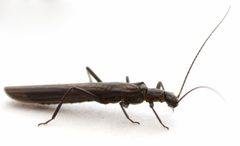
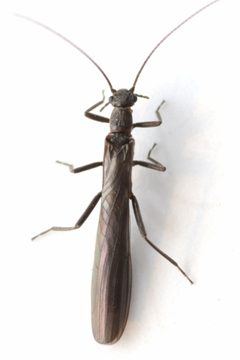
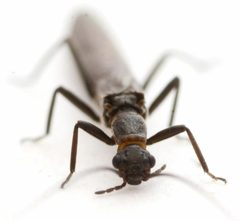
Pronunciation
How to pronounce Paraleuctra: /ˌpærəˈljuːktrə/
These audio files are automatically generated. While they are not always 100% accurate, they are a good starting point.
Images
Habitat
Nymphs inhabit cold streams, springs, and rock fissure seepage with high dissolved oxygen. occur on herbs, grasses, and shrubs along stream banks.
Distribution
Nearctic: Alberta, Alabama, Alaska, British Columbia. Palaearctic: Russia, China (Henan, Shaanxi, Anhui, Hubei, Sichuan, Yunnan, Zhejiang, Fujian), Siberia.
Diet
Life Cycle
Females lay in water after mating. Nymphs develop aquatically in cold, oxygen-rich waters. emerge and live on bank vegetation for days to weeks.
Behavior
exhibit weak flying ability and positive . Adults aggregate in groups conducive to mating. Nymphs have narrow ranges.