
Parabacillus
Caudell, 1903
Short-horn Walkingsticks
Species Guides
2- Parabacillus coloradus(Colorado short-horn walkingstick)
- Parabacillus hesperus(western short-horn walkingstick)
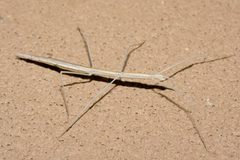
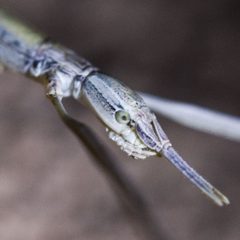
Parabacillus is a of short-horn walkingsticks in the Heteronemiidae, established by Caudell in 1903. The genus contains at least three described : Parabacillus coloradus, P. hesperus, and P. palmeri. These stick insects are native to western North America and are characterized by their cryptic, twig-like appearance. They are seldom encountered due to their excellent camouflage.

Pronunciation
How to pronounce Parabacillus: /ˌpærəˈbæsɪləs/
These audio files are automatically generated. While they are not always 100% accurate, they are a good starting point.
Identification
Distinguished from other Heteronemiidae by relatively short . -level identification requires examination of specific morphological characters not detailed in available sources.
Images
Habitat
Found in prairie and grassland , including heavily grazed areas with scattered trees. One observation reports occurrence in a cottonwood grove with nearby wetland in otherwise arid prairie. Specific microhabitat preferences within these environments remain undocumented.
Distribution
Western North America. Documented from Mexico, Arizona, California, Colorado, and Kansas. Parabacillus hesperus extends into the Pacific Northwest, with records from Washington and Idaho.
Seasonality
have been observed in July. Seasonal activity patterns for the as a whole are insufficiently documented.
Behavior
Nocturnally active at light sources, as evidenced by attraction to mercury vapor and blacklight stations. Highly cryptic; rarely seen due to effective camouflage against vegetation.
Human Relevance
Occasionally encountered by entomologists during insect surveys. No documented economic or medical significance.
Similar Taxa
- Other Heteronemiidae generaSimilar body form and cryptic appearance; distinguished by relatively shorter in Parabacillus
- DiapheromeridaeOther common North American walkingstick ; typically longer than in Parabacillus
More Details
Taxonomic note
The was established by Caudell in 1903, with Parabacillus palmeri as the type . The three currently recognized species were described between 1903 and 1934.
Observation bias
Most records derive from light-trapping events, suggesting this sampling method may significantly underestimate true abundance due to the group's strong cryptic .
Sources and further reading
- BugGuide
- Wikipedia
- GBIF taxonomy match
- iNaturalist taxon
- Catalogue of Life
- Bug Eric: National Moth Week Recap for Colorado Springs
- Parabacillus hesperus Hebard, 1934 (Phasmida: Heteronemiidae): new state records for Washington and Idaho and an assessment of its distribution in the Pacific Northwest (U.S.A.)