
Parabacillus coloradus
(Scudder, 1893)
Colorado short-horn walkingstick
Parabacillus coloradus, commonly known as the Colorado short-horn walkingstick, is a of in the Heteronemiidae. It is native to western North America, with documented occurrence in Arizona, Colorado, Kansas, Nebraska, and New Mexico. The species was described by Scudder in 1893. As a member of the Phasmida, it exhibits the characteristic elongated body form and cryptic appearance typical of walkingsticks.
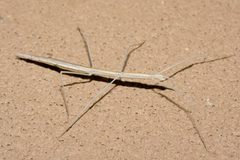
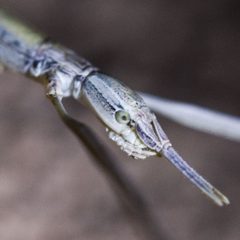
Pronunciation
How to pronounce Parabacillus coloradus: //ˌpærəˈbæsɪləs kəˈlɔːrədəs//
These audio files are automatically generated. While they are not always 100% accurate, they are a good starting point.
Identification
Distinguished from other Parabacillus and western North American walkingsticks by combination of geographic range and morphological features; precise diagnostic characters require examination of specimens. The specific epithet 'coloradus' refers to the state of Colorado, where the species was first described. Differentiation from similar Heteronemiidae in the region would require detailed examination of genitalia, body proportions, and antennal length.
Images
Habitat
Vegetated areas within its documented range; specific preferences are not well documented but likely include shrublands and woodland edges where plants occur.
Distribution
Documented from Arizona, Colorado, Kansas, Nebraska, and New Mexico in the United States. The occupies the western and central plains and intermountain regions of North America.
Ecological Role
As a phytophagous insect, likely contributes to nutrient cycling and serves as prey for various including birds, reptiles, and arthropods. Specific ecological functions are not documented.
Human Relevance
No documented economic or medical significance. Like many walkingstick , may be encountered by naturalists and entomologists in field surveys.
Similar Taxa
- Parabacillus hesperusCongeneric in western North America; differentiation requires examination of morphological details not specified in available sources.
- Other Heteronemiidae in western North America members share general walkingstick ; -level identification requires examination of structural features.
More Details
Taxonomic history
Originally described by Scudder in 1893. The Parabacillus is placed in tribe Paraleptyniini within Heteronemiinae.
Nomenclature note
The specific epithet 'coloradus' is a Latinized adjective referring to Colorado, the type locality, and properly agrees in gender with the masculine name Parabacillus.