
Phasmida
Leach, 1815
stick insects, walking sticks, stick-bugs, phasmids, ghost insects, leaf insects
Family Guides
5- Diapheromeridae(Common Walking Stick Insects)
- Heteronemiidae(walkingsticks)
- Phasmatidae(stick insects)
- Pseudophasmatidae(striped walkingsticks)
- Timematidae
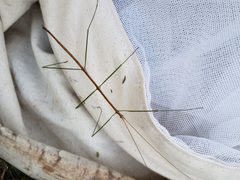
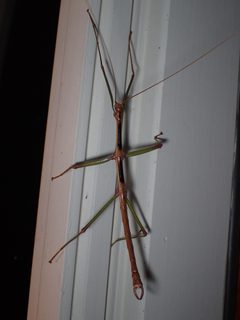
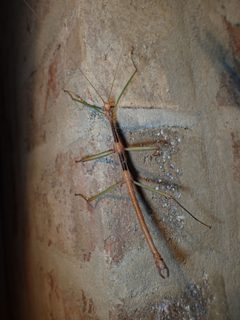
Phasmida is an order of insects comprising approximately 3,000 valid worldwide, grouped into 523 and 13 . Members are renowned for extreme cryptic resembling sticks, twigs, or leaves, with elongated bodies and appendages that match vegetation in color and texture. The order exhibits remarkable size variation, from small species to the longest insects known, with some exceeding 18 inches in length. The group was formerly classified within Orthoptera but now constitutes its own order based on distinct morphological and molecular characteristics. The name derives from Greek 'phasma' (apparition, ghost), referencing their uncanny resemblance to inanimate plant parts.
Pronunciation
How to pronounce Phasmida: //ˈfæzmɪdə//
These audio files are automatically generated. While they are not always 100% accurate, they are a good starting point.
Identification
Distinguished from Orthoptera by absence of enlarged hind adapted for jumping. Separated from mantids by lack of forelegs. Differs from other elongate insects like snakeflies (Raphidioptera) by having five-segmented rather than three-segmented. ( Phylliidae) recognized by broad, flattened bodies with leaf- patterning. Walking sticks (families Diapheromeridae, Phasmatidae, etc.) identified by cylindrical stick-like form; some distinguished by toothed femora, antennal length relative to body, or presence of spines.
Images
Habitat
Primarily tropical and subtropical forests, but extends into temperate regions. Occupies arboreal and shrub-layer including forest , understory, and scrub vegetation. Some inhabit grasslands and open rocky areas. In North America, found in deciduous and mixed forests, glades, and prairie-woodland . Brazilian species collected from gallery forests along streams and in highland plateaus. Specific microhabitats include tree trunks, branches, leaves, and low vegetation.
Distribution
in distribution except Antarctica. Highest diversity in tropical Asia, Malesia, and Neotropics. Present on all continents: Europe, Africa, Asia-Temperate, Indian Subcontinent, Malesia, Australasia, North America, Central America, and South America. In North America, ranges from southern Canada through the United States to Mexico, with greatest diversity in the south-central U.S. and southwestern regions. Brazilian fauna comprises over 200 described . Some species exhibit restricted ranges while others are widespread.
Seasonality
Activity patterns vary by latitude and . In temperate regions, most abundant in late summer and autumn; nymphs present earlier in season. In tropical regions, activity correlates with wet season; Brazilian study found all 47 specimens collected exclusively during rainy season (October-March), none during dry season. Northern walkingstick (Diapheromera femorata) overwinters as , with nymphs emerging in spring. Some tropical species may reproduce year-round.
Diet
Herbivorous; nymphs and feed nocturnally on foliage. plants include diverse trees, shrubs, and herbaceous vegetation. Specific hosts recorded include oak (Quercus), grape (Vitis), mesquite, grass, crepe myrtle, roses, and rosemary. Some are , feeding on multiple plant species. Feeding occurs primarily at night to maintain during daylight hours.
Host Associations
- Quercus spp. (oaks) - food plantPrimary in Ozark highlands
- Sideroxylon lanuginosa (gum bumelia) - food plant for Megaphasma denticrus in White River Hills
- Vitis spp. (grape) - food plantRecorded for Megaphasma denticrus
- Prosopis spp. (mesquite) - food plantRecorded in south-central U.S.
- Pristomyrmex punctatus - Queenless disperse of Phraortes illepidus; ants attracted to capitula on eggs, carry them horizontally across surfaces and bury some at shallow depths
Life Cycle
Hemimetabolous development with , nymph, and stages. Eggs often resemble seeds; some bear external appendages called capitula that attract ants for (myrmecochory). Nymphs resemble miniature adults, gradually increasing in size through multiple . Some add extra instar relative to males, contributing to larger female size. stage varies: northern temperate species typically as eggs, tropical species may have overlapping . Adult longevity varies by species and climate.
Behavior
Primary defense is : maintaining motionless stick-like posture with forelegs extended forward, swaying slowly to simulate movement in breeze when active. Secondary defense includes —controlled shedding of legs at predetermined abscission points when grasped by ; breakage sealed rapidly to prevent fluid loss. Some discharge noxious, irritating secretions from thoracic glands when attacked. feeding reduces detection risk. Mating pairs may remain coupled for extended periods.
Ecological Role
Herbivores contributing to foliage consumption and nutrient cycling in forest and shrub . Serve as prey for birds, reptiles, mammals, and despite chemical and physical defenses. by ants suggests potential mutualistic relationships. Some may reach locally high densities and cause noticeable defoliation, particularly along rocky ridgetops.
Human Relevance
Popular in insect collections and educational displays due to impressive size and cryptic appearance. Some kept as pets or in captive breeding programs. Subject of ecological and evolutionary research on , sexual size dimorphism, and chemical defense. Minimal agricultural significance; occasional localized defoliation reported but not major pest status. Some species protected by regulations on interstate transport due to potential plant pest concerns.
Similar Taxa
- Orthoptera (grasshoppers, crickets, katydids)Formerly classified together; distinguished by absence of enlarged hind for jumping in Phasmida, and different wing venation and tarsal structure.
- Mantodea (mantids)Both have elongate bodies and cryptic forms; mantids possess forelegs modified for catching prey, which Phasmida lack.
- Phylliidae (leaf insects, within Phasmida) are a within Phasmida with broad, flattened, leaf-like bodies rather than cylindrical stick-like form; treated as similar for identification purposes.
More Details
Taxonomic nomenclature
The alternative spellings Phasmodea and Phasmida are considered improper formations from the Greek root phasma. Phasmida is the accepted form.
Scientific name etymology
Megaphasma denticrus: from Greek mega (large) + phasma (apparition); from Latin dens (tooth) + crus (leg), referring to toothed mesofemur. Frequently misspelled 'dentricus' in literature.
Size records
Phobaeticus chani from Borneo holds world record at 567 mm, displacing former record holder Phobaeticus serratipes at 357 mm. Megaphasma denticrus is North America's longest at 150+ mm body length, exceeding 200 mm with legs extended.
Sources and further reading
- BugGuide
- GBIF taxonomy match
- iNaturalist taxon
- Catalogue of Life
- Scorpions Draw Curious Looks and Scores of Questions | Bug Squad
- North America’s longest insect | Beetles In The Bush
- treehopper | Beetles In The Bush
- From the Bug of the Week mailbag: World’s largest walking stick visits the Goddard Space Flight Center, Northern walkingstick, Diapheromera fermorata — Bug of the Week
- Destination Hutchison Island, Florida: a visit with the Twostriped walkingstick, 'Anisomorpha buprestoides' — Bug of the Week
- Bug Eric: New Mexico Dragonfly Blitz - Day 1
- Morphology, Histology And Serotonin Distribution On Digestive Tract Of Stick Insect, Phobaeticus serratipes (Phasmida: Phasmatidae)
- Dispersal of Phraortes illepidus (Phasmida: Phasmatidae) Eggs by Workers of the Queenless Ant, Pristomyrmex punctatus (Hymenoptera: Formicidae)
- Diversidade de Phasmida (Insecta) na Serra do Espinhaço, Chapada Diamantina (MG)
- Complete mitochondrial genome of Oxyartes lamellatus (Phasmida: Lonchodidae: Necrosciinae).