
Phymonotus
Lightfoot, Weissman & Ueshima, 2011
Species Guides
1- Phymonotus jacintotopos(San Jacinto shieldback)
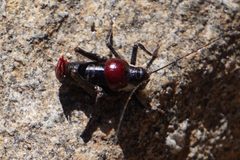
Phymonotus is a of shield-backed katydid erected in 2011, containing the single P. jacintotopos. The genus is distinguished by an unusually enlarged dome-like pronotum, a distinctive calling song, and seven additional morphological features. It is considered a Pleistocene relic to high-elevation conifer forests of the San Jacinto Mountains in southern California.
Pronunciation
How to pronounce Phymonotus: //faɪməˈnoʊtəs//
These audio files are automatically generated. While they are not always 100% accurate, they are a good starting point.
Identification
The is diagnosed by an enlarged dome-like pronotum that is unusually elevated compared to related genera. Additional diagnostic characters include the and lobes of the titillators and the dorsal of the titillators. The sole , P. jacintotopos, exhibits distinct red-and-black coloration not found in similar katydids.
Images
Habitat
Restricted to high-elevation mixed conifer forests above 1,500 meters elevation, extending to at least 3,000 meters. Forest composition includes Jeffrey pine, Ponderosa pine, White fir, and California incense cedar. The occurs in geographically isolated montane on the western slopes of the San Jacinto Mountains, with notable concentration near Fern Valley.
Distribution
to the San Jacinto Mountains of southern California, USA. This range represents the highest section of the Baja California Peninsular Ranges.
Behavior
Males produce a distinctive calling song. Males have been observed to possibly produce thoracic glandular secretions that may be offered to mating females, suggesting potential courtship feeding .
Similar Taxa
- AgalothoraxPhylogenetically related occurring in lower elevation environments throughout the surrounding region; distinguished from Phymonotus by the latter's enlarged dome-like pronotum and high-elevation restriction.
- NedubaPhylogenetically related found in lower elevation environments throughout the surrounding region; Phymonotus is distinguished by its elevated pronotum structure and isolated montane distribution.
More Details
Phylogenetic and biogeographic context
Phymonotus belongs to the tribe Nedubini, which has a Gondwanan distribution with additional in Australia and South America (Chile and Argentina). Western North American Nedubini apparently result from a South American event.
Conservation status
The sole P. jacintotopos is described as rare in source materials, with restricted range in isolated high-elevation .