
Orchelimum erythrocephalum
Davis, 1905
Red-headed Meadow Katydid
Orchelimum erythrocephalum is a North American in the meadow katydid Orchelimum. The refers to its distinctive red coloration. Like other Orchelimum species, it inhabits grasslands and wetland edges where it feeds on both plant material and small insects. The species was described by entomologist William T. Davis in 1905.

Pronunciation
How to pronounce Orchelimum erythrocephalum: /ɔːrˈkɛlɪˌməm ɛˌrɪθroʊˈsɛfələm/
These audio files are automatically generated. While they are not always 100% accurate, they are a good starting point.
Identification
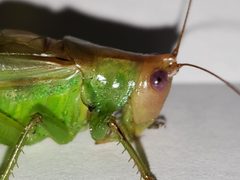
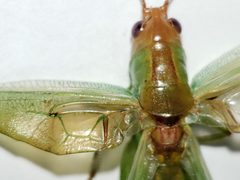
The red provides the primary distinguishing feature from other Orchelimum meadow katydids, which typically have green or brown heads. As with all Conocephalinae, it possesses long, thread-like exceeding body length, distinguishing it from short-horned grasshoppers (Acrididae). The Orchelimum is characterized by a relatively robust body form compared to the smaller, more slender Conocephalus meadow katydids.
Images
Habitat
Grasslands, meadows, and wetland margins with tall herbaceous vegetation.
Distribution
Southeastern and mid-Atlantic United States: recorded from Alabama, Delaware, Florida, Georgia, and Louisiana.
Seasonality
reach maturity in late summer and early autumn, coinciding with the mating period typical for temperate Conocephalinae.
Diet
Consumes grass seeds, forb leaves and flowers, and opportunistically preys on small insects including leafhoppers, planthoppers, and other small arthropods. Females have been observed to engage in on smaller .
Behavior
Males produce -specific songs by stridulation to attract females. During copulation, males transfer a containing both sperm and a nutritious , which the female consumes after mating. This reduces female likelihood of remating.
Ecological Role
Significant consumer of plant in grassland and marsh ; one study documented conocephaline katydids converting approximately 16% of rush biomass into insect biomass. Seed can reduce grass and rush seed production by 30-50%. Functions as both herbivore and opportunistic , contributing to nutrient transfer within .
Similar Taxa
- Conocephalus spp.Smaller, more slender meadow katydids with less robust body form; lack the red coloration of O. erythrocephalum.
- Neoconocephalus spp.Larger conehead katydids with more elongated, cone-shaped and different stridulatory patterns.
- Other Orchelimum speciesShare body form and preferences but distinguished by coloration—O. erythrocephalum is specifically characterized by its red head.