
Conocephalini
Kirby & Spence, 1826
Common Meadow Katydids
Genus Guides
3- Conocephalus(Lesser Meadow Katydids)
- Odontoxiphidium(meadow katydids)
- Orchelimum(meadow katydid)
Conocephalini is a tribe of katydids within the Conocephalinae, commonly known as meadow katydids and conehead katydids. Members are among the most abundant orthopterans in eastern North America and adjacent Canada. The tribe includes such as Conocephalus (lesser meadow katydids), Neoconocephalus (conehead katydids), and Orchelimum (greater meadow katydids). Many exhibit feeding habits and produce species-specific acoustic signals for mate attraction.
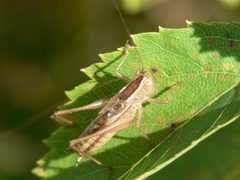
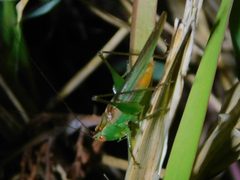
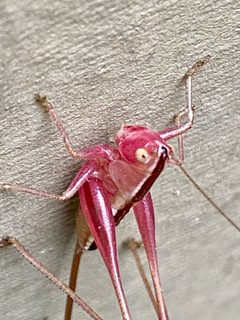
Pronunciation
How to pronounce Conocephalini: /ˌkɒnəˌsɛfəˈlaɪnaɪ/
These audio files are automatically generated. While they are not always 100% accurate, they are a good starting point.
Identification
Conocephalini katydids can be distinguished from other Tettigoniidae by their association with grassland and meadow combined with specific morphological traits. Conehead katydids (Neoconocephalus) are notably large, with some exceeding seven centimeters in body length. Meadow katydids (Conocephalus, Orchelimum) are generally smaller. Females possess a prominent ovipositor for -laying, visible at the rear of the . Males produce calling songs by stridulation, rubbing a scraper on one forewing against a file on the opposing forewing; these songs are species-specific and used for mate attraction.
Images
Habitat
Members of Conocephalini occupy grassland, meadow, prairie, and wetland . Some are found in seasonally flooded savannah habitats. African representatives in the subtribe Karniellina occupy montane to afroalpine grasslands, forest clearings, and forest edges. The tribe shows to open grassland environments, with some lineages evolving in response to the spread of grasslands and increasing aridification in East Africa.
Distribution
Conocephalini has a worldwide distribution. The Conocephalus contains approximately 150 recognized globally, with around 25 species in South America. North American members are abundant in the eastern United States and adjacent Canada. African representatives are found in East African mountain ranges including Mt. Kilimanjaro, Mt. Kenya, the Eastern Arc mountains, and associated highlands. Some species are to specific regions, such as the Apalachicola River Basin in Florida.
Seasonality
In temperate regions, reach maturity in late summer and autumn (September-October in North America). Activity patterns include both and calling during this period.
Diet
Conocephalini katydids are . A substantial portion of the diet consists of grass seeds, which they crack with powerful . They also feed on forbs (flowering herbaceous plants), consuming leaves and flowers. Some , particularly meadow katydids in the Orchelimum, are opportunistic on other insects including leafhoppers, planthoppers, smaller katydids, and aphids. Females may require additional protein for development.
Behavior
Males produce -specific calling songs through stridulation to attract females. Females discriminate among potential mates based on song quality, with the buzz component of the male's song playing a significant role in mate choice in some species. During copulation, males deliver a consisting of a sperm container (ampulla) and a nutritious gelatinous mass (), which the female consumes. This may reduce the likelihood of female remating. Some species have been observed using their front to manipulate food items while feeding.
Ecological Role
Conocephalini katydids function as primary consumers of plant material, particularly grass seeds and forb vegetation. One study documented that three meadow katydid converted nearly 16% of rush into biomass. Their seed feeding can reduce seed production of rushes and grasses by 30-50%. As opportunistic , they also contribute to of smaller herbivorous insects. They serve as prey for higher .
Similar Taxa
- Tettigoniinae (true katydids)Also in Tettigoniidae but typically associated with arboreal or shrub rather than grasslands and meadows; generally lack the same degree of to open grassland environments.
- Copiphorini (coneheads)Historically sometimes confused with Neoconocephalus; both have cone-shaped , but Copiphorini is a separate tribe with distinct distributions and acoustic .
- Acrididae (short-horned grasshoppers)Also abundant in grasslands but distinguished by short, stout versus the very long, thread-like antennae characteristic of katydids in Conocephalini.
More Details
Acoustic communication
All recorded in related African produce long-lasting, trill-like calling songs consisting of sequences of continuously repeated syllables or syllable pairs, with the peak carrier frequency in the low ultrasound range. Song patterns are highly similar among closely related species, suggesting in some lineages.
Evolutionary history
The subtribe Karniellina within Conocephalini probably evolved as grasslands spread in East Africa due to increasing aridification. Major splits within Karniellina likely occurred with the of savannah grasslands and fragmentation of forest several million years ago, with most radiations boosted by climatic fluctuations of the past 1–2 million years.
Flightlessness
Many African members of the subtribe Karniellina are flightless, an to stable grassland on mountains and highlands. This flightlessness has contributed to across isolated mountain ranges.
Sources and further reading
- BugGuide
- iNaturalist taxon
- NCBI Taxonomy
- Catalogue of Life
- Bug Eric: Orthoptera Thursday: The Katydid's Menu
- Minstrels of the meadow: Short-winged meadow katydid, Conocephalus brevipennis — Bug of the Week
- Bug Eric: Mate Guarding and Oviposition in the White-spotted Sawyer, Monochamus scutellatus (Coleoptera: Cerambycidae)
- Clarifying the identity of the Uruguayan meadow katydid Conocephalus doryphorus (Orthoptera: Tettigoniidae: Conocephalini)
- A new genus of African Karniellina (Orthoptera, Tettigoniidae, Conocephalinae, Conocephalini): integrating morphological, molecular and bioacoustical data
- A new species of Meadow Katydid (Orthoptera: Tettigoniidae: Conocephalini) from the Apalachicola River Basin of Florida, USA
- Notes on the genus Conocephalus (Orthoptera: Tettigoniidae; Conocephalinae; Conocephalini) from India and description of two new species
- Dispersal and speciation of East African mountain bushcrickets of the genus Phlesirtes (Orthoptera: Tettigoniidae: Conocephalinae, Conocephalini) related to climate fluctuations
- Ecological adaptations of grassland‐inhabiting flightless Orthoptera: Fulvoscirtes and Acanthoscirtes , two new genera of African Karniellina (Orthoptera, Tettigoniidae, Conocephalinae, Conocephalini)
- The genus Phlesirtes Bolivar, 1922 (Orthoptera: Tettigoniidae: Conocephalinae, Conocephalini; Karniellina), a review of the genus with data on its bioacoustics and the description of new species