
Conocephalus gracillimus
(Morse, 1901)
Graceful Meadow Katydid
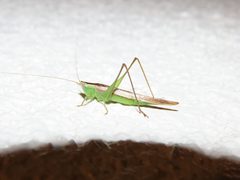
Conocephalus gracillimus, commonly known as the graceful meadow katydid, is a of meadow katydid in the Tettigoniidae. It is native to North America, with records from Florida and broader North American distribution. As a member of the Conocephalinae, it belongs to a group of abundant orthopterans in the eastern United States and adjacent Canada.
Pronunciation
How to pronounce Conocephalus gracillimus: //ˌkɒnəˈsɛfələs ɡrəˈsɪlɪməs//
These audio files are automatically generated. While they are not always 100% accurate, they are a good starting point.
Identification
Members of the Conocephalus (lesser meadow katydids) are generally smaller and more slender than the larger Orchelimum meadow katydids. They possess the long, thread-like characteristic of katydids, distinguishing them from true grasshoppers which have shorter, thicker antennae. Females can be identified by the presence of an elongated ovipositor (-laying appendage) at the rear of the . Specific distinguishing features for C. gracillimus from other Conocephalus are not documented in available sources.
Images
Habitat
As a meadow katydid, it likely inhabits grasslands, meadows, and similar open with herbaceous vegetation. Related Conocephalus are found in tall grass habitats, including wetlands, lush meadows, and prairies.
Distribution
North America, with confirmed records from Florida. The is present across the continent though specific range boundaries are not well documented.
Similar Taxa
- Conocephalus brevipennis (Short-winged Meadow Katydid)Another North American Conocephalus ; distinguished by very short wings relative to body length, whereas C. gracillimus likely has longer wings given its specific epithet meaning 'most slender' or 'most graceful'
- Conocephalus fuscus (Long-winged Conehead)European with prominent long ovipositor; North American Conocephalus species including C. gracillimus are distinct geographically
- Orchelimum spp. (larger meadow katydids)Larger and more robust conocephaline katydids in the same ; Conocephalus are smaller and more slender
More Details
Taxonomic Status
According to Catalogue of Life, Conocephalus gracillimus (Morse, 1901) has been listed as a synonym, though GBIF and NCBI treat it as an accepted . The taxonomic placement places it in the subgenus Conocephalus (Anisoptera).
Etymology
The specific epithet 'gracillimus' is Latin, meaning 'most slender' or 'most graceful', likely referring to the relatively delicate body form compared to related .
Sources and further reading
- BugGuide
- Wikipedia
- GBIF taxonomy match
- iNaturalist taxon
- NCBI Taxonomy
- Catalogue of Life
- Minstrels of the meadow: Short-winged meadow katydid, Conocephalus brevipennis — Bug of the Week
- The Changing Distributions of our Grasshoppers, Crickets and Relatives - Buglife Blog - Buglife
- Bug Eric: Orthoptera Thursday: The Katydid's Menu
- What’s the difference between a cricket and a grasshopper? - Buglife Blog - Buglife
- Bug Eric: Wasp Wednesday: Great Golden Digger
- Bug Eric: October 2022