
Macrobaenetes algodonensis
Tinkham, 1962
Algodones Sand Treader Cricket
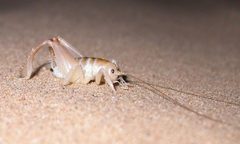
Macrobaenetes algodonensis, the Algodones Sand Treader , is a of camel cricket described by Tinkham in 1962. It belongs to the Rhaphidophoridae, a group of wingless, hump-backed crickets commonly known as camel or cave crickets. The species is to the Algodones Dunes region of southeastern California, where it inhabits sandy desert environments. As a member of the Macrobaenetes, it shares adaptations for life in loose sand with related sand treader crickets.
Pronunciation
How to pronounce Macrobaenetes algodonensis: //ˌmæk.roʊˈbeɪ.nɪˌtiːz ˌæl.ɡəˈdoʊ.nɛn.sɪs//
These audio files are automatically generated. While they are not always 100% accurate, they are a good starting point.
Identification
Distinguished from other camel crickets by its restricted distribution in the Algodones Dunes and association with sandy . Differs from congeneric such as Macrobaenetes kelsoensis and M. valgum in geographic range and subtle morphological characters of the male genitalia and . Accurate identification requires examination of specimens by a .
Images
Habitat
Restricted to the Algodones Dunes, a large sand dune system in the Colorado Desert of southeastern California. Occupies loose, shifting sand environments within this dune system. Specific microhabitat preferences within the dunes are not well documented.
Distribution
to California, United States. Known only from the Algodones Dunes (also known as the Imperial Sand Dunes) in Imperial County, southeastern California. Not recorded elsewhere.
Seasonality
Activity patterns not well documented. Likely active year-round in suitable conditions given the mild winter climate of the region, though surface activity may vary with temperature and moisture.
Behavior
, as is typical for Rhaphidophoridae. specific to this has not been documented in detail.
Ecological Role
Contributes to nutrient cycling in the dune through feeding activities and as prey for desert . Specific ecological functions have not been studied.
Human Relevance
Restricted range makes it potentially vulnerable to disturbance from recreational vehicle use in the Algodones Dunes. Not known to be of direct economic importance.
Similar Taxa
- Macrobaenetes kelsoensisAnother sand treader in the same , found in the Kelso Dunes of the Mojave Desert, California. Differs in geographic distribution and subtle morphological characters.
- Macrobaenetes valgumCongeneric with overlapping general ; distinguished by geographic range and genitalic characters.
- DaihinibaenetesRelated of sand treader crickets also found in southwestern North American deserts; differs in taxonomic characters and usually in specific dune systems occupied.
More Details
Taxonomic History
Described by E.R. Tinkham in 1962, a on Orthoptera of western North America. The Macrobaenetes was established to accommodate sand-dwelling camel crickets with specialized adaptations for life in dunes.
Conservation Status
The restricted range of this to a single dune system subject to heavy recreational use suggests potential conservation concern, though it has not been formally assessed by major conservation authorities.