
Trigonidiidae
Saussure, 1874
Sword-tailed Crickets, Ground Crickets, Wood Crickets, Trigs
Genus Guides
5- Anaxipha(Brown Sword-tail Crickets)
- Cyrtoxipha(Green Trigs)
- Falcicula
- Phyllopalpus(handsome trig)
- Trigonidiinae(trigs)
Trigonidiidae is a of small crickets within the superfamily , comprising two : Nemobiinae (wood/ground crickets) and Trigonidiinae (sword-tail crickets). Members are typically small-bodied with diverse associations ranging from woodland leaf-litter to sandy beaches and urban parks. The family exhibits complex , including calling songs, courtship songs, and substrate-borne vibrational signals in some . Several , including Anaxipha and Cranistus, have been documented using drumming during courtship. Many species remain poorly known, with ongoing taxonomic work describing new species primarily from China and other regions.
Pronunciation
How to pronounce Trigonidiidae: /trɪɡoʊˈnɪdiˌaɪdi/
These audio files are automatically generated. While they are not always 100% accurate, they are a good starting point.
Identification
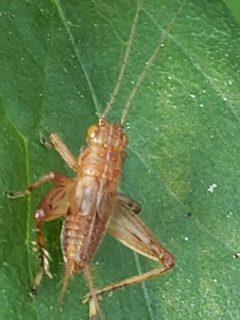
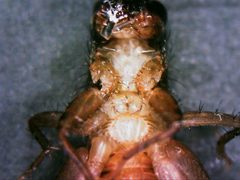
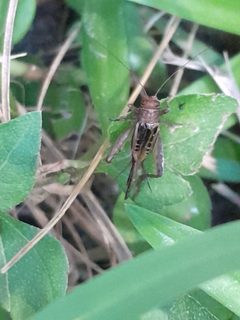
Members of Trigonidiidae are generally small crickets that can be distinguished from other by a combination of morphological features. Nemobiinae (ground/wood crickets) typically have reduced or modified wings and are associated with ground-level . Trigonidiinae (sword-tail crickets) possess elongated, sword-like ovipositors in females. The Zilingxi is characterized by a black line above the , pseudepiphallic paramere of male genitalia with 2–3 branches, and an ovipositor shorter than other genera. Male genitalia structure, particularly the shape and branching of the pseudepiphallic paramere, serves as a key diagnostic character for -level identification. Color patterns on the frontal rostrum also distinguish closely related species.
Images
Habitat
associations vary by . Nemobiinae inhabit woodland leaf-litter, ground vegetation, and semi-wild herb layers; Nemobius sylvestris specifically requires woodland habitat with leaf-litter maintenance. Some Nemobiinae occupy specialized habitats: Dianemobius csikii inhabits sandy beaches, while Polionemobius mikado occurs in lawns. Trigonidiinae species are found in bushes and grasses along open fields or forest edges, as documented for Cranistus colliurides. Urban parks can serve as refugia for some species, as demonstrated by Nemobius sylvestris in Bucharest.
Distribution
Trigonidiidae has a worldwide distribution spanning multiple biogeographic regions. Documented occurrences include: eastern North America ( Anaxipha); Europe including Croatia and Romania; East Asia with concentration in China (provinces of Zhejiang, Yunnan, Hainan); Brazil (Rio Grande do Sul); Cuba (Caribbean); and northwestern Morocco. GBIF records additionally indicate presence in East Tropical Africa, Southern Africa, Caucasus, Malesia, and New Zealand.
Seasonality
timing varies by and is influenced by . Polionemobius mikado exhibits protogyny (earlier female emergence) under short-day photoperiods, with no sexual difference in emergence timing under long-day conditions. Field sampling in northwestern Morocco occurred between spring and summer. Nemobius sylvestris persist in urban parks where is maintained.
Life Cycle
Development includes , nymph, and stages. Nymphal development duration in Polionemobius mikado is -dependent, with protogynous development more pronounced in crickets eclosing later in the year. Ovipositor varies among , with some possessing elongated sword-like ovipositors and others shorter ovipositors.
Behavior
Males produce calling songs to attract females. Courtship involves distinct courtship songs that differ in echeme delivery pattern and syllable details from calling songs. Substrate-borne (drumming) using the sclerotized portion of the occurs during courtship in Anaxipha and variably during calling songs in some species. Cranistus colliurides exhibits a complex communication system with calling, courtship, and post-copulatory songs, with females triggering courtship through . Dianemobius csikii males switch from courtship song to a continuous trill song immediately before copulation. Courtship duration is relatively extended in some species; female Dianemobius csikii remain with the male for approximately 25 minutes during courtship song emission.
Human Relevance
Urban and peri-urban parks serve as important refugia for Trigonidiidae biodiversity, with Nemobius sylvestris documented as surviving in urban Bucharest parks despite residential development pressure. Maintenance of woodland with semi-wild herb layer and leaf-litter is required for persistence. The has been used in studies of and . Some may serve as indicators of habitat quality and connectivity in urban environments.
Similar Taxa
- Gryllidae (true crickets)Trigonidiidae can be distinguished by generally smaller body size, reduced wing development in many Nemobiinae, and the sword-like ovipositor characteristic of Trigonidiinae. Courtship differs: Dianemobius csikii exhibits prolonged courtship with distinct trill song before copulation, unlike typical Gryllinae courtship patterns.
- Mogoplistidae (scaly crickets)Both contain small crickets, but Trigonidiidae lack the distinctive covering the body that characterize Mogoplistidae.
More Details
Acoustic Communication Diversity
Trigonidiidae exhibits diverse signaling modalities beyond airborne sound. Multiple in the Anaxipha (A. exigua, A. tinnulacita, A. tinnulenta, A. thomasi) have been documented using substrate-borne through mandibular drumming. Cranistus colliurides possesses a three-song repertoire (calling, courtship, post-copulatory) combined with substrate vibration signals. Some Chinese Trigonidiinae species are 'mute,' lacking typical calling songs.
Taxonomic Activity
The is subject to intensive recent taxonomic revision, particularly in China. New (Zilingxi) and numerous new have been described from Yunnan, Hainan, and Zhejiang provinces based on morphological and molecular data (COI, 18S, 28S genes). Many species remain undescribed or poorly characterized biologically.
Sexual Dimorphism in Development
Protogyny (earlier female ) has been documented in Polionemobius mikado and is -dependent, representing an unusual pattern as most insects exhibit protandry (earlier male emergence). This trait is adaptive in relation to environmental seasonality encountered by eclosing females.
Sources and further reading
- BugGuide
- Wikipedia
- GBIF taxonomy match
- iNaturalist taxon
- NCBI Taxonomy
- Catalogue of Life
- A new species of Parapteronemobius from Zhejiang, China (Orthoptera: Trigonidiidae: Nemobiinae)
- Two new species of ground crickets (Orthoptera: Trigonidiidae; Nemobiinae) from China
- New and little-known mute Trigonidiinae species from China (Orthoptera: Grylloidea: Trigonidiidae)
- Dwarf Cricket, Stenonemobius gracilis (Jakovlev, 1871) (Orthoptera: Trigonidiidae), new to Croatian fauna Tajnoviti patuljasti šturak, Stenonemobius gracilis (Jakovlev, 1871) (Orthoptera: Trigonidiidae), novi za hrvatsku faunu
- Urban parks as a refuge for the Wood-cricket, Nemobius sylvestris (Orthoptera: Trigonidiidae)
- Two new species of genus Svistella Gorochov, 1987 from China (Orthoptera: Trigonidiidae: Trigonidiinae)
- Substrate-borne vibrations used during acoustic communication and the existence of courtship songs in some species of the genus Anaxipha (Saussure) (Orthoptera: Trigonidiidae: Trigonidiinae)
- RARE OR POORLY KNOWN CARIBBEAN ORTHOPTERANS. PART 1. THE TRUE GENERIC IDENTITY OF HYGRONEMOBIUS HISTRIONICUS ZAYAS, 1976 (ORTHOPTERA: TRIGONIDIIDAE: NEMOBIINAE)
- A new species of Paratrigonidium Brunner von Wattenwyl, 1893 from Hainan, China (Orthoptera: Trigonidiidae; Trigonidiinae)
- The complex communication signals in the mating behavior of the tropical cricket Cranistus colliurides Stål, 1861 (Orthoptera: Grylloidea; Trigonidiidae: Phylloscyrtini)
- Mating behavior and three types of mating songs of the sandy beach-dwelling ground cricket Dianemobius csikii (Grylloidea, Trigonidiidae, Nemobiinae)
- Two new species of the genus Rhicnogryllus Chopard, 1925 from Hainan, China (Orthoptera: Trigonidiidae: Trigonidiinae)
- Taxonomy and distribution of some orthopteran species (Orthoptera: Gryllidae, Trigonidiidae, Acrididae) from northwestern Morocco
- Photoperiodic control of protogyny in the lawn ground cricket, Polionemobius mikado (Orthoptera: Trigonidiidae)
- A new species of genus Homoeoxipha Saussure, 1874 from China (Orthoptera: Trigonidiidae: Trigonidiinae)