
Anaxipha
Saussure, 1874
Brown Sword-tail Crickets
Species Guides
10- Anaxipha calusa(Calusa Trig)
- Anaxipha delicatula(chirping trig)
- Anaxipha exigua(Say's trig)
- Anaxipha fultoni(Fulton's Trig)
- Anaxipha hyalicetra(Ruby Road Trig)
- Anaxipha imitator(Cuban trig)
- Anaxipha rosamacula(Pink-spotted Trig)
- Anaxipha tinnula(Tidewater Trig)
- Anaxipha tinnulacita(Fast-tinkling Trig)
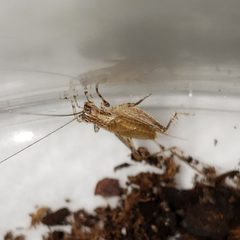
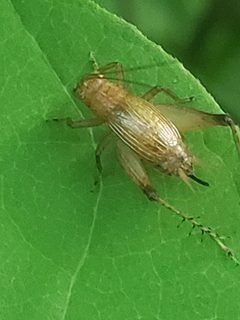
Anaxipha is a of small swordtail crickets distributed across tropical and subtropical regions worldwide, including the Americas, Africa, Asia, Australia, and western Pacific islands. Members are known as "brown sword-tail crickets" and are characterized by their systems, which in several studied include both calling songs and previously undocumented courtship songs with substrate-borne vibrational signals (drumming). Some species occupy agricultural such as rice fields, where they function as .
Pronunciation
How to pronounce Anaxipha: //əˈnæksɪfə//
These audio files are automatically generated. While they are not always 100% accurate, they are a good starting point.
Identification
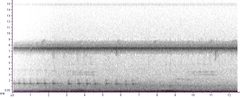
Members of this can be distinguished from other trigonidiine crickets by the sword-like extension of the female ovipositor (the "sword-tail" characteristic). -level identification requires examination of male genitalia and analysis of calling song patterns, which vary in echeme delivery, syllable structure, and pulse train rates. Some North American species exhibit broad tegmina relative to .
Images
Habitat
Tropical and subtropical environments including forests, grasslands, and agricultural systems. Specific documented include rice fields in Indonesia and isolated urban green spaces in Tokyo. One described from southeastern Arizona occurs in semiarid regions adjacent to the Mexico border.
Distribution
Pantropical and subtropical distribution spanning East Tropical Africa, Southern Africa, Mexico, Brazil, Argentina (Northeast), Asia, Australia, and western Pacific islands. Documented occurrence in urban green spaces in Tokyo, Japan, and rice agroecosystems in Indonesia.
Diet
Anaxipha longipennis has been observed as a feeding on of rice leaf folders (Cnaphalocrocis medinalis) and small insects including rice hoppers (Nilaparvata lugata and related ). Dietary habits for the as a whole remain undocumented.
Life Cycle
Females of at least one (A. longipennis) insert into stems or leaf of living plants including rice (Oryza sativa) and various weed species. Oviposition site selection has been demonstrated to influence persistence in agricultural .
Behavior
Males of several North American (A. exigua, A. tinnulacita, A. tinnulenta, A. thomasi) produce courtship songs distinct from calling songs in pattern of echeme delivery and syllable details. During courtship, males perform substrate-borne (drumming) using the sclerotized portion of their to impact the substrate. Drumming during calling songs occurs variably among species, being most common in A. tinnulacita. Anaxipha pallidula occurrence in urban Tokyo is negatively correlated with sound level and road traffic noise, indicating sensitivity to acoustic degradation. The possibility of aggressive song has been noted in A. hyalicetra.
Ecological Role
A. longipennis functions as a in rice with potential as a agent for rice leaf folder and rice hoppers. The contributes to acoustic structure in both natural and urban soundscapes.
Human Relevance
A. longipennis has been investigated for its potential role in of rice pests. Urban noise pollution has been documented to negatively affect occurrence of A. pallidula in Tokyo green spaces, illustrating sensitivity of acoustic insects to anthropogenic modification.
Similar Taxa
- TrigonidiumBoth are trigonidiine crickets with sword-like ovipositors; Anaxipha is distinguished by specific male genitalia and documented presence of courtship songs with substrate-borne drumming in multiple , features not reported for Trigonidium.
- CyrtoxiphaBoth small trigonidiid crickets with ; Anaxipha typically have brown coloration and sword-tail ovipositor, while Cyrtoxipha species often exhibit different color patterns and calling song structures.
More Details
Acoustic Communication Diversity
The exhibits complex acoustic signaling including -specific calling songs and, in at least four North American species, distinct courtship songs accompanied by -based substrate drumming—a form of previously undocumented in the genus.
Taxonomic History
Many within the were only recently described and their calling songs characterized, indicating ongoing taxonomic revision and discovery, particularly in eastern North America.
Sources and further reading
- BugGuide
- Wikipedia
- GBIF taxonomy match
- iNaturalist taxon
- NCBI Taxonomy
- Catalogue of Life
- Anaxipha hyalicetra sp. n. (Gryllidae: Trigonidiinae), a new sword-tailed cricket species from Arizona
- Ketertarikan Anaxipha longipennis Serville (Orthoptera: Gryllidae) terhadap Beberapa Jenis Gulma di Sawah sebagai Tempat Bertelur
- Effects of complex soundscapes on the occurrence of Anaxipha pallidula in isolated green spaces in Tokyo
- Substrate-borne vibrations used during acoustic communication and the existence of courtship songs in some species of the genus Anaxipha (Saussure) (Orthoptera: Trigonidiidae: Trigonidiinae)