
Velarifictorus
Randell, 1964
Species Guides
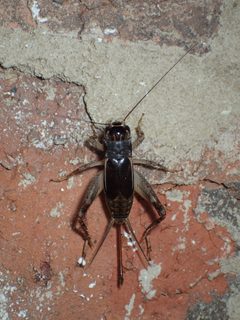
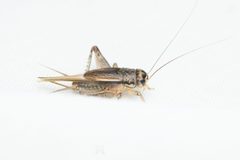
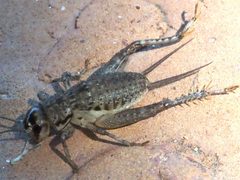
1- Velarifictorus micado(Japanese Burrowing Cricket)
Velarifictorus is a of crickets in the Gryllidae, tribe Gryllini. occur naturally across Australia, Asia, and Africa, with at least one species introduced to eastern North America. The genus includes both wing-dimorphic species exhibiting trade-offs between capability and , and species with discrete modes adapted to different climatic conditions.
Pronunciation
How to pronounce Velarifictorus: //vɛˌlɛrɪˈfɪktərəs//
These audio files are automatically generated. While they are not always 100% accurate, they are a good starting point.
Images
Habitat
vary by . Velarifictorus micado is generally associated with urban environments and human habitation, though specimens have been captured in more remote areas. Species in the have been recorded from diverse environments including tropical forest (Borneo), arid regions, and coastal areas.
Distribution
Native range includes Australia, Asia, and Africa. Velarifictorus micado was introduced to the eastern United States in 1959 and has since expanded to the eastern Great Plains and northern United States. One has been described from Borneo (Brunei), with V. aspersus also recorded there.
Life Cycle
Velarifictorus micado exhibits discrete modes of : fast-hatching with nymphal , and slow-hatching populations with diapause. Photoperiodic responses in nymphal development differ between these forms, with nymphal diapause populations showing slower development under short-day conditions ( 12:12) and egg diapause populations showing slower development under long-day conditions (LD 16:8). These adaptations synchronize stages with local climate.
Behavior
Males of V. aspersus exhibit wing dimorphism with distinct behavioral and physiological trade-offs. Long-winged males possess better-developed muscles but slower reproductive organ development; short-winged males produce heavier and mate more frequently. Fighting in male V. aspersus is modulated by resource availability and nitric oxide signaling: males fight more aggressively when burrows or females are present, and NO synthase inhibition affects fighting intensity depending on resource conditions.
Human Relevance
Velarifictorus micado was introduced to North America by humans and has become established in urban areas. The ' range expansion has been tracked using citizen science platforms (BugGuide, iNaturalist), which have proven effective for monitoring its spread. Observations in atypical suggest potential ecological impacts from this introduction.
Sources and further reading
- BugGuide
- Wikipedia
- GBIF taxonomy match
- iNaturalist taxon
- NCBI Taxonomy
- Catalogue of Life
- Introduced Japanese burrowing cricket (Orthoptera: Gryllidae: Velarifictorus (Velarifictorus) micado) range continues to expand in North America
- Discrete Modes of Life Cycle in Velarifictorus micado Species Complex (Orthoptera: Gryllidae)
- Trade‐off between flight capability and reproduction in male Velarifictorus asperses crickets
- The genetic differentiation of a cricket (Velarifictorus micado) with two modes of life cycle in East Asia after the middle Pleistocene
- First Velarifictorus (Orthoptera: Gryllidae, Gryllinae) cricket described from Borneo (Southeast Asia) and notes on a co-occurring congener
- Critical Flight Time for Switch from Flight to Reproduction in the Wing Dimorphic Cricket Velarifictorus aspersus
- Redescription of two species and a new distribution record for China of the genus MelanogryllusChopard, 1961 and a report of one new species of the genus Velarifictorus Randell, 1964 (Orthoptera: Gryllidae; Gryllinae)
- Effect of a Nitric Oxide Synthase Inhibitor on Fighting Behavior of Male Crickets Velarifictorus aspersus (Orthoptera: Gryllidae) under Different Resource Conditions
- Effects of physical and social experiences and octopamine receptor agonist on fighting behavior of male crickets Velarifictorus aspersus (Orthoptera: Gryllidae)
- Jumping Kinematics and Performance in Fighting Crickets Velarifictorus micado.