
Ellipes minuta
(Scudder, 1862)
Smaller Sand Cricket
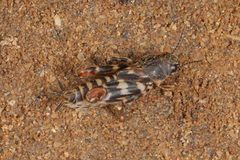
Ellipes minuta, commonly known as the Smaller Sand , is a of pygmy in the Tridactylidae. This small orthopteran is adapted for burrowing in sandy substrates, with modified forelegs for digging. The species occurs across a broad geographic range including parts of North, Central, and South America. Like other members of the Ellipes, it inhabits moist sandy areas near water bodies where it can burrow and feed.
Pronunciation
How to pronounce Ellipes minuta: /ˈɛl.ɪˌpiːz maɪˈnuː.tə/
These audio files are automatically generated. While they are not always 100% accurate, they are a good starting point.
Identification
Distinguished from other Tridactylidae by its small size and specific genitalic characters; from congeneric by subtle differences in pronotal shape and male genitalia structure. The Ellipes is separated from other tridactylid genera by the structure of the hind and other skeletal features. Accurate identification typically requires examination of male genitalia or molecular analysis.
Images
Habitat
Moist sandy soils, particularly along the margins of streams, rivers, ponds, and lakes; also found in sandy areas with sufficient moisture to support burrowing activity.
Distribution
Recorded from Alabama (United States), Belize, Colombia, Rica, Cuba, and likely occurs more broadly in suitable sandy across the Neotropics and southeastern United States.
Similar Taxa
- Ellipes eisneriCongeneric with similar preferences and ; distinguished by male genitalic characters and subtle differences in body proportions.
- Neotridactylus spp.Other pygmy mole crickets in the same with similar adaptations; separated by differences in tarsal structure and genitalia.
- Tridactylus spp.Old World pygmy mole crickets with convergent ; not naturally sympatric with E. minuta but may be confused in museum collections.
More Details
Taxonomic History
Originally described as Tridactylus minutus by Scudder in 1862, later transferred to the Ellipes based on revised understanding of tridactylid .
Conservation Status
Not formally assessed by IUCN; likely vulnerable to loss through development of riparian sandy areas and water pollution affecting aquatic margins.
Sources and further reading
- BugGuide
- GBIF taxonomy match
- iNaturalist taxon
- NCBI Taxonomy
- Catalogue of Life
- Tiny raptors: Mantisflies, Mantispidae, and Praying mantises, Mantidae — Bug of the Week
- Bug Eric: Last Night to Blacklight?
- For an Understudied Ant Genus, Two Researchers Choose a "Bird Guide" ID Tool
- Bug Eric: October 2022
- Uncategorized | Blog - Part 12