Trimerotropis verruculata verruculata
(Kirby, 1837)
Crackling Locust, Crackling Forest Grasshopper
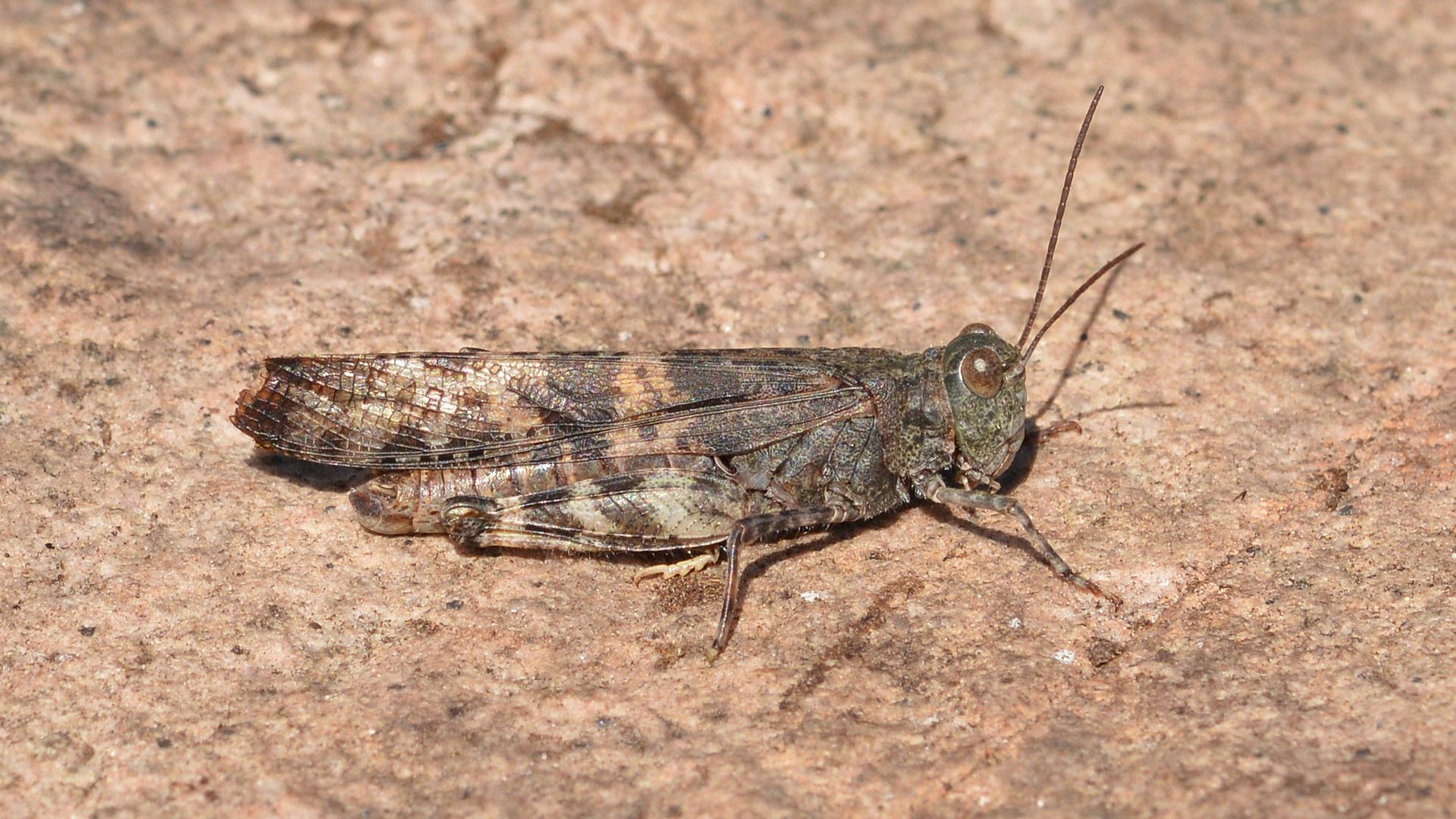
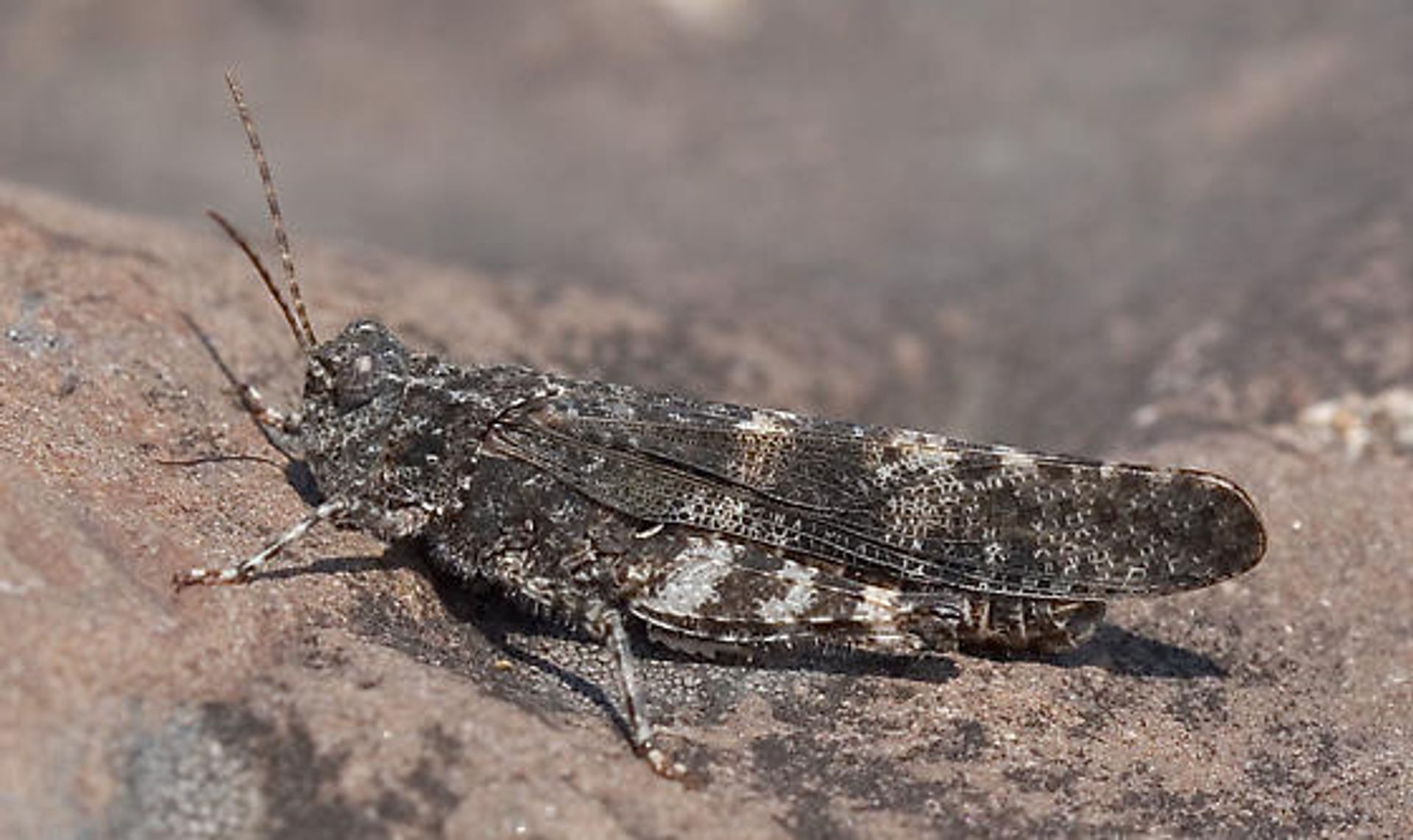
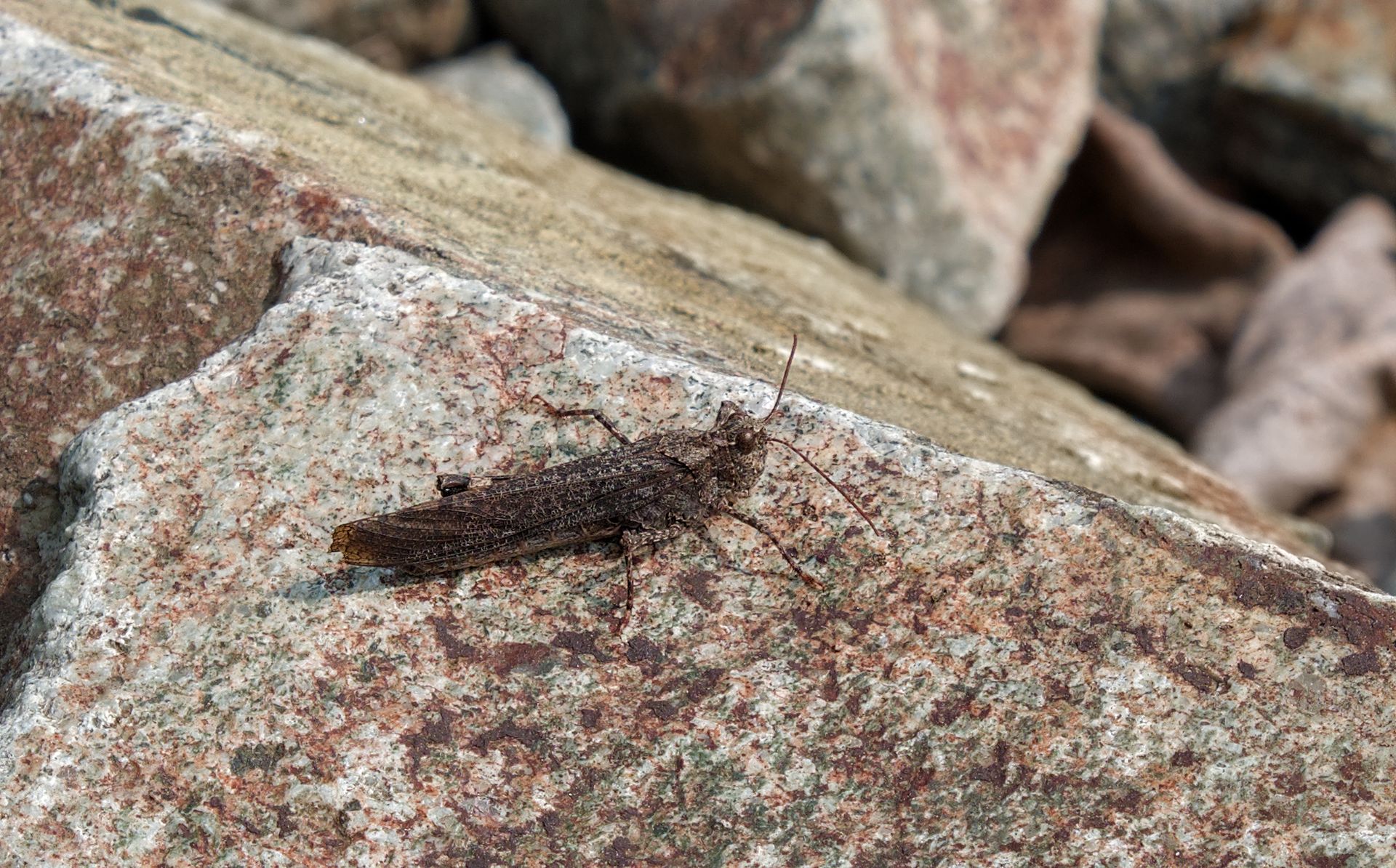
Trimerotropis verruculata verruculata is a of band-winged grasshopper in the Acrididae, commonly known as the Crackling Locust or Crackling Forest Grasshopper. It is distinguished by its forest-dwelling habits and the characteristic crackling sound produced by its wings in . The subspecies exhibits cryptic coloration adapted to woodland environments.
Pronunciation
How to pronounce Trimerotropis verruculata verruculata: /ˌtraɪməˈrɒtrəpɪs vəˌrʊkjʊˈleɪtə vəˌrʊkjʊˈleɪtə/
These audio files are automatically generated. While they are not always 100% accurate, they are a good starting point.
Identification
Distinguished from other Trimerotropis by its association with forested rather than open grasslands or rocky areas. The nominate T. v. verruculata can be separated from T. v. suffusa by geographic distribution and subtle differences in coloration and wing patterns. Identification typically requires examination of the male genitalia and wing venation patterns.
Images
Habitat
Forested environments, particularly coniferous and mixed woodlands. Associated with forest floor litter and understory vegetation rather than open rangeland or rocky exposures typical of many .
Distribution
North America: recorded from British Columbia, California, New Mexico, and Vermont. The nominate occupies the northern and western portions of the range, while T. v. suffusa occurs in more southern and interior regions.
Behavior
Produces a distinctive crackling or snapping sound during , created by the interaction of wing . This acoustic signal is a key behavioral characteristic of the . are capable of sustained flight and may disperse between forest patches.
Human Relevance
Contributes to forest dynamics as a herbivore in woodland understory . Not considered an agricultural pest due to its forest preference.
Similar Taxa
- Trimerotropis verruculata suffusaOverlaps in distribution and ; distinguished by geographic range and subtle differences in coloration and genitalia structure.
- Trimerotropis latifasciataSimilar band-winged but occupies open clay and lichen-encrusted rather than forests; has red hind tibiae and longer wings.
- Trimerotropis saxatilisShares cryptic lichen-matching coloration but occurs on rock outcrops rather than forested environments; more greenish in coloration.