
Trimerotropis verruculata suffusa
Scudder, 1876
Crackling Forest Grasshopper
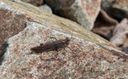
Trimerotropis verruculata suffusa is a of bandwinged in the Acrididae, commonly known as the Crackling Forest Grasshopper. It belongs to the Oedipodinae , characterized by their ability to produce sound during . The subspecies designation indicates geographic variation within the broader T. verruculata. Available records indicate presence across western North America including British Columbia, California, New Mexico, and Vermont.
Pronunciation
How to pronounce Trimerotropis verruculata suffusa: //ˌtrɪmɛroʊˈtroʊpɪs vəˌrʊkjʊˈlɑːtə səˈfjuːzə//
These audio files are automatically generated. While they are not always 100% accurate, they are a good starting point.
Images
Habitat
High-elevation mountain meadows. The source explicitly groups this with "other high-elevation mountain meadow " that are underrepresented in rangeland surveys due to their preferences.
Distribution
British Columbia, California, New Mexico, and Vermont in North America. Distribution records indicate presence in these jurisdictions, though survey data note this is underrepresented due to concentration of collecting efforts in eastern Wyoming rangelands rather than mountainous regions.
Behavior
Produces crackling sounds during , a characteristic of the Oedipodinae (bandwinged grasshoppers) to which this belongs. The "Crackling Forest Grasshopper" derives from this acoustic .
Similar Taxa
- Trimerotropis verruculata (nominate subspecies)The nominate of the same , distinguished by geographic distribution and potentially subtle morphological differences that led to the subspecific designation.
- Arphia conspersa (Specklewinged Grasshopper)Another bandwinged that shares the crackling sound production and mountain meadow preferences; may overlap in timing and elevation range.
- Trimerotropis suffusaExplicitly mentioned in source as another high-elevation mountain meadow with similar preferences and survey underrepresentation; may share .
More Details
Survey Underrepresentation
This is explicitly noted as underrepresented in the Wyoming survey database due to geographic in collection efforts. The survey concentrated on eastern Wyoming rangelands and the Big Horn Basin, while mountainous areas received the least collecting effort. This bias affects interpretation of distribution maps and abundance data.
Taxonomic Authority
Described by Scudder in 1876, with the subspecific epithet 'suffusa' indicating a named for its suffused or diffused coloration pattern.