
Shotwellia isleta
Gurney, 1940
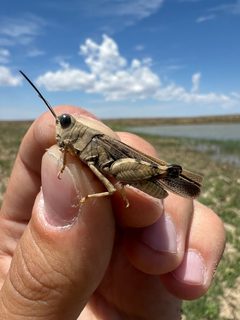
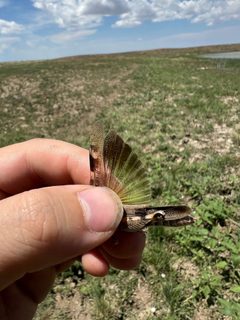
Shotwellia isleta is a rare, band-winged grasshopper described by Gurney in 1940. Molecular phylogenetic analysis places it as sister to other within the Chortophaga genus group of Oedipodinae. The is a restricted to isolated locations in the Chihuahuan Desert.
Pronunciation
How to pronounce Shotwellia isleta: //ʃɒtˈwɛliə ɪsˈleɪtə//
These audio files are automatically generated. While they are not always 100% accurate, they are a good starting point.
Identification
As the sole member of its , Shotwellia isleta can be distinguished from other Chortophagini genera by a combination of morphological and behavioral traits. Molecular data support its placement as sister to Chortophaga, Spharagemon, and related genera. Specific diagnostic morphological characters are not detailed in available sources.
Images
Habitat
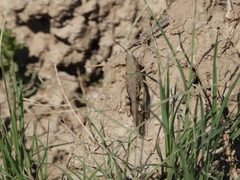
Freshwater ephemeral desert lake beds (playas) in the Chihuahuan Desert. These temporary wetland form in shallow depressions following rainfall events.
Distribution
Known from a few isolated localities in the Chihuahuan Desert of New Mexico, USA and adjacent Mexico. GBIF records confirm presence in New Mexico.
Human Relevance
of conservation concern. loss from human activity impacting ephemeral lake bed systems. Understanding its informs conservation and management decisions.
Similar Taxa
- ChortophagaShotwellia isleta is sister to Chortophaga and related within the Chortophaga genus group; historically classified near this genus before molecular analysis clarified relationships
- SpharagemonMember of the same group (Chortophaga group) with which Shotwellia shares a common ancestor
More Details
Phylogenetic significance
Shotwellia represents a distinct lineage whose uncertain taxonomic placement has been resolved through combined molecular and morphological analysis. Its position as sister to other Chortophagini indicates early divergence within this group.
Rarity and survey effort
Only 9 observations recorded on iNaturalist as of source date, reflecting both natural rarity and specialization. Field sampling required targeted surveys of ephemeral lake bed habitats.