Encoptolophus
Scudder, 1875
dusky grasshoppers, clouded grasshoppers, pale clouded grasshopper, western clouded grasshopper, coast clouded grasshopper, southwestern dusky grasshopper
Species Guides
5- Encoptolophus costalis(Dusky Grasshopper)
- Encoptolophus pallidus(pale clouded grasshopper)
- Encoptolophus robustus(coast clouded grasshopper)
- Encoptolophus sordidus(clouded grasshopper)
- Encoptolophus subgracilis(southwestern dusky grasshopper)
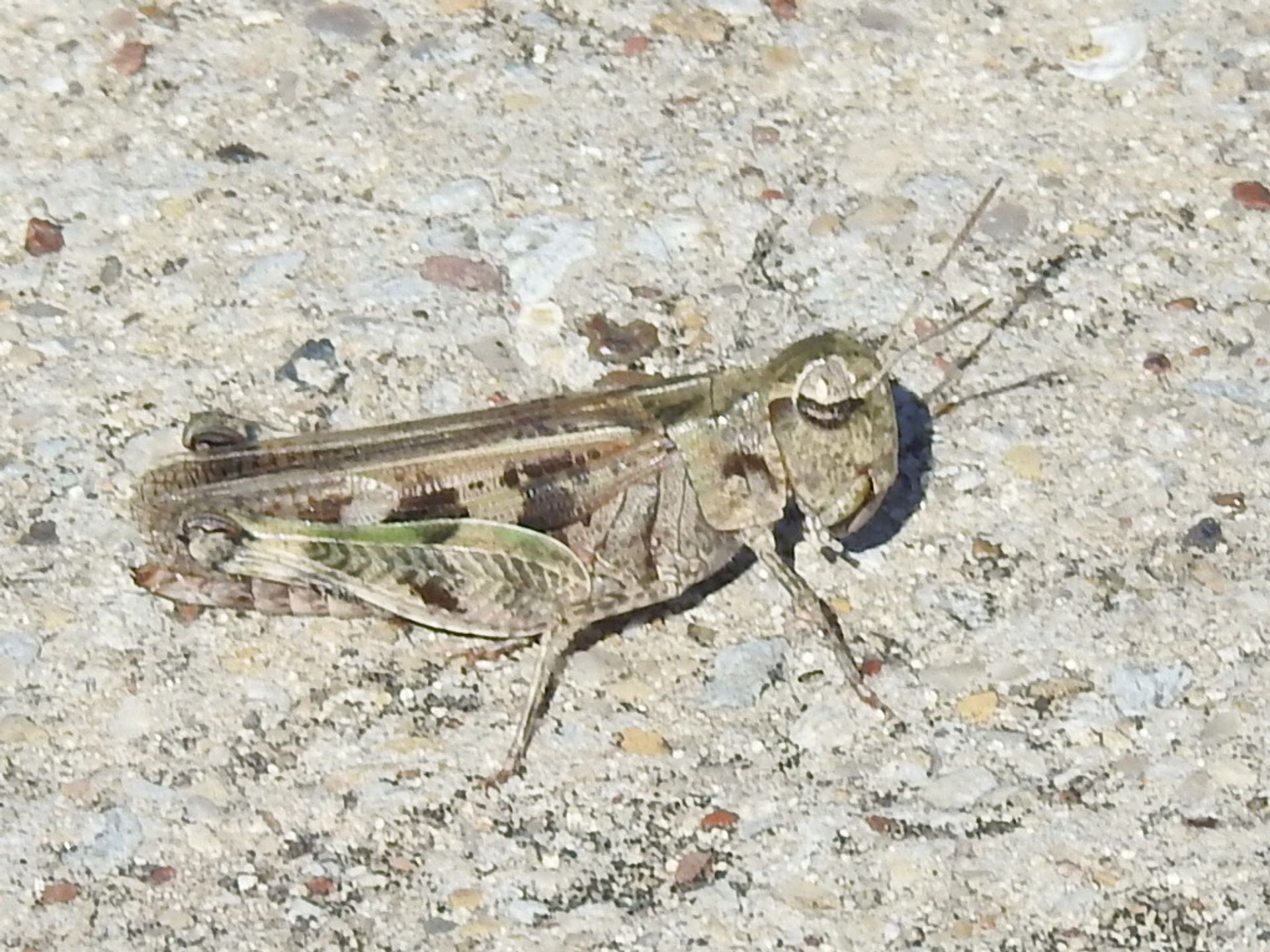
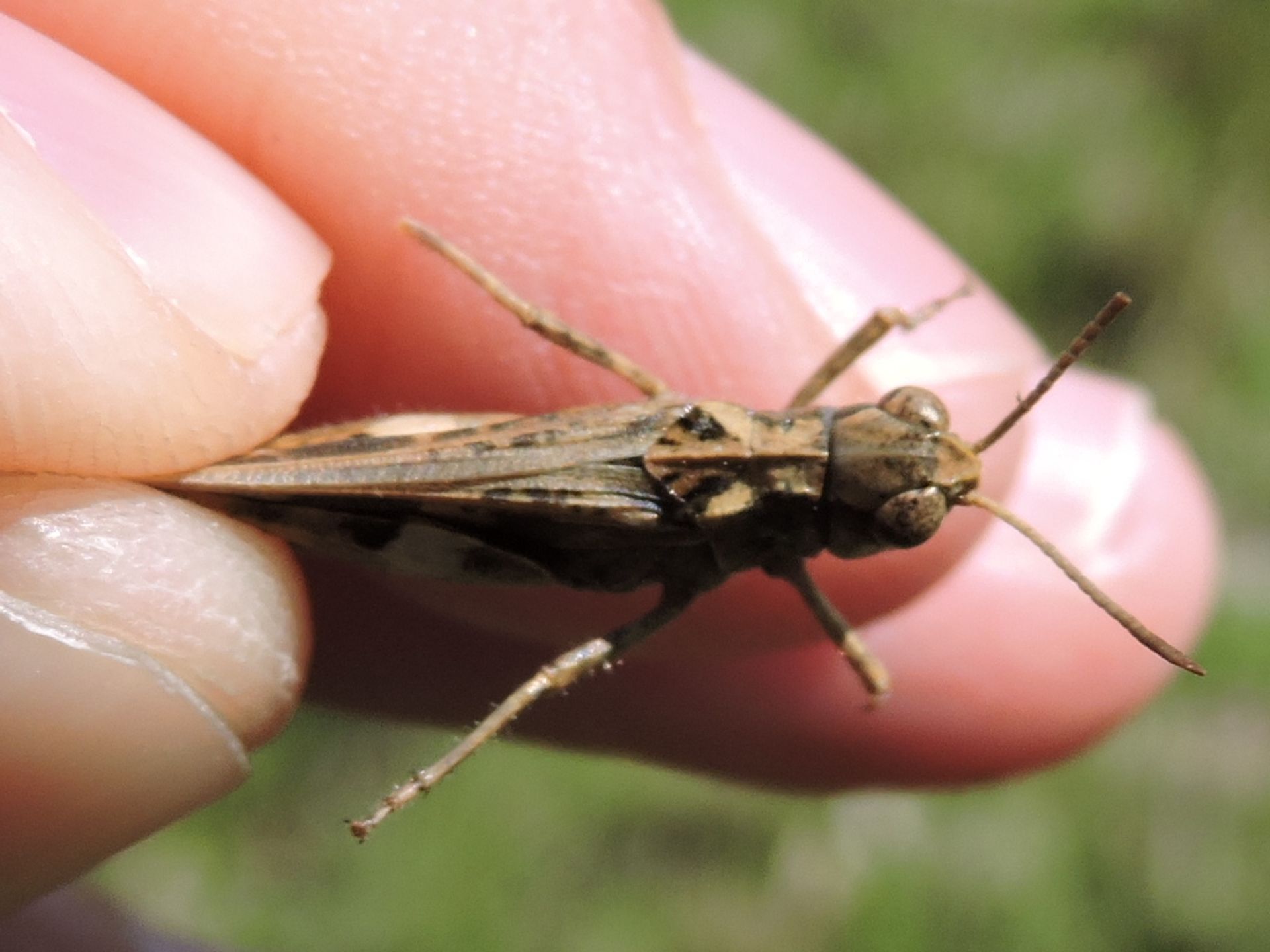
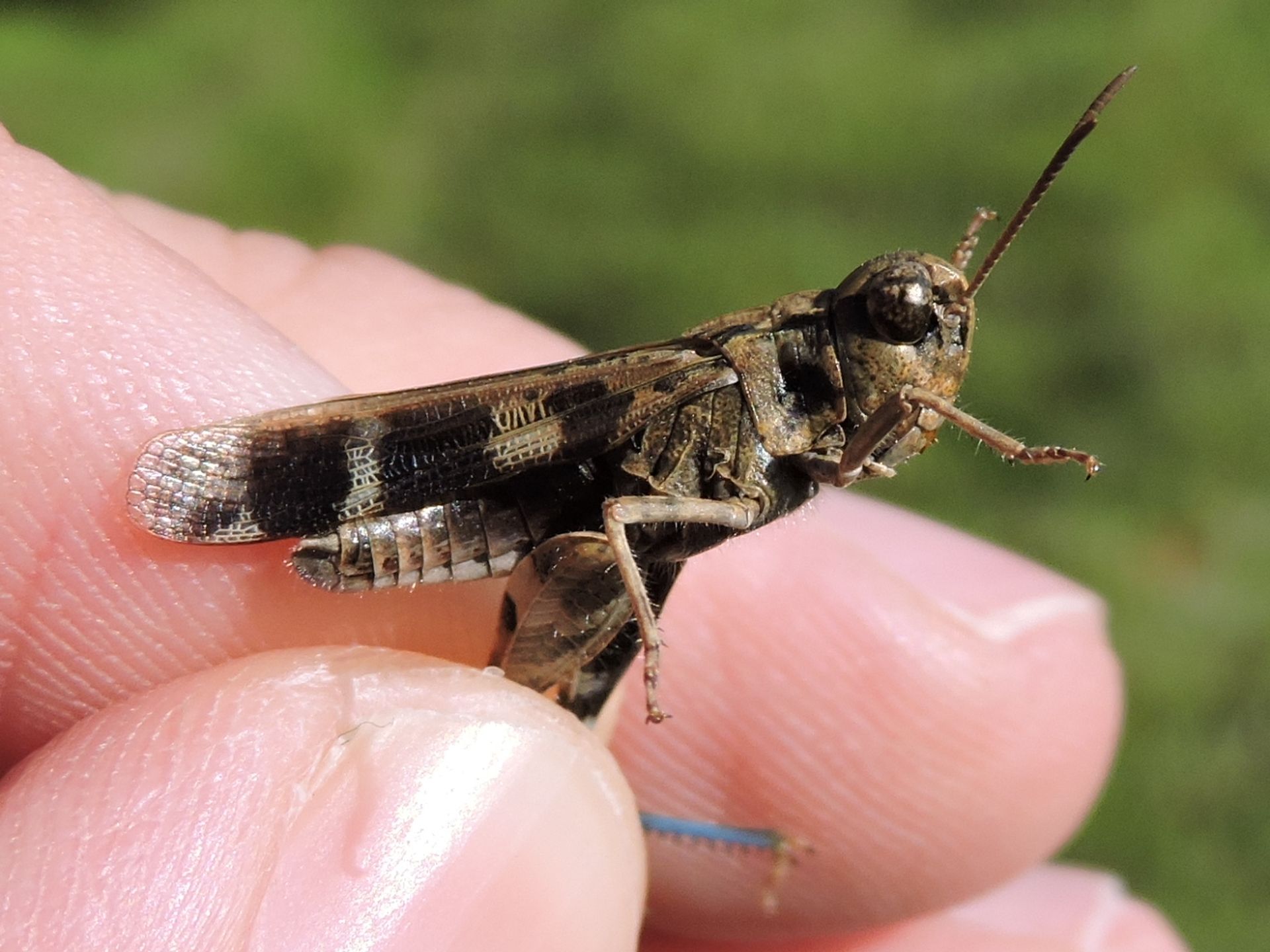
Encoptolophus is a of band-winged grasshoppers comprising approximately eight described distributed across western North America. Members of this genus are medium-sized grasshoppers characterized by long wings extending beyond the , banded tegmina, and often blue hind tibiae. The genus has undergone taxonomic revision, with species formerly assigned to Encoptolophus now placed in the new genus Nebulatettix and in Chimarocephala. Several species serve as important components of grassland , with some achieving local dominance in mixedgrass and shortgrass prairie .
Pronunciation
How to pronounce Encoptolophus: //ɛnˌkɒptəˈloʊfəs//
These audio files are automatically generated. While they are not always 100% accurate, they are a good starting point.
Identification
distinguished from similar by combination of long wings extending beyond , banded tegmina, blue hind tibia, and fastigium longer than wide. Nymphs identifiable by in instars I-III (becoming in IV-V), four distinct longitudinal ridges with black lines between them on outer of fore- and midleg and tibiae, and pink medial area of hind femur in half of instar I. Pronotum disk slopes moderately with obtuse angle (not tectate as in Chortophaga). Early instars may be confused with Chortophaga viridifasciata but differ in antennal shape, leg ridge structure, and hind femur coloration.
Images
Appearance
Medium-sized grasshoppers with long wings that extend 1-4 mm beyond the tip. Tegmina are banded; hind wings possess weak dark bands that may occasionally be dark and distinct. Body coloration ranges from dark brown to greenish. Hind tibia is blue. Hind outer surface displays three dark bands (weak or absent in green specimens), with dark knee. Fastigium is distinctly longer than wide in males, and ranges from slightly to distinctly longer than wide in females.
Habitat
Inhabits grasslands including mixedgrass prairie, shortgrass prairie, bunchgrass prairie, and desert prairies. Most abundant in northern mixedgrass prairie. Favors moist areas with rich grass and sedge growth interspersed with bare ground. In southern distribution, occupies mesic swales and roadsides dominated by western wheatgrass, and prairies with Houston black clay soil dominated by Texas needlegrass. Also found in fine sandy loam soils. Requires bare ground for basking and oviposition.
Distribution
Western North America from Canada to Mexico. Documented in Colorado, Montana, Nebraska, and Mexico (Central and Northeast regions). Ranges widely across western plains and prairie .
Seasonality
Intermediate-developing . Hatching begins early to mid June in northern mixedgrass prairie, continuing for six to eight weeks. appear August 8-14 in Wyoming and Saskatchewan. In southern distribution (northeastern Texas), adults appear by mid April with second adults by August, and stages present year-round with at least two generations annually.
Diet
Primarily feeds on grasses and sedges. Principal plants include western wheatgrass (Pascopyrum smithii) and needleleaf sedge (Carex eleocharis). Other consumed plants include northern wheatgrass, needleandthread, green needlegrass, blue grama, quackgrass, prairie junegrass, sand dropseed, little bluestem, sideoats grama, Kentucky bluegrass, foxtail barley, timothy, and Penn sedge. Forbs constitute approximately 1% of natural diet but may be consumed under stress conditions or in atypical ; laboratory tests show acceptance of scarlet globemallow, prairie coneflower, dandelion, and vetch.
Host Associations
- Pascopyrum smithii - principal plantwestern wheatgrass
- Carex eleocharis - preferred food plantneedleleaf sedge; consumed at more than twice the rate expected by abundance, especially important for early instars
- Hesperostipa comata - food plantneedleandthread
- Nassella viridula - food plantgreen needlegrass
- Bouteloua gracilis - food plantblue grama
- Elymus repens - food plantquackgrass
- Koeleria macrantha - food plantprairie junegrass
- Sporobolus cryptandrus - food plantsand dropseed
- Schizachyrium scoparium - food plantlittle bluestem
- Bouteloua curtipendula - food plantsideoats grama
- Poa pratensis - food plantKentucky bluegrass
- Hordeum jubatum - food plantfoxtail barley
- Phleum pratense - food planttimothy
- Carex pennsylvanica - food plantPenn sedge
Life Cycle
stage overwinters. Hatching begins early to mid June in northern range, with prolonged hatching period of six to eight weeks. Nymphal development requires five instars for both sexes, lasting 56-66 days based on field observations. appear mid-August in northern latitudes; earlier in southern distribution with multiple possible. Fledgling adults require two to three weeks of growth and maturation before mating. Oviposition may begin by day 16 of adulthood. Egg pods are 3/4 inch long, slightly curved, containing 14-20 tan eggs measuring 4.0-4.4 mm.
Behavior
Geophilus spending nearly all time on the ground. resting position: sitting horizontally on bare soil and litter, often under thin of leaves surrounded by grasses. Basking : one to two hours after sunrise, individuals turn side perpendicular to sun rays and lower associated hindleg to expose for two to three hours. Second basking period occurs late in day until sunset. Feeding occurs during midday hours (9:12 a.m. to 1:27 p.m.) at ground temperatures 76-126°F. At extreme high temperatures (125°F+), takes evasive actions: resting in partial shade, sitting on grass 0.5 inch above ground, crawling into full shade, or climbing onto litter facing sun to minimize body exposure. Males make frequent to arouse females; when pursuing potential mate on ground, produces single burst of vibratory stridulation followed by single pulse of ordinary stridulation while moving toward individual. and by flight enabled by long wings and strong thoracic muscles; documented fall dispersal events including mixed species swarms and movement from depleted rangeland into adjacent crops.
Ecological Role
Rangeland herbivore, typically subdominant member of that contributes to cumulative grazing pressure. In favorable , may become locally (documented at 74% of grasshopper at Matador site, Saskatchewan). Consumes approximately 1.5-2.4% of grass production in studied populations. Serves as prey for various vertebrate and in grassland .
Human Relevance
Minor agricultural pest. Reported as minor pest in alfalfa in Arizona and North Dakota, and as pest in fall wheat in Nebraska ( migrated from depleted rangeland into adjacent wheat crop). Generally causes limited damage individually but contributes to cumulative defoliation in multi- . No significant direct economic impact documented; typically too low for standalone pest status.
Similar Taxa
- Chortophaga viridifasciataEarly instar nymphs appear similar—both usually green and structurally similar. Distinguished by: (not ) ; two distinct longitudinal ridges on fore- and midleg /tibiae with weak third ridge and no black lines between ridges (vs. four distinct ridges with black lines); entirely green hind femur in instar I (vs. pink in half); tectate (steep roof-like) pronotum disk with acute angle in instars IV-V (vs. moderately sloping with obtuse angle).
- NebulatettixFormerly classified within Encoptolophus; separated based on phylogenetic analysis showing Encoptolophus as historically non-monophyletic. Members transferred to new Nebulatettix based on morphological and molecular characters.
- ChimarocephalaEncoptolophus californicus transferred to this based on phylogenetic revision; historically used combination now restored.
More Details
Taxonomic Revision
Phylogenetic analysis of the Chortophaga group resolved Encoptolophus as non-monophyletic, leading to erection of new genus Nebulatettix to accommodate one former Encoptolophus clade, and transfer of Encoptolophus californicus to Chimarocephala.
Oviposition Substrate Preference
When given choice of five Texas soil types ranging from clay to gravel, ovipositing females strongly preferred Houston black clay (111 of 204 pods laid in this soil type).
Population Dynamics
At Matador site (Saskatchewan), declined 1968-1971 despite luxuriant vegetation growth; hypothesized cause was decreased soil temperature from shading, delaying development and reducing production. Fire disturbance followed by vegetation recovery created favorable with bare ground, attracting immigrants from unburned areas.
Sources and further reading
- BugGuide
- Wikipedia
- GBIF taxonomy match
- iNaturalist taxon
- NCBI Taxonomy
- Catalogue of Life
- Comparison
- Grasshoppers of Colorado
- Grasshoppers of Colorado
- Dusky Grasshopper
- Grasshoppers of Colorado
- Grasshoppers of Colorado
- Food preferences of the dusky grasshopper, Encoptolophus sordidus costalis (Scudder) (Orthoptera: Acrididae)
- A phylogenetic review of the North American band-winged grasshopper genus, Encoptolophus Scudder with description of Nebulatettix gen.n. (Orthoptera: Acrididae: Oedipodinae)