
Anacridium
Uvarov, 1923
tree locusts, bird grasshoppers
Species Guides
1- Anacridium aegyptium(Egyptian grasshopper)
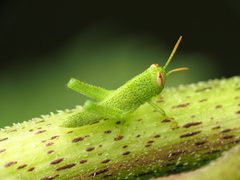
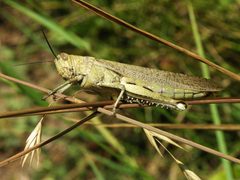
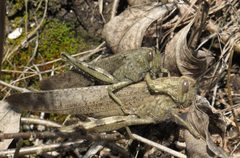
Anacridium is a of large grasshoppers commonly known as tree locusts or bird grasshoppers, placed in the Cyrtacanthacridinae. The genus contains approximately 13 described distributed across Africa, the Middle East, and parts of southern Europe and Asia. Anacridium aegyptium, the Egyptian , serves as the type species and is among the most studied members of the genus. Species in this genus are associated with woody vegetation and have been documented as occasional pests of trees and agricultural crops.
Pronunciation
How to pronounce Anacridium: /ænəˈkrɪdiəm/
These audio files are automatically generated. While they are not always 100% accurate, they are a good starting point.
Identification
Members of Anacridium are large-bodied grasshoppers with elongated forms typical of the Cyrtacanthacridinae . They can be distinguished from related by combinations of genitalic characters and body proportions, though precise identification to often requires examination of male genitalia. The genus name refers to the absence of certain pronotal features found in related Cyrtacanthacris.
Images
Habitat
Associated with trees and woody vegetation; found in savanna, woodland, and plantation environments. Anacridium melanorhodon melanorhodon has been documented on Acacia senegal plantations in Sudan's western sand plains.
Distribution
Africa, Middle East, southern Europe, and parts of Asia. Specific records include: Sudan, Senegal, Chad, Ethiopia, Kenya, Libya, Mali, Mauritania, Morocco, Niger, Nigeria, Somalia, Tanzania, Uganda, Algeria, Cape Verde Islands; also Iran, Saudi Arabia, Oman, and Afghanistan. Anacridium aegyptium occurs in southern Europe including Albania.
Seasonality
of Anacridium melanorhodon melanorhodon appear in May, with peak from June to September and gradual decline through February. Hoppers occur July to October with peak in September. Sexual maturation begins with first rains in May/June; oviposition June-July.
Host Associations
- Acacia senegal - feeding and development siteprimary for A. m. melanorhodon in Sudan; causes damage to gum Arabic producing trees
- Citrus - plantrecorded for A. melanorhodon
- cotton - plantrecorded for A. melanorhodon
- guava - plantrecorded for A. melanorhodon
- acacia - plantgeneral record for A. melanorhodon
Life Cycle
Hoppers pass through six instars; development from hatching to takes 1-2 months in A. melanorhodon melanorhodon.
Behavior
activity in A. melanorhodon melanorhodon, earning the "night wanderer" in Sudan. locomotion in A. aegyptium involves deliberate irregular turning with sharp directional changes, efficient spatial exploration, and obstacle negotiation rather than random or chaotic movement.
Human Relevance
Sporadic pest of trees and agricultural crops. Anacridium melanorhodon causes considerable damage to Acacia senegal, an economically important source of gum Arabic in Sudan.
Similar Taxa
- CyrtacanthacrisBoth are large Cyrtacanthacridinae grasshoppers; Anacridium distinguished by absence of certain pronotal features present in Cyrtacanthacris
- SchistocercaSimilar large body size and locust-like appearance; differs in wing venation, genitalic structure, and geographic distribution patterns
Sources and further reading
- BugGuide
- Wikipedia
- GBIF taxonomy match
- iNaturalist taxon
- NCBI Taxonomy
- Catalogue of Life
- Rise of the Grasshoppers: New Analysis Redraws Evolutionary Tree for Acrididae Family
- diversity of Acrididae grasshoppers - Entomology Today
- Anacridium melanorhodon . [Distribution map].
- Reproduction of the grasshopper Anacridium aegyptium L. in the laboratory
- Nonlinear locomotion patterns in the Egyptian Locust (Anacridium aegyptium) during walking: a detailed case study
- Short Communication: Seasonal occurrence of the tree locust Anacridium melanorhodon melanorhodon on Acacia Senegal in North Kordofan State, Sudan
- Ecology of Anacridium melanorhodon melanorhodon on Acacia senegal in North Kordofan, Sudan