
Enallagma signatum
(Hagen, 1861)
Orange Bluet
The orange bluet (Enallagma signatum) is a of in the Coenagrionidae. It is a small, slender odonate found across eastern North America. The species was first described by Hagen in 1861 and has been subject to taxonomic revision, including work by Rosser Garrison who published a revision of the Enallagma in 1984. Like other members of its genus, it is associated with freshwater where it completes its aquatic larval development.
Pronunciation
How to pronounce Enallagma signatum: //ɛˈnæ.ləɡ.mə sɪɡˈneɪ.təm//
These audio files are automatically generated. While they are not always 100% accurate, they are a good starting point.
Identification
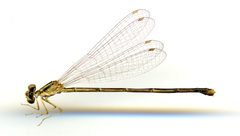
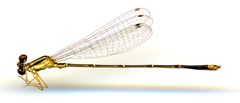
The orange bluet can be distinguished from similar Enallagma by the orange coloration on at least abdominal segments 8-10 in males, with the possibility of orange extending to more segments. The species shows variation in the extent of orange markings, which can complicate field identification. Females are generally more drab in coloration, typically tan or pale blue with a stripe running down the center of the back. Accurate identification often requires close examination of abdominal patterning and may need confirmation through detailed morphological analysis.
Images
Habitat
Associated with freshwater including ponds and lakes. are typically found cruising vegetation near water bodies. Females deposit on submerged aquatic vegetation, sometimes submerging completely underwater to reach appropriate oviposition sites.
Distribution
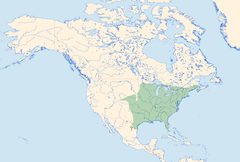
Eastern North America. GBIF records indicate presence in North America generally, with specific records from Vermont, United States. The occurs from Maine westward, with the distribution pattern typical of many eastern North American odonates.
Diet
are aerial that capture small insect prey on the wing. Larvae are aquatic predators, feeding on small aquatic .
Life Cycle
Hemimetabolous development with aquatic larval stage and terrestrial stage. are laid on submerged aquatic vegetation. Larvae develop underwater, emerging to transform into winged adults. The larval stage duration varies with environmental conditions.
Behavior
are active fliers that hunt by sight and seize prey while flying. Males and females are often observed flying in tandem during mating. During oviposition, the female may submerge completely underwater while the male, attached to her in tandem , releases his grasp when she descends beneath the surface.
Ecological Role
in both aquatic and terrestrial . Larvae function as predators in freshwater . serve as aerial predators of small insects.
Similar Taxa
- Enallagma civileSimilar size and general body form; both are small bluet . E. civile (familiar bluet) shows blue coloration rather than orange terminal abdominal segments, though some color variation can occur.
- Other Enallagma speciesThe Enallagma contains many morphologically similar , often requiring detailed examination of abdominal patterning, shape, and other structural characters for definitive identification. Color patterns, particularly the extent and location of orange markings, are primary distinguishing features.
More Details
Taxonomic History
The Enallagma was subject to a major taxonomic revision by Rosser Garrison, published in 1984 based on his doctoral dissertation work on and of western United States . This work established important morphological criteria for distinguishing species within the genus.
Observation Data
As of available records, iNaturalist documents over 13,000 observations of this , indicating it is relatively well-observed and documented by citizen scientists, though identification challenges remain due to color variation and similarity to .
Sources and further reading
- BugGuide
- GBIF taxonomy match
- iNaturalist taxon
- NCBI Taxonomy
- Catalogue of Life
- Dragonfly Enthusiasts, Unite! Open House Set Nov. 6 at Bohart Museum | Bug Squad
- Know Your Dragonflies! | Bug Squad
- Dragonflies! Who Isn't Fascinated by Dragonflies? | Bug Squad
- Bohart Museum Open House: Dragonflies Rule! | Bug Squad
- Encyrtid Holdings | Entomology Research Museum
- Hooray for the red, white, and blue! Milkweed longhorned beetle, Tetraopes tetraophthalmus; dogbane tiger moth, Cycnia tenera; and familiar bluet, Enallagma civile — Bug of the Week