
Macromia illinoiensis
Walsh, 1862
swift river cruiser, Illinois river cruiser
Species Guides
2- Macromia illinoiensis georgina(Georgia river cruiser)
- Macromia illinoiensis illinoiensis(Illinois River Cruiser)
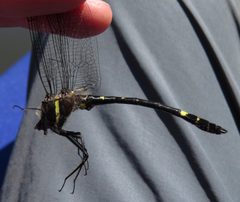
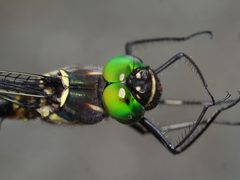
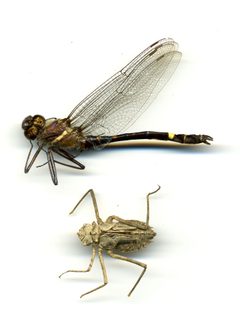
Macromia illinoiensis, commonly known as the swift river cruiser or Illinois river cruiser, is a in the Macromiidae. The aquatic larval stage has been extensively studied due to its interactions with the zebra mussel (Dreissena polymorpha), which frequently colonizes larval bodies. Research demonstrates that zebra mussel attachment impairs larval foraging , reducing prey capture and altering burying behavior. Mussel creates a positive feedback loop where colonized larvae bury more shallowly, increasing further colonization risk. These effects are -dependent and reversible when mussels are lost, typically at molting. The species' spans aquatic and terrestrial , making impacts from mussel colonization potentially significant for dynamics.
Pronunciation
How to pronounce Macromia illinoiensis: /məˈkroʊ.mi.ə ɪˌlɪ.nɔɪˈɛnsɪs/
These audio files are automatically generated. While they are not always 100% accurate, they are a good starting point.
Images
Habitat
Aquatic freshwater ; larval stage occupies lakes and rivers where burying in sandy or soft substrates occurs. Habitat specifically includes water bodies invaded by zebra mussels (Dreissena polymorpha), which colonize larval .
Distribution
North America; specifically recorded from Vermont and broadly across the United States. Global presence indicated but primary distribution centered in North America.
Diet
Predatory; larval stage captures aquatic prey including mayflies (Hexagenia limbata documented as prey item). Prey capture occurs via sit-and-wait ambush strategy when buried with exposed, or active sprawling above substrate during night foraging.
Host Associations
- Dreissena polymorpha - epizoic Zebra mussels attach to larval body; not in strict sense but physical attachment with negative consequences. Mussel loads lost at larval molting but accumulate quickly over final larval stadium.
Life Cycle
Hemimetabolous development with aquatic larval (naiad) stage and terrestrial stage. and final larval stadia described in behavioral studies. Larvae multiple times; attached zebra mussels are shed at molting events. Final larval stadium duration allows significant mussel accumulation.
Behavior
Larval burying involves burying into substrate with only exposed for and ambush . Bury time and depth are plastic traits: slower-burying individuals have higher mussel rates, and colonized individuals subsequently bury more shallowly. Night foraging involves sprawling above substrate with higher prey capture rates than daytime. Behavioral changes are reversible when mussel attachment is lost.
Ecological Role
Aquatic in freshwater ; prey for visual predators including fish. -level impacts from zebra mussel may affect dynamics due to ' cross- spanning aquatic and terrestrial environments. Reduced from mussel attachment increases risk.
Human Relevance
Subject of ecological research on impacts; serves as model organism for studying effects of zebra mussel invasion on native aquatic . No direct economic or medical significance documented.
Sources and further reading
- BugGuide
- Wikipedia
- GBIF taxonomy match
- iNaturalist taxon
- NCBI Taxonomy
- Catalogue of Life
- 2022 Six-State Insect Collecting Trip iReport | Beetles In The Bush
- Reciprocal Effects between Burying Behavior of a Larval Dragonfly (Odonata: Macromia illinoiensis) and Zebra Mussel Colonization
- Effects of zebra mussel attachment on the foraging behaviour of a larval dragonfly, Macromia illinoiensis