
Paltothemis
Karsch, 1890
Rock Skimmers
Species Guides
1- Paltothemis lineatipes(Red Rock Skimmer)
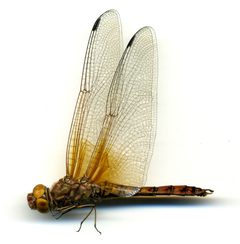
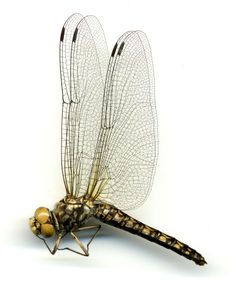
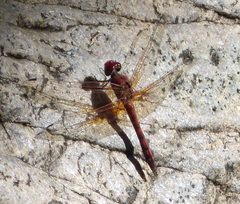
Paltothemis is a of skimmer in the Libellulidae, established by Karsch in 1890. The genus contains at least three described , commonly known as Rock Skimmers. The best-known species, Paltothemis lineatipes (Red Rock Skimmer), has been studied for its variable mating system, which shifts between territorial defense and alternative strategies depending on male . Members of this genus are associated with rocky stream in western North America.
Pronunciation
How to pronounce Paltothemis: /ˌpæltəˈθɛmɪs/
These audio files are automatically generated. While they are not always 100% accurate, they are a good starting point.
Identification
Rock Skimmers can be distinguished from other Libellulidae by their association with rocky stream and river , combined with specific wing and body patterning. Paltothemis lineatipes shows , with males and females differing in coloration. The genus is closely related to other skimmers but is differentiated by morphological characters and habitat preference. Accurate -level identification requires examination of abdominal patterning and wing venation details.
Images
Habitat
Rocky streams and rivers with exposed rock surfaces. Paltothemis lineatipes has been observed perching on shorelines and rocks adjacent to flowing water. The shows strong association with lotic (flowing water) , particularly in canyon and cliff environments where rocky substrates are abundant.
Distribution
Western North America. Documented from New Mexico (Gila region) through southwestern United States to California. The occurs in arid and semi-arid regions where rocky watercourses are present.
Seasonality
Active during summer months. In New Mexico, observed in late August. In California, recorded in early July. Activity appears to peak during warm periods when water flow is adequate but not torrential.
Behavior
Males of Paltothemis lineatipes exhibit variation in mate-locating that correlates with . In high- years, males defend small streamside territories, raid neighboring territories to steal females, and frequently lose territories through competition; temporal partitioning of sites occurs with males rotating ownership. In low-density years, males defend territories more than twice as large, rarely steal females, and less frequently share site ownership. Females have been observed perching on artificial structures near water, including window screens, for extended periods.
Human Relevance
Subject of behavioral ecological research due to its variable mating system. Observed by naturalists and photographers during surveys. One (Paltothemis lineatipes) is known colloquially as the Red Rock Skimmer.
Similar Taxa
- SympetrumBoth are Libellulidae skimmers, but Sympetrum (meadowhawks) typically inhabit ponds and lakes rather than rocky streams, and show different perching and associations.
- LibellulaLibellula such as the Flame Skimmer (Libellula saturata) share characteristics but differ in preference and territorial patterns.
More Details
Taxonomic Note
The epithet has appeared in literature as both 'lineatipes' and 'kneatipes' (or 'Kneatipes'), reflecting historical variations in spelling. The is monophyletic within Libellulidae based on morphological and molecular evidence.