Libellula quadrimaculata
Linnaeus, 1758
Four-spotted Skimmer, Four-spotted Chaser
Libellula quadrimaculata, known as the four-spotted skimmer in North America and four-spotted chaser in Europe, is a holarctic found across Europe, Asia, and North America. This species exhibits notable behavioral plasticity in males, who adopt either territorial or satellite mating strategies depending on competitive conditions. It is also recognized for its gregarious migratory , with historical records of immense swarms in Europe and documented in North America.
Pronunciation
How to pronounce Libellula quadrimaculata: //lɪˈbɛl.jʊ.lə ˌkwɒd.rɪ.mæk.jʊˈleɪ.tə//
These audio files are automatically generated. While they are not always 100% accurate, they are a good starting point.
Identification
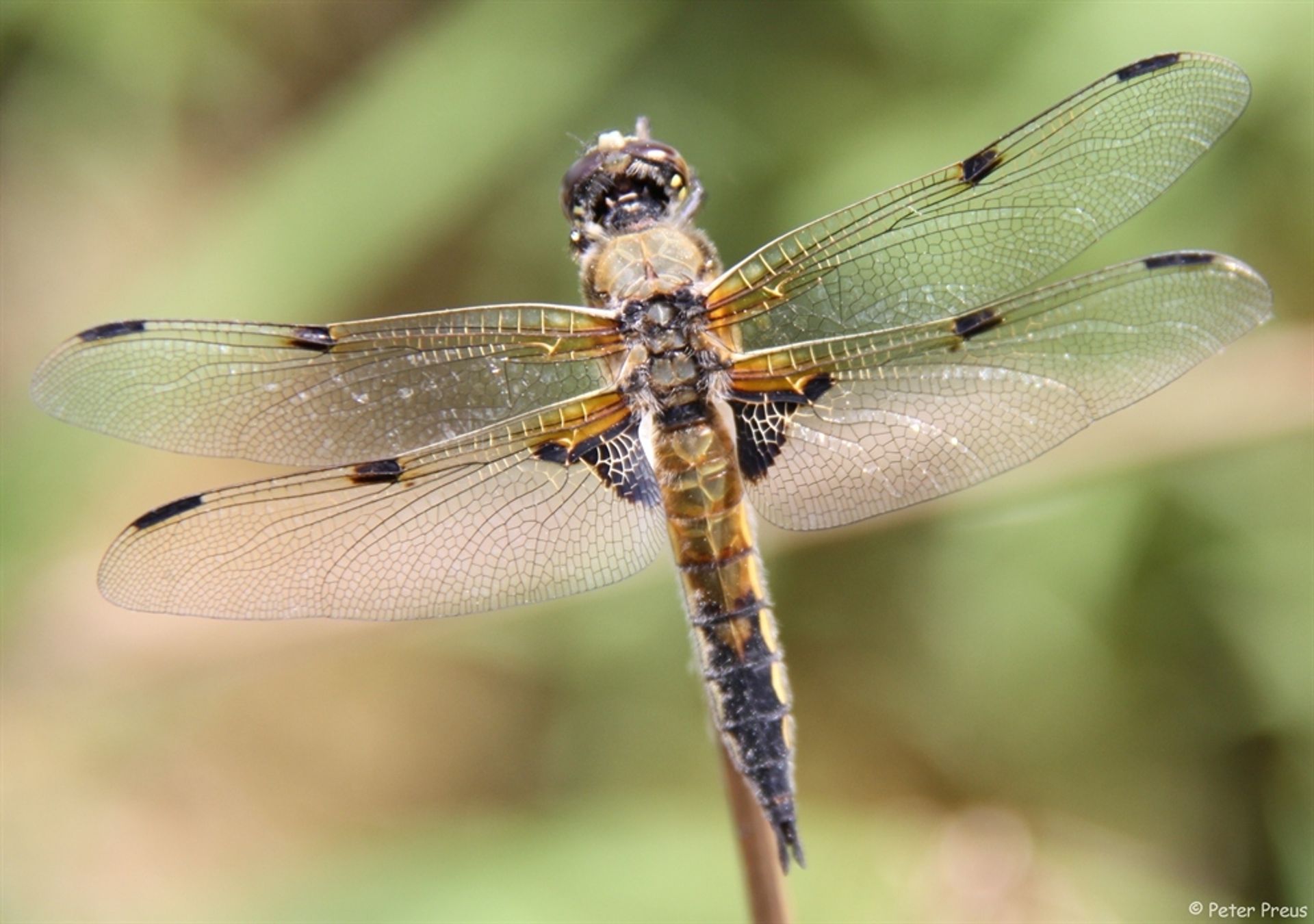
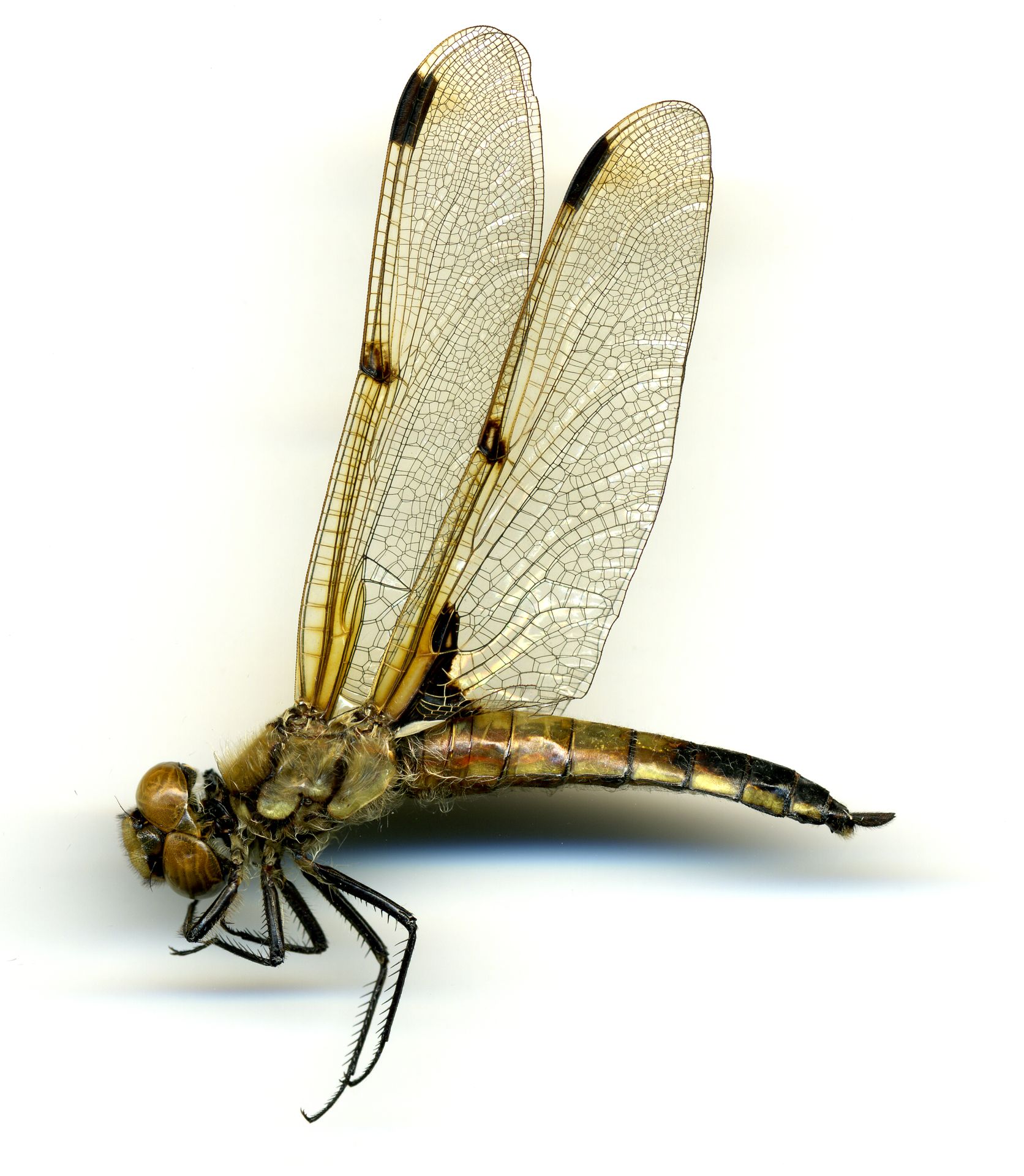
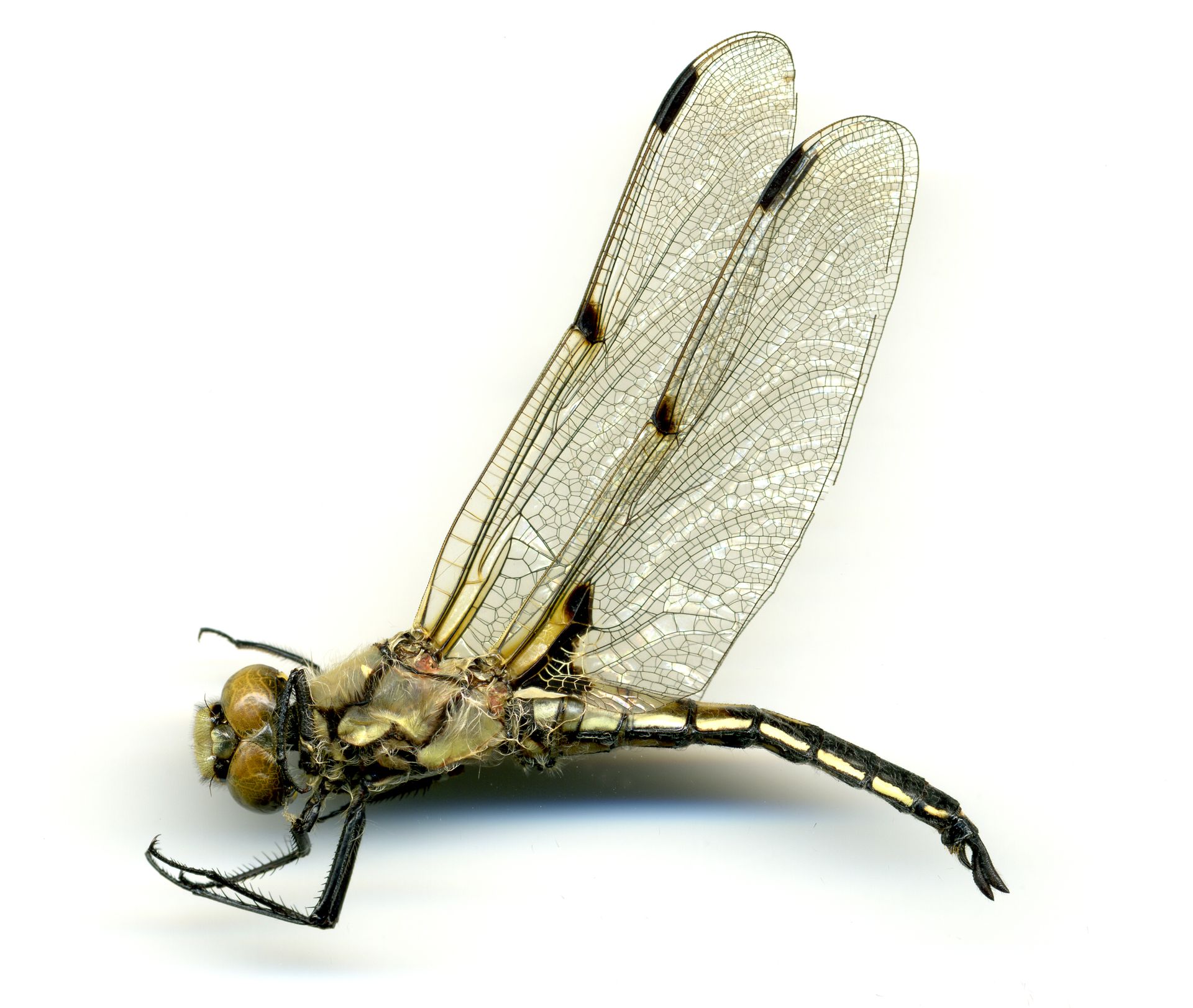
Distinguished from other Libellula by the four dark spots on the wings—two on each forewing. The broad-bodied chaser (Libellula depressa) has broader, flatter and different wing pattern. The four-spotted chaser has a more tapered abdomen than L. depressa. In North America, distinguished from other skimmers by the combination of wing spots and golden-brown body coloration.
Images
Appearance
Medium-sized with a golden-brown to amber body. The name derives from four distinct dark spots on the wings—one near the base and one near the tip of each forewing. Males develop a (whitish) with age. Wings are clear with the characteristic spots; venation typical of Libellulidae. Hindwings broader than forewings, as in all Anisoptera.
Habitat
Breeds in acidic bog pools, sloughs, and shallow wetlands. patrol territories near water bodies and oviposition sites. In Scotland, specifically associated with Sphagnum moss and heather in bog . stopovers recorded in residential areas with tree cover.
Distribution
Holarctic distribution: Europe, Asia, and North America. Present throughout Flanders (Belgium). In North America, recorded from Manitoba, Canada and widespread across the continent. In Europe, common and widespread. In the UK, found in Scotland including the Slammannan Plateau and other bog . The Azure Hawker is restricted to Scottish Highlands, but L. quadrimaculata has broader UK distribution.
Seasonality
active from late spring through summer. In the UK, on the wing during National Week (July). In Manitoba, observed in late June (June 26, 1936 record).
Life Cycle
: , nymph (naiad), and . Females lay eggs in aquatic vegetation or submerged debris in water bodies. Nymphs are entirely aquatic, feeding on small . Nymph stage duration varies from months to years depending on conditions. Nymphs climb out of water onto emergent vegetation to emerge; adults undergo maturation period before developing full coloration.
Behavior
Males exhibit territorial , defending oviposition sites against males. At high densities, some males adopt satellite strategy—intercepting females without territory defense. Satellite males are typically larger in wingspan and hindwing length but have lower muscle content per unit body weight. Males can switch between territorial and satellite strategies. Exhibits gregarious migratory behavior; forms immense swarms during flights in Europe and North America. Migration flights occur in hot, sultry conditions with specific weather patterns.
Ecological Role
in both aquatic (nymph stage) and terrestrial ( stage) . Nymphs control of small aquatic . Adults hunt flying insects. Serves as prey for various predators including birds and other insects.
Human Relevance
Subject of behavioral research, particularly regarding alternative mating tactics. Featured in citizen science platforms (iNaturalist) with over 35,000 observations. Used as example in educational contexts about insect and . No significant pest or beneficial status recorded.
Similar Taxa
- Libellula depressa (Broad-bodied Chaser)Similar size and preference, but has broader, flatter and lacks the four distinct wing spots; body coloration more uniformly brown without development in males
- Sympetrum species (darters)Similar in bog pools, but smaller size, more slender , and lack the characteristic four wing spots; typically have red or yellow coloration
More Details
Alternative Mating Tactics
Research at Wicken Fen, Cambridgeshire demonstrated that male strategy choice is influenced by scaling factors—larger males may be forced into satellite roles due to lower power output per unit body weight affecting maneuverability, despite their size advantage.
Migration Documentation
A notable on June 26, 1936 in Brandon, Manitoba involved thousands of individuals in a residential area with Manitoba maple trees, beginning at 6:00 p.m. in hot (85°F), sultry conditions with a light west breeze—conditions similar to European swarm events.
Sources and further reading
- BugGuide
- GBIF taxonomy match
- iNaturalist taxon
- NCBI Taxonomy
- Catalogue of Life
- Just Buggin' Ya | Bug Squad
- Dragonfly Enthusiasts, Unite! Open House Set Nov. 6 at Bohart Museum | Bug Squad
- Know Your Dragonflies! | Bug Squad
- Bug Eric: What the Insects Have Taught Me
- Bug Eric: May 2020
- Beauties in the Bog - Buglife Blog - Buglife
- A MIGRATION OF THE DRAGONFLY, LIBELLULA QUADRIMACULATA L.
- Influences On the Choice Between Territorial and Satellite Behaviour in Male Libellula Quadrimaculata Linn. (Odonata: Libellulidae)