
Cannaphila insularis
Kirby, 1889
gray-waisted skimmer
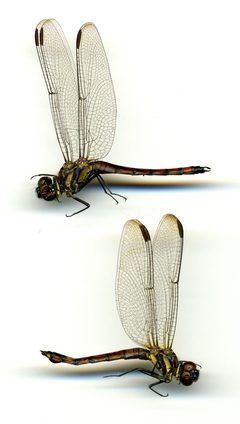
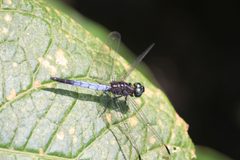
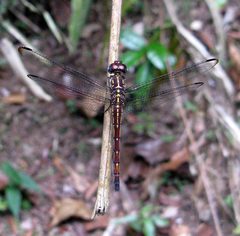
Cannaphila insularis, commonly known as the gray-waisted skimmer, is a in the Libellulidae. The species includes two recognized : C. i. insularis (nominate) and C. i. funerea. It is distributed across the Caribbean, Central America, and North America, with the nominate subspecies occurring on Hispaniola, Jamaica, and Isla de Pinos (Cuba), while C. i. funerea ranges from southern Texas through Colombia and is widely distributed in Cuba. The species inhabits lentic freshwater environments including lagoons, ponds, and slow-moving streams with abundant herbaceous vegetation. The last instar larva of C. i. funerea has been formally described, providing diagnostic morphological characters for identification.
Pronunciation
How to pronounce Cannaphila insularis: //ˈkænəˌfaɪlə ɪnˈsuːlərɪs//
These audio files are automatically generated. While they are not always 100% accurate, they are a good starting point.
Identification
can be distinguished from other Cannaphila by the gray coloration of the (giving rise to the "gray-waisted skimmer"). The two differ in geographic distribution and subtle morphological features. Larvae of C. i. funerea can be distinguished from C. vibex by characters described in the formal larval description; previously described larvae by Klots (1932) attributed to Brachymesia are now considered likely referable to C. i. funerea.
Images
Habitat
Freshwater lentic including lagoons, ponds with abundant herbaceous vegetation, and slow-moving streams (lentic streams). The is frequently observed flying over these water bodies.
Distribution
Caribbean (Cuba, Hispaniola, Jamaica, Isla de Pinos), Central America, and North America (southern Texas). The nominate C. i. insularis is restricted to the Greater Antilles (Hispaniola, Jamaica, Isla de Pinos), while C. i. funerea occurs from southern USA (Texas) to Colombia and is widely distributed throughout Cuba. Antilles records outside of Cuba are exclusive to the nominate subspecies.
Life Cycle
Hemimetabolous development with aquatic larval stages. The last instar larva of C. i. funerea has been formally described, providing morphological details for identification. larvae were previously described by Klots (1932).
Behavior
are frequently observed flying over lentic streams and standing water bodies.
Similar Taxa
- Cannaphila vibexCongeneric ; larvae of C. i. funerea have been compared morphologically to C. vibex in formal descriptions
- BrachymesiaLarvae of C. i. funerea were previously misidentified as Brachymesia by Klots (1932) before correct assignment to Cannaphila
More Details
Subspecies
Two recognized: C. i. insularis Kirby, 1889 (nominate) and C. i. funerea (Carpenter, 1897)
Larval description
The last instar larva of C. i. funerea was formally described in Zootaxa (DOI: 10.11646/zootaxa.2034.1.6), filling a gap in knowledge for the where previously only C. vibex had a described larva
Sources and further reading
- BugGuide
- Wikipedia
- GBIF taxonomy match
- iNaturalist taxon
- NCBI Taxonomy
- Catalogue of Life
- Encyrtid Holdings | Entomology Research Museum
- Look Out, Franklin's Bumble Bee, They're Coming for You! | Bug Squad
- Pensoft Editorial Team | Blog - Part 13
- Inspiring a new generation of taxonomists | Blog
- Description of the last instar larva of Cannaphila insularis funerea (Carpenter, 1897) (Anisoptera: Libellulidae), with notes on the habitat of the species