
Cannaphila
Kirby, 1889
narrow-winged skimmers, Convict Skimmers
Species Guides
1- Cannaphila insularis(gray-waisted skimmer)
Small Neotropical of in the Libellulidae. Contains three : C. insularis (with C. i. insularis and C. i. funerea), C. mortoni, and C. vibex. One species, C. insularis, extends into North America. are commonly called narrow-winged skimmers.

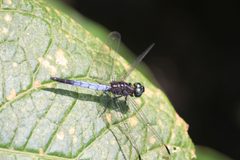
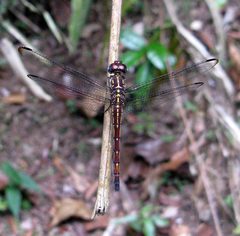
Pronunciation
How to pronounce Cannaphila: //ˌkænəˈfaɪlə//
These audio files are automatically generated. While they are not always 100% accurate, they are a good starting point.
Identification
Members of this can be distinguished from other Libellulidae by their narrow wings, which gives rise to their . The genus is distinguished from related by genitalic characters and wing venation patterns typical of the group.
Images
Habitat
of C. i. funerea frequent lagoons and ponds with abundant herbaceous vegetation, and have been observed flying over lentic streams. Specific larval requirements are less documented, though larvae have been collected in association with these water bodies.
Distribution
Neotropical, with range extending into southern North America. C. insularis funerea occurs from southern USA (Texas) through Colombia, with Antillean records exclusive to Cuba where it is widely distributed. C. insularis insularis occurs on Hispaniola, Jamaica, and Isla de Pinos (Cuba). C. mortoni and C. vibex have more restricted Neotropical distributions.
Life Cycle
Oviposition and development have not been described. Larvae are aquatic; the last instar larva has been described for C. i. funerea and C. vibex. and lifespan details are undocumented.
Behavior
of C. i. funerea have been observed flying over lentic streams. Other behavioral traits for the remain unreported.
Similar Taxa
- BrachymesiaLarvae of C. i. funerea were previously misidentified as Brachymesia; both share Libellulidae characteristics and Neotropical distributions, but differ in wing shape and genitalic structure.