
Somatochlora hineana
Williamson, 1931
Hine's Emerald, Hine's Emerald Dragonfly
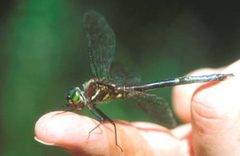
Somatochlora hineana is a rare to North America, listed as endangered in Canada since 2011 and of conservation concern in the United States. The species is highly specialized, requiring groundwater discharge areas in wetland to complete its . It exhibits habitat segregation between sexes and has been documented with biased sex ratios, factors that complicate conservation efforts. The Canadian is restricted to the Minesing Wetlands in Ontario, while U.S. populations occur in Michigan and other states with suitable calcareous wetland habitats.

Pronunciation
How to pronounce Somatochlora hineana: /sɔˌmɑtəˈklɔrə haɪˈniːənə/
These audio files are automatically generated. While they are not always 100% accurate, they are a good starting point.
Images
Habitat
Groundwater discharge areas in rich fens and calcareous wetlands, characterized by shallow creeks, springs, small pools, and marl deposits. The eastern Minesing Wetlands specifically relies on calcium- and bicarbonate-dominated groundwater chemistry. requirements include open wetland areas with emergent vegetation and stable hydrological conditions maintained by groundwater inputs.
Distribution
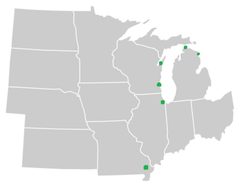
North America: Canada (Ontario—Minesing Wetlands, only known Canadian ); United States (Michigan, with range extended nearly 200 km northeast from previously known distribution, and additional states with suitable calcareous fen ). Global distribution limited to this Nearctic range.
Life Cycle
Relies on groundwater discharge areas to complete its . exhibit segregation, with males and females using different portions of wetland habitat. Specific details of , nymph, and stages not documented in available sources.
Behavior
Exhibits segregation between sexes, a behavioral trait with significant implications for conservation planning. Biased sex ratios have been documented in .
Human Relevance
Subject to active conservation management due to endangered status. Groundwater chemistry monitoring established as baseline for detecting anthropogenic impacts. Land use planning for groundwater recharge areas is a critical conservation consideration. Research focus on understanding sex ratio and use patterns to inform reserve design.
Similar Taxa
- Somatochlora arcticaBoth Somatochlora inhabit northern wetland systems; S. arctica (Northern Emerald) is Near Threatened and restricted to Scottish Highlands bogs, while S. hineana occupies calcareous fens. S. arctica has metallic emerald body coloration and is found in moorland and meadow , whereas S. hineana is distinguished by its specific groundwater-dependent fen habitat requirements.
- Somatochlora tenebrosaCongeneric emerald with similar overall and wetland association. S. tenebrosa (Clamp-tipped Emerald) has broader distribution across eastern North America and less specialized requirements, lacking the strict groundwater dependency that characterizes S. hineana.
Sources and further reading
- BugGuide
- GBIF taxonomy match
- iNaturalist taxon
- NCBI Taxonomy
- Catalogue of Life
- Host and a Parasite: Battle of Sand Field Crickets vs. Horsehair Worms | Bug Squad
- What the Fossil Record Tells Us About Insect Extinctions in Deep Time
- Beauties in the Bog - Buglife Blog - Buglife
- The ubiquitous tiger beetle | Beetles In The Bush
- Distribution, Habitat, and Field Biology of Somatochlora hineana (Odonata: Corduliidae)
- New Distribution Records of <i>Somatochlora Hineana</i> (Odonata: Corduliidae)
- Groundwater characterization of the eastern Minesing Wetlands in support of the endangered Hine’s emerald dragonfly (Somatochlora hineana)
- Protecting more than the wetland: The importance of biased sex ratios and habitat segregation for conservation of the Hine’s emerald dragonfly, Somatochlora hineana Williamson