
Aeshna palmata
Hagen, 1856
Paddle-tailed Darner
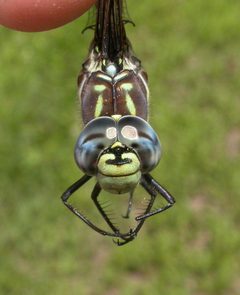
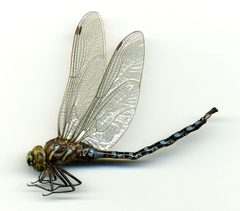
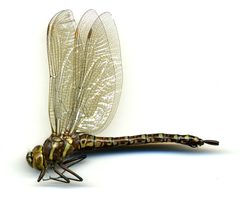
Aeshna palmata, commonly known as the Paddle-tailed Darner, is a of in the Aeshnidae. It is widely distributed across western Canada and the western United States. The species is named for its distinctive paddle-shaped (appendages at the tip of the ). It inhabits lakes, ponds, and slow-moving streams, typically with dense vegetation along the shorelines. The species was first scientifically described by Hermann Hagen in 1856.
Pronunciation
How to pronounce Aeshna palmata: /ˈiːʃnə ˈpælˌmeɪtə/
These audio files are automatically generated. While they are not always 100% accurate, they are a good starting point.
Identification
The Paddle-tailed Darner is distinguished from other Aeshna by its characteristic paddle-shaped —flattened, widened terminal appendages that give the species its . These modified cerci are particularly noticeable in males and serve as a key diagnostic feature. The species is a large typical of the darner group, with that meet broadly at the top of the . Coloration includes blue and green markings on the and , though specific pattern details vary. It can be separated from similar western darners such as Aeshna walkeri (Walker's Darner) and Aeshna interrupta (Variable Darner) by the shape of the male cerci and details of abdominal patterning.
Images
Habitat
Lakes, ponds, and slow-moving streams, usually with dense emergent vegetation along shorelines. The shows adaptability to various freshwater across its range.
Distribution
Western Canada and western United States. Records indicate presence across North America, with the core range in the western portion of the continent.
Life Cycle
Like other , Aeshna palmata undergoes with three stages: , nymph (naiad), and . Eggs are laid in aquatic vegetation or submerged debris. Nymphs are entirely aquatic, feeding on small and possibly small fish or tadpoles. The nymphal stage duration is not specifically documented for this but in Aeshna darners generally ranges from one to several years depending on environmental conditions. Mature nymphs emerge onto emergent vegetation to transform into adults.
Behavior
are strong, agile fliers that patrol territories over water. Males are known to spend considerable time in , defending areas suitable for -laying. The is and active during daylight hours.
Similar Taxa
- Aeshna walkeriWalker's Darner overlaps in western North American range and shares similar size and general coloration; distinguished by differences in male shape and abdominal patterning.
- Aeshna interruptaVariable Darner occurs across much of the same range and is similar in appearance; separated by details of thoracic striping and male appendage .
- Aeshna eremitaLake Darner is another large western darner with overlapping preferences; differs in shape and typically shows more extensive blue coloration on the .
More Details
Etymology
The specific epithet 'palmata' and 'Paddle-tailed Darner' both refer to the distinctive flattened, paddle-like shape of the male .
Taxonomic history
First described by German-American entomologist Hermann August Hagen in 1856, a prominent 19th-century odonatologist.