
Sisyra vicaria
(Walker, 1853)
spongillafly
Sisyra vicaria is a of spongillafly ( Sisyridae) found in North America. Spongillaflies are small, delicate neuropteran insects whose larvae are obligate associates of freshwater sponges (Porifera), feeding on the sponge tissue. The species was originally described by Francis Walker in 1853 as Hemerobius vicarius. As with other members of the Sisyra, the are typically and attracted to light.
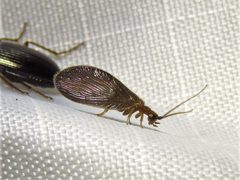
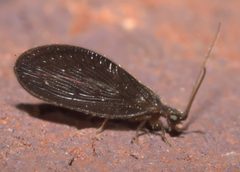
Pronunciation
How to pronounce Sisyra vicaria: /ˈsɪsɪrə vɪˈkɛəriə/
These audio files are automatically generated. While they are not always 100% accurate, they are a good starting point.
Identification
spongillaflies can be distinguished from similar neuropterans (such as brown lacewings in Hemerobiidae) by their association with aquatic , smaller size, and reduced wing venation. The Sisyridae is distinguished from other neuropteran families by the aquatic larval stage and specific wing venation patterns. -level identification within Sisyra requires examination of genitalic structures and wing venation details; S. vicaria is distinguished from by specific arrangements of crossveins and male genitalic .
Images
Habitat
Aquatic and semi-aquatic environments. are found near freshwater bodies where their larval occur. Larvae develop exclusively in freshwater sponges (Spongillidae), which grow on submerged wood, rocks, and vegetation in lakes, ponds, slow-moving streams, and other lentic or slow lotic .
Distribution
North America. Specific records indicate presence across temperate regions of the continent, though precise range boundaries are incompletely documented.
Seasonality
are typically active during warmer months, with peak activity varying by latitude. Most observations occur from late spring through early autumn. Larvae are present year-round within their sponge .
Diet
Larvae are obligate / of freshwater sponges ( Spongillidae), piercing sponge and feeding on the contents. diet is poorly documented; likely feeds on nectar, honeydew, or not at all.
Host Associations
- Freshwater sponges (Spongillidae) - larval Larvae develop within living sponge tissue, feeding on sponge . This obligate association is unique among Neuroptera.
Life Cycle
Complete (holometabolous). are laid on or near freshwater sponges. Larvae are aquatic and develop through three instars within the sponge tissue. occurs in a silken cocoon spun on emergent vegetation or other substrates above the water line. are terrestrial and short-lived.
Behavior
are and attracted to light. Larvae are sedentary within sponge tissue, feeding on . When disturbed, larvae may exit the sponge and search for new host tissue. Pupae can remain for extended periods if conditions are unfavorable.
Ecological Role
As consumers of freshwater sponges, larvae play a unique role in aquatic . The association represents one of the few known examples of insect-sponge . Spongillaflies may influence sponge and serve as prey for aquatic and terrestrial .
Human Relevance
Limited direct relevance. Occasionally attracted to lights near water bodies. May serve as indicators of healthy freshwater due to their dependence on clean water and specific sponges. No economic importance as pests or beneficial .
Similar Taxa
- Sisyra fuscataWidespread congeneric in North America; distinguished by subtle differences in wing venation and genitalia
- Sisyra nigraAnother North American ; requires detailed morphological examination for separation
- Hemerobiidae (brown lacewings)Similar appearance but larvae are terrestrial of aphids and other small insects, not aquatic sponge feeders
More Details
Taxonomic history
Originally described by Francis Walker in 1853 as Hemerobius vicarius, later transferred to the Sisyra. The genus Sisyra was established by Curtis in 1834 and is the type genus of the Sisyridae.
Conservation status
Not formally assessed. status is unknown, but likely dependent on health of freshwater sponge populations and water quality in lentic .