
Zeugomantispa
Hoffman, 2002
Green Mantidflies
Species Guides
1- Zeugomantispa minuta(green mantisfly)
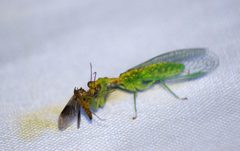
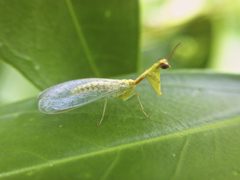
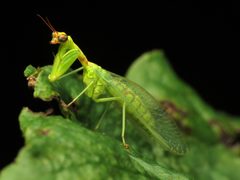
Zeugomantispa is a of small predatory mantidflies in the Mantispidae, commonly known as green mantidflies. The genus contains at least three described distributed in the Americas, with Zeugomantispa minuta being the most frequently encountered and commonly called the green mantisfly. are sit-and-wait that ambush small soft-bodied insects, while larvae are specialized predators of spider within egg sacs. The genus is distinguished by its green coloration and forelegs that resemble those of praying mantises, though the two groups are not closely related.
Pronunciation
How to pronounce Zeugomantispa: /ze.ʊ.ɡo.mænˈtɪs.pə/
These audio files are automatically generated. While they are not always 100% accurate, they are a good starting point.
Identification
Distinguished from praying mantises (order Mantodea) by long, thread-like (mantises have shorter, thicker antennae), roof-like wing posture, and generally smaller size. Separated from other mantidfly by green coloration in Zeugomantispa minuta, though specific diagnostic characters for the genus require examination of wing venation and genitalia. The three described —Z. compellens, Z. minuta, and Z. virescens—are distinguished by subtle morphological differences in wing venation patterns and male genital structures. From Dicromantispa species, which also occur at blacklights, Zeugomantispa can be separated by coloration and body proportions; Dicromantispa interrupta and D. sayi typically show brown or patterned coloration rather than uniform green.
Images
Appearance
Small insects, typically less than 25 mm in length, with bright green coloration in of at least some . The most distinctive feature is the pair of forelegs: enlarged, spiny front legs modified for capturing prey, with sharp spines on the and tibia that interlock when the leg closes. The femur and tibia form a hinge mechanism that clamps shut on prey. Body is slender with long, delicate wings held roof-like over the when at rest. are relatively long and thread-like. is triangular with large . Overall appearance closely resembles a miniature praying mantis, though wings and antennae structure differ.
Habitat
are found in a variety of vegetated where they can perch on leaves and stems to ambush prey. Observed in gardens, on house exteriors, and at blacklights in residential areas. The presence of spiders and their sacs is critical for larval development, so habitats supporting spider are essential for . Adults have been documented on milkweed and other herbaceous vegetation.
Distribution
restricted to the Americas. Zeugomantispa minuta occurs in North America, with records from the northeastern United States (Kansas, documented in blog records) and likely more broadly across eastern and central regions. The other two , Z. compellens and Z. virescens, have more southern distributions; specific ranges are poorly documented in available sources but include Neotropical regions.
Seasonality
are active from late spring through autumn. In Kansas, observed at blacklights in late October during unseasonably warm weather, suggesting adults can remain active late into fall when temperatures permit. stage is not explicitly documented for this , though related neuropterans often overwinter as adults or pupae.
Diet
are predatory, feeding on small soft-bodied insects including aphids. They are sit-and-wait that ambush prey, though active hunting has also been reported. Larvae are specialized predators of spider , feeding exclusively within spider egg sacs; they do not feed on the spider itself.
Host Associations
Life Cycle
Complete with , larva, pupa, and stages. Larvae in Mantispinae are specialized egg within spider egg sacs. Newly hatched larvae either directly seek out and penetrate spider egg sacs, or employ a phoretic strategy: positioning on vegetation to intercept passing female spiders, riding on the spider until she constructs an egg sac, then dismounting and entering the sac. Within the egg sac, larvae consume spider eggs and develop through several instars before pupating. The specific number of larval instars and site are not documented for Zeugomantispa specifically.
Behavior
are primarily sit-and-wait , remaining motionless on vegetation to ambush passing prey. They have been observed their forelegs, an apparently important maintenance . Adults are attracted to blacklights at night, suggesting or activity patterns. When disturbed, adults may quickly take . The larval phoretic behavior—hitchhiking on female spiders to reach sacs—is a remarkable specialized behavior for accessing their obligate food source.
Ecological Role
function as of small soft-bodied insects, potentially contributing to . Larvae are specialized predators of spider , representing a unique trophic interaction that may influence spider . The phoretic larval creates a direct link between adult mantidfly distribution and spider reproductive activity. As members of the neuropteran , they contribute to overall predatory insect diversity in their .
Human Relevance
occasionally encountered by homeowners on building exteriors and in gardens. Attracted to blacklights, making them known to entomologists and naturalists conducting insect surveys. No documented economic importance; neither beneficial nor pest status established. Their on aphids suggests potential incidental benefit in gardens, but no formal use has been documented.
Similar Taxa
- DicromantispaOther mantidfly in same with similar forelegs; distinguished by typically brown or patterned coloration rather than green, and subtle differences in body proportions and wing venation
- Tenodera sinensis and other praying mantises of forelegs and predatory posture; separated by order-level characters including structure, wing posture, and overall body plan—mantises are in order Mantodea, not Neuroptera
- Green lacewings (Chrysoperla spp.)Related neuropterans often found at same blacklights; distinguished by absence of forelegs, more delicate build, and different wing venation with dense network of crossveins
More Details
Convergent evolution
The remarkable similarity between mantidflies and praying mantises represents a classic example of , where unrelated lineages independently evolve similar morphological structures ( forelegs) in response to similar ecological pressures (ambush on mobile prey).
Taxonomic history
The was established by Hoffman in 2002, indicating relatively recent taxonomic recognition; were previously classified elsewhere in Mantispidae.