
Dicromantispa interrupta
(Say, 1825)
Four-spotted Mantidfly
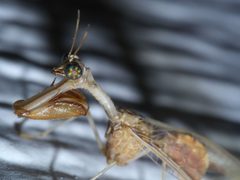
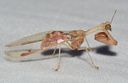
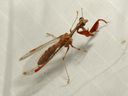
Dicromantispa interrupta is a of mantidfly in the Mantispidae, distributed across Central America and North America. have spotted wings and are predatory, feeding on smaller insects. The species is notable for its larval development inside the sacs of hunting spiders, a specialized parasitic relationship. Adults are attracted to lights at night and are most commonly observed during late summer and fall.
Pronunciation
How to pronounce Dicromantispa interrupta: /dɪkroʊˈmæntɪspə ɪntəˈrʌptə/
These audio files are automatically generated. While they are not always 100% accurate, they are a good starting point.
Identification
can be recognized by their spotted or banded wings, with D. interrupta specifically showing four dark spots on the wings that give rise to the "Four-spotted Mantidfly." The forelegs are , modified for grasping prey in a manner convergent with praying mantises. Distinguishing D. interrupta from congeneric requires examination of wing spot pattern and genitalia; D. sayi is similar but differs in wing markings and geographic distribution.
Images
Habitat
Found in diverse terrestrial including forests, woodlands, and suburban areas where hunting spiders occur. frequent vegetation and are attracted to artificial lights at night.
Distribution
Central America and North America, ranging from southern Canada through the United States to Mexico and Central America. Records include the northeastern United States (Vermont) southward.
Seasonality
are active primarily from late summer through fall (August to November), with peak activity during warm autumn evenings.
Diet
are predatory, feeding on small insects and other arthropods. Larvae develop as within the sacs of hunting spiders ( such as Lycosidae and related groups), consuming spider eggs and possibly spiderlings.
Life Cycle
Complete with , larval, pupal, and stages. Larvae are found in spider egg sacs; first instar larvae are active triungulins that seek out spider egg sacs. Development occurs within the egg sac, with larvae feeding on spider eggs. occurs in a cocoon, often in soil or leaf litter. Adults emerge in late summer.
Behavior
are and strongly attracted to ultraviolet and white light sources. They are sit-and-wait , perching on vegetation to ambush passing prey. When disturbed, they may fly to nearby vegetation or lights.
Ecological Role
function as of small insects. Larvae act as of spider sacs, potentially regulating of hunting spiders. The relationship with spiders represents a rare case of directed at spider reproductive structures rather than adult spiders.
Human Relevance
Occasionally encountered at porch lights and blacklighting setups, where they attract attention due to their mantis-like appearance. Not economically significant; poses no threat to humans or agriculture.
Similar Taxa
- Dicromantispa sayiSimilar size and general appearance, but D. sayi has different wing spot pattern and more southerly distribution; genitalia examination may be required for definitive separation
- Zeugomantispa minutaAlso called "Green Mantidfly," differs in coloration (often green), smaller size, and wing venation; lacks the distinct four-spotted wing pattern of D. interrupta