
Nothochrysa
McLachlan, 1868
black lacewings
Species Guides
1- Nothochrysa californica(San Francisco lacewing)
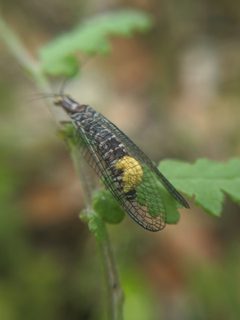
Nothochrysa is a of green lacewings ( Chrysopidae) comprising approximately 10 described . Members are commonly known as black lacewings due to their brown coloration, distinguishing them from the typically green Chrysopidae. The genus includes both extant and extinct species, with fossil representatives known from the Cenozoic. Nothochrysa capitata serves as the primary reference species for genomic studies within the genus.
Pronunciation
How to pronounce Nothochrysa: //ˌnɒt.hoʊˈkraɪ.sə//
These audio files are automatically generated. While they are not always 100% accurate, they are a good starting point.
Identification
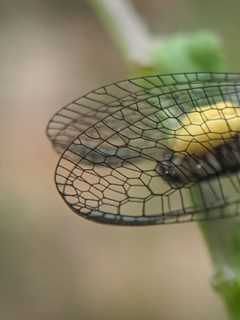
distinguished from the similar Nothochrysa fulviceps by lack of pale thoracic stripe, smaller size (wingspan 20–35 mm versus >40 mm in N. fulviceps), and untoothed claw base. Prominent Pseudomedia and Pseudocubitus run parallel to the hind wing margin. Adults hold wings in a tent-like position over the body. Overall coloration is brown rather than the green typical of many Chrysopidae.
Images
Habitat
Primarily associated with conifers; also found associated with oaks.
Distribution
Records from Denmark, Norway, Sweden (GBIF). Nothochrysa capitata widespread and common in England and Wales, with records from Scotland but not Ireland. Other with more restricted ranges: N. californica in western North America, N. sinica in China, N. turcica in Turkey.
Diet
larvae.
Life Cycle
are stalked and laid on vegetation, specifically observed on pine needles.
Behavior
hold wings in a tent-like position over the body when at rest.
Human Relevance
Not flagged as a conservation concern in assessed regions. Subject of sequencing efforts (N. capitata genome assembled at level, 688.43 Mb haplotype 1, 587.48 Mb haplotype 2).
Similar Taxa
- Nothochrysa fulvicepsLarger size (>40 mm wingspan), possesses pale thoracic stripe, and has toothed claw base; N. capitata lacks these features
More Details
Genomic resources
Nothochrysa capitata sequenced and assembled at level, revealing 8 chromosomes including W/Z
Fossil record
Two extinct known: Nothochrysa praeclara (Statz, 1936) and Nothochrysa stampieni (Nel & Séméria, 1986)