
Chrysopa incompleta
Banks, 1911
green lacewing
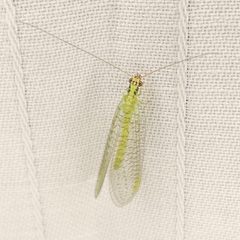
Chrysopa incompleta is a of green lacewing in the Chrysopidae. The species was described by Banks in 1911. Like other green lacewings, it is a predatory insect with that feed on pollen, nectar, and honeydew, while larvae are voracious of soft-bodied insects. The species is found in the eastern United States.
Pronunciation
How to pronounce Chrysopa incompleta: /ˈkrɪsoʊpə ˌɪnkəmˈplɛtə/
These audio files are automatically generated. While they are not always 100% accurate, they are a good starting point.
Images
Distribution
Eastern United States; North America broadly according to some sources.
Diet
feed on pollen, nectar, and honeydew. Larvae are predatory on soft-bodied insects including aphids, mites, , and soft scales.
Life Cycle
are laid on plant stems. Larvae emerge and actively hunt soft-bodied prey. Larvae have been observed to be cannibalistic.
Behavior
are or and attracted to lights. Larvae are active with sickle-shaped used to impale and consume prey.
Ecological Role
agent; larvae are significant of agricultural and garden pests, particularly aphids.
Human Relevance
Considered beneficial in agricultural and garden settings due to predatory larvae that control pest . No known negative impacts to humans.
Similar Taxa
- Chrysopa oculataAnother common green lacewing in eastern North America; may overlap in range and .
- Chrysoperla spp.Formerly included in Chrysopa; green lacewings with similar appearance but differing in larval markings and genetic characteristics.
More Details
Nomenclature
The specific epithet 'incompleta' was established by Nathan Banks in 1911.