
Corydalus texanus
Banks, 1903
Western Dobsonfly
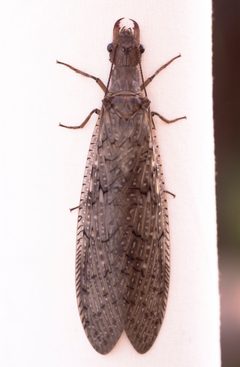
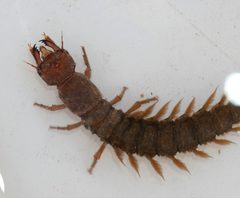
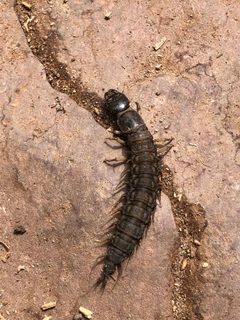
Corydalus texanus is a large megaloopteran insect commonly known as the Western . are among the largest winged insects in their range, with males distinguished by elongated sickle-shaped used in combat with rivals. Females possess shorter but powerful jaws capable of delivering a painful bite. The aquatic larval stage, known as hellgrammites, are and serve as important indicators of stream health. Adults are attracted to lights and may be observed near water bodies at night.
Pronunciation
How to pronounce Corydalus texanus: /kɔˈrɪdələs tɛkˈsænəs/
These audio files are automatically generated. While they are not always 100% accurate, they are a good starting point.
Identification
Males identified by extremely elongated, sickle-shaped used in male-male combat; females have shorter, powerful mandibles. Large size distinguishes them from most other insects in range. Similar to Corydalus cornutus (Eastern Dobsonfly) but with western distribution. have large wings and divided . Larval hellgrammites have gills along abdominal margins and allowing amphibious respiration.
Images
Habitat
Associated with freshwater streams and rivers. Larvae (hellgrammites) inhabit rapidly flowing streams, living in spaces between stones and vegetation in the benthos. found near water bodies, often attracted to lights on buildings near waterways.
Distribution
Western North America. Present in North America according to GBIF records. Western counterpart to the eastern Corydalus cornutus.
Seasonality
active during summer months. Larval development takes one to three years. Adults may be encountered in the morning near lighted structures after nighttime activity.
Diet
have liquid diet, not predatory. Larvae (hellgrammites) are , feeding on mayflies, stoneflies, and .
Life Cycle
Complete with aquatic larval and terrestrial pupal stages. Females deposit on vegetation overhanging water; hatchlings drop into stream. Larvae (hellgrammites) develop in water for 1-3 years, then climb out to build pupal chambers beneath moist stones, logs, or other protected structures on land. emerge from pupal chambers.
Behavior
males use elongated in combat to dislodge rivals from substrates near potential mates. Adults attracted to light. When cold, adults engage in rapid wing-fluttering (shivering thermogenesis) to warm muscles for takeoff. Larvae are ambush in stream benthos.
Ecological Role
Larvae serve as key bioindicators of stream health, absent from polluted waters. Important prey item for fish. contribute to nutrient cycling and may serve as food for .
Human Relevance
Larvae (hellgrammites) valued as excellent fish . may startle humans due to large size and appearance; females can deliver painful defensive bite. Attracted to porch lights, occasionally encountered by humans near waterways.
Similar Taxa
- Corydalus cornutusEastern Dobsonfly, similar appearance and but eastern distribution; C. texanus is western counterpart
- Chauliodes pectinicornis, also in Corydalidae, smaller size and different structure
- Other MegalopteraAlderflies (Sialidae) are smaller with different wing venation and shorter
Sources and further reading
- BugGuide
- GBIF taxonomy match
- iNaturalist taxon
- Catalogue of Life
- Bembicid Holdings | Entomology Research Museum
- California Has No State Bee--Yet! | Bug Squad
- How a cool creepy insect warms up: Eastern Dobsonfly, Corydalus cornutus — Bug of the Week
- Tracking Tetraopes texanus with Terry | Beetles In The Bush
- Neuroptera | Beetles In The Bush | Page 2
- The Texas Prick | Beetles In The Bush