
Chauliodes
Spring and Summer Fishflies
Species Guides
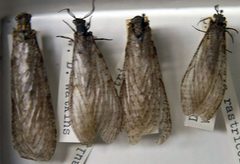
2- Chauliodes pectinicornis(Summer Fishfly)
- Chauliodes rastricornis(Spring Fishfly)
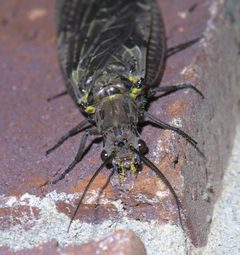
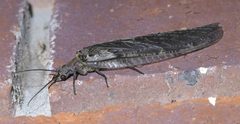
Chauliodes is a of fishflies in the Corydalidae, commonly known as spring and summer fishflies. The genus contains approximately five described distributed in North America, including the well-known spring (C. rastricornis) and summer fishfly (C. pectinicornis). are and frequently attracted to lights. The genus is distinguished from other fishflies by specific antennal and wing characteristics.
Pronunciation
How to pronounce Chauliodes: //kaʊliˈəʊdiːz//
These audio files are automatically generated. While they are not always 100% accurate, they are a good starting point.
Identification
Distinguished from other Corydalidae by the combination of: (1) relatively smaller size compared to Corydalus (dobsonflies), (2) absence of the greatly elongated seen in male dobsonflies, (3) pectinate male in most , and (4) specific wing venation patterns including fewer crossveins in certain wing sectors. Chauliodes can be separated from the related Neohermes by differences in antennal structure and details of male genitalia. Species-level identification relies primarily on antennal , seasonal occurrence, and geographic distribution.
Images
Habitat
are found in riparian zones and wooded areas near streams, rivers, and lakes. Larvae are aquatic, inhabiting flowing and still waters with organic detritus, often found under stones and in submerged woody debris. Adults may disperse into adjacent terrestrial but remain associated with water bodies.
Distribution
North America, with distributed across eastern and central United States and adjacent Canada. Individual species have more restricted ranges: C. pectinicornis occurs broadly in the eastern U.S. and Canada; C. rastricornis ranges through the eastern and central U.S.; C. carsteni is known from Mexican amber (fossil); C. priscus and C. schneideri have more limited documented distributions.
Seasonality
Strongly seasonal with distinct spring and summer emergences. C. rastricornis (spring ) active from March to June, peaking in April-May. C. pectinicornis (summer fishfly) adults active from June to August, peaking in July. Other have less documented seasonality but generally follow similar temperate patterns.
Life Cycle
Holometabolous with aquatic larval stage. laid on vegetation or other substrates near water. Larvae are predatory or scavenging, feeding on small aquatic and organic matter; they possess lateral gills and require well-oxygenated or cool water conditions. Larval development spans one to multiple years depending on and environmental conditions. occurs in moist terrestrial environments near the water's edge, often in chambers constructed in soil or under objects. are short-lived and do not feed, or feed little.
Behavior
are strongly attracted to artificial lights at night, often appearing in large numbers. They are weak, fluttering fliers generally remaining near larval . Mating occurs shortly after , with males using pectinate to detect female . Adults are primarily and , resting in vegetation during daylight hours.
Ecological Role
Larvae function as and in freshwater , contributing to nutrient cycling and serving as prey for larger aquatic organisms. provide food for terrestrial predators including birds, bats, and spiders. The serves as a bioindicator of healthy aquatic due to larval sensitivity to water quality degradation.
Human Relevance
are conspicuous and sometimes considered nuisance pests when attracted to lights in large numbers near lakes and rivers. Not medically or economically significant. Occasionally used as educational specimens to demonstrate aquatic insect and freshwater . Attraction to lights makes them easily observable and photographable for citizen science platforms.
Similar Taxa
- CorydalusDobsonflies in this are substantially larger; males possess extremely elongated, sickle-shaped absent in Chauliodes; are in both sexes without pectination.
- NeohermesOverlapping distribution and similar appearance; distinguished by differences in male genitalia structure and antennal segment proportions; Neohermes generally less common and more restricted to specific stream .
- SialisAlderflies in this related are smaller with shorter, less densely veined wings and shorter ; have more compact body form and different wing venation pattern with distinct costal region.
More Details
Fossil Record
C. carsteni is known only from Eocene Mexican amber, indicating the has persisted for at least 44 million years with minimal morphological change.
Common Name Origin
The vernacular names 'spring ' and 'summer fishfly' directly correspond to the seasonal periods of the two most common and widespread , C. rastricornis and C. pectinicornis respectively.