
Neohermes
Banks, 1908
Gray Fishflies
Species Guides
5- Neohermes angusticollis(narrow-collared fishfly)
- Neohermes californicus(California fishfly)
- Neohermes concolor(fishfly)
- Neohermes filicornis(Fishfly)
- Neohermes inexpectatus
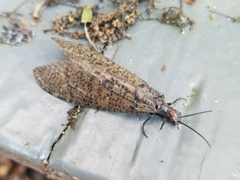
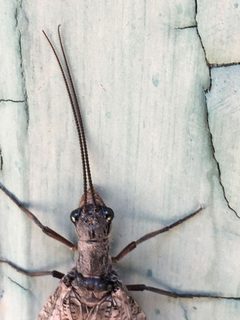
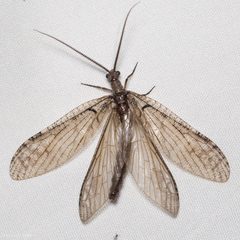
Neohermes is a of fishflies in the Corydalidae containing approximately five described . Species in this genus are aquatic insects associated with freshwater , particularly intermittent streams. The genus is known for including long-lived aquatic species with specialized burrowing .
Pronunciation
How to pronounce Neohermes: /ˌniːoʊˈhɜrmiːz/
These audio files are automatically generated. While they are not always 100% accurate, they are a good starting point.
Identification
Neohermes can be distinguished from other by characteristics typical of the genus, though specific diagnostic features are not detailed in available sources. As gray fishflies, they likely exhibit muted coloration compared to more brightly colored relatives.
Images
Habitat
Aquatic environments, particularly intermittent streams. At least one (N. filicornis) has been documented in intermittent stream systems where burrowing is an important .
Distribution
North America. Documented from the United States including Vermont and western regions (California and surrounding areas based on epithets).
Life Cycle
Long-lived aquatic insect with extended larval development in freshwater . Specific duration varies by ; N. filicornis has been described as notably long-lived.
Behavior
Burrowing is a documented trait, particularly in intermittent stream where substrate excavation may provide during dry periods.
Similar Taxa
- CorydalusAnother in Corydalidae; Neohermes are generally smaller and less conspicuous than the large dobsonflies of Corydalus, and are commonly called gray fishflies rather than dobsonflies.
- Chauliodes in Corydalidae; separation requires examination of specific morphological characters including wing venation and genitalia.
More Details
Species diversity
The contains five described : Neohermes angusticollis, N. californicus, N. concolor, N. filicornis, and N. matheri.