
Megalopyge lacyi
(Barnes & McDunnough, 1910)
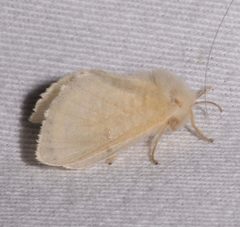
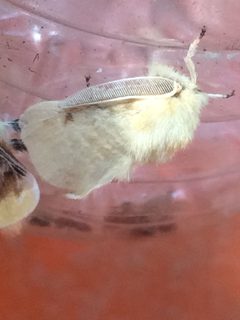
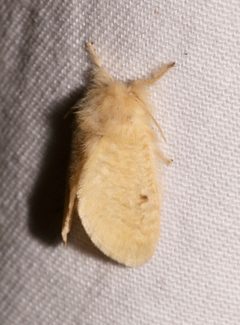
Megalopyge lacyi is a flannel described by Barnes and McDunnough in 1910. Like other members of the Megalopyge, its larvae possess venomous concealed beneath a dense coat of soft, hair-like setae. The species is part of a known for caterpillars that can deliver painful stings upon contact.
Pronunciation
How to pronounce Megalopyge lacyi: //ˌmɛɡəloʊˈpaɪdʒi ˈleɪsiˌaɪ//
These audio files are automatically generated. While they are not always 100% accurate, they are a good starting point.
Identification
Insufficient documented information exists to distinguish this from such as M. opercularis or M. crispata based on available sources. Identification likely requires examination of genitalia or other subtle morphological features not described in general references.
Images
Distribution
Distribution not specifically documented for this ; the Megalopyge occurs across eastern and central North America.
Human Relevance
Larvae possess venomous urticating spines that can cause intense burning pain, localized swelling, redness, and blistering upon contact. Medical attention should be sought for reactions or contact with mucous . Handling should be avoided.
Similar Taxa
- Megalopyge opercularisShares the distinctive hairy larval appearance and venomous spines; require careful morphological examination to separate.
- Megalopyge crispataSimilar larval with dense hair-like setae concealing urticating spines; specific distinguishing features for M. lacyi not documented.
More Details
Taxonomic note
This is rarely referenced in entomological literature compared to the more commonly encountered M. opercularis and M. crispata. Most biological information about the is derived from studies of these better-known species, and direct observations of M. lacyi are sparse (iNaturalist reports 7 observations as of source date).
Sources and further reading
- BugGuide
- Wikipedia
- GBIF taxonomy match
- iNaturalist taxon
- Catalogue of Life
- Look but do not touch: puss caterpillar, Megalopyge opercularis; White flannel moth, Norape ovina; Io moth, Automeris io; buck moth Hemileuca spp.; and hag moth, Phobetron pithecium — Bug of the Week
- Megalopygidae | Beetles In The Bush
- Bug Eric: A Potential New Host Record for Calliephialtes grapholithae (Hymenoptera: Ichneumonidae) from a Paper Wasp nest (Hymenoptera: Vespidae: Polistes metricus)