
Parasa indetermina
(Griffith & Pidgeon, 1832)
stinging rose moth, stinging rose caterpillar moth
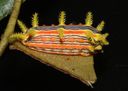
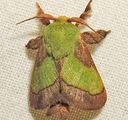
Parasa indetermina is a Nearctic slug in the Limacodidae, commonly known as the stinging rose moth. have green-banded forewings with a wingspan of 23–30 mm and are active from June to July. The larvae are brightly colored and possess numerous that deliver a painful sting, from which the derives its . The species occurs in sympatry with the morphologically similar P. chloris throughout eastern North America, though the larvae are distinctly different.
Pronunciation
How to pronounce Parasa indetermina: /ˈpæɹəsə ˌɪndɪˈtɜrmɪnə/
These audio files are automatically generated. While they are not always 100% accurate, they are a good starting point.
Identification
are difficult to distinguish from the sympatric P. chloris based on external alone; examination of male genitalia or COI barcoding may be required for definitive identification. Larvae are diagnostic: brightly colored with prominent stinging hairs, differing markedly from P. chloris larvae. The derives directly from the larval and association with rose bushes as a plant.
Images
Habitat
Eastern North American deciduous forests and associated edge . Larval plants include Myrica and rose bushes (Rosa).
Distribution
United States from New York south to Florida, west to Missouri, Texas, and Oklahoma. Occurs in sympatry with P. chloris throughout eastern USA.
Seasonality
on wing June to July. Larval activity period not explicitly documented in sources.
Diet
Larvae feed on apple, dogwood, hickory, maple, oak, poplar, and rose bushes.
Life Cycle
Complete with , larva, pupa, and stages. Specific details of developmental timing and strategy not documented in available sources.
Behavior
Larvae possess that deliver a painful sting when touched. are and attracted to light.
Human Relevance
Larvae can be a nuisance pest in gardens and orchards due to their stinging hairs. The painful sting makes them noteworthy to gardeners and field biologists.
Similar Taxa
- Parasa chlorisMorphologically similar appearance, but larvae are distinctly different; occurs in sympatry throughout eastern USA
- Euclea delphiniiAnother Limacodidae with stinging larval hairs, but larva has spiny oak slug appearance rather than rose-associated form
- Apoda y-inversaYellow-collared slug moth with different larval coloration and associations