
Apoda latomia
Yellow-collared slug moth
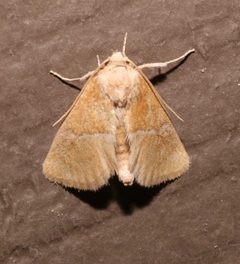
Apoda latomia is a slug in the Limacodidae. The is known for its distinctive caterpillar that feeds on hickory foliage and has a helmet-like appearance. are small, relatively nondescript moths. The species occurs in eastern North America and is most frequently encountered in its larval stage.
Pronunciation
How to pronounce Apoda latomia: /əˈpoʊdə ləˈtoʊmiə/
These audio files are automatically generated. While they are not always 100% accurate, they are a good starting point.
Identification
The caterpillar is distinguished from other Limacodidae by its helmet-shaped profile and association with hickory plants. It can be separated from the similar Apoda y-inversa by details of color pattern and geographic distribution. are difficult to identify without dissection or molecular analysis and are easily confused with other small brown .
Images
Habitat
Deciduous forests and woodlands, particularly those containing hickory trees. The is associated with Carya species as larval plants.
Distribution
Eastern North America. Records indicate occurrence in the United States, particularly in the Midwest and eastern regions. The exact northern and southern range limits are not precisely documented.
Seasonality
are active during summer months. Caterpillars are present during the growing season when hickory foliage is available. Specific periods vary by latitude.
Diet
Caterpillars feed on leaves of hickory trees (Carya ). The feeding habits are not documented; adults of many Limacodidae do not feed.
Host Associations
- Carya - larval Caterpillars feed on foliage of hickory
Life Cycle
Complete with , larval, pupal, and stages. Larvae are the most commonly observed stage. occurs in a cocoon. Detailed timing is not well documented.
Behavior
Caterpillars are slow-moving and feed exposed on leaf surfaces. They possess urticating spines or setae typical of Limacodidae that can cause skin irritation upon contact. are and attracted to light.
Ecological Role
As a folivore on hickory, caterpillars contribute to nutrient cycling and serve as prey for and other natural enemies. levels are typically low and not considered economically significant.
Human Relevance
Caterpillars can cause minor skin irritation if handled due to urticating structures. Not a significant agricultural or forest pest. Occasionally encountered by naturalists and enthusiasts.
Similar Taxa
- Apoda y-inversaSimilar helmet-shaped caterpillar and yellow coloration, but differs in specific markings and has been treated as a distinct ; some sources suggest potential synonymy
- Other LimacodidaeShare slug-like larval form but differ in plant associations and specific caterpillar color patterns