
Apoda
slug moths, slug caterpillar moths
Species Guides
4- Apoda biguttata(Shagreened Slug Moth)
- Apoda latomia(Yellow-collared slug moth)
- Apoda rectilinea(Rectilinea Slug Moth)
- Apoda y-inversum(inverted Y slug moth)
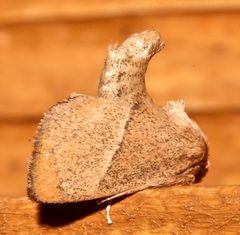
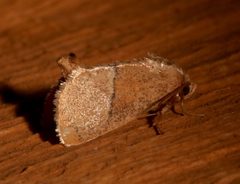
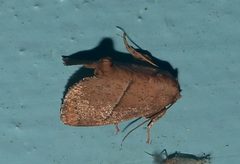
Apoda is a of in the Limacodidae, commonly known as slug moths due to the distinctive caterpillar . The genus includes whose larvae are characterized by a flattened, slug-like body form and reduced or absent , moving with a gliding motion rather than typical caterpillar crawling. Caterpillars in this genus possess venomous spines or setae that can cause painful stings upon contact with human skin. The genus is part of a larger group of limacodid moths known for their unusual larval forms and defensive capabilities.
Pronunciation
How to pronounce Apoda: /əˈpoʊdə/
These audio files are automatically generated. While they are not always 100% accurate, they are a good starting point.
Identification
Apoda are difficult to distinguish from other limacodid without close examination of genitalia or molecular analysis. The caterpillars are more readily identified by their distinctive slug-like form, reduced , and gliding movement. Apoda y-inversa caterpillars specifically show a yellow coloration with a dark collar marking and are associated with hickory foliage. The amorphous, nearly shapeless body form of the caterpillar separates Apoda from many other limacodid genera whose larvae may be more spiny or have more defined body segmentation.
Images
Habitat
Larval consists primarily of deciduous forest and woodland edges where trees occur. Specific records indicate association with hickory trees (Carya ) and oaks (Quercus species) in tallgrass prairie remnants and dry-mesic oak-hickory forests. The occurs in temperate North American habitats ranging from prairie-forest to mature deciduous woodlands.
Distribution
North America, with records from the central and eastern United States including Missouri, Kansas, and surrounding regions. Specific locality records include southwestern Washington County, Missouri, and the greater Kansas City metropolitan area.
Seasonality
activity occurs during summer months, with records from July. Larval stages are present during the growing season when foliage is available.
Diet
Larvae feed on leaves of deciduous trees, with documented associations with hickory (Carya tomentosa, mockernut hickory) and oak (Quercus stellata, post oak; Quercus marilandica, blackjack oak). The diet appears restricted to these . feeding habits are not documented.
Host Associations
- Carya tomentosa - larval mockernut hickory
- Quercus stellata - larval post oak
- Quercus marilandica - larval blackjack oak
Behavior
Caterpillars are solitary feeders on leaf surfaces. When disturbed, they rely on their venomous spines for defense rather than escape . The slug-like locomotion—gliding on their broad surface—is an unusual behavioral trait among Lepidoptera larvae. are and attracted to ultraviolet light sources.
Ecological Role
As herbivores, larvae contribute to nutrient cycling in deciduous forest through leaf consumption. The venomous spines provide defense against and , though specific natural enemies are not documented. The association with hickory and oak suggests a role in these plant , though impacts are likely minor given the solitary nature of the larvae.
Human Relevance
Caterpillars pose a stinging hazard to humans who contact them; the venomous setae can cause localized pain, rash, and other dermatological reactions. The is of interest to entomologists and naturalists due to the unusual caterpillar . No economic importance as pests has been documented.
Similar Taxa
- ParasaBoth are limacodid with stinging caterpillars, but Parasa larvae are more distinctly spiny with defined body segmentation and often brighter coloration (e.g., Parasa indetermina, the stinging rose slug , shows green with red and yellow spines).
- EucleaAnother limacodid with slug-like larvae, but Euclea caterpillars such as Euclea delphinii (spiny oak slug ) possess more prominent spiny and different color patterns, often lichen-mottled.
- MegalopygeRelated flannel with extremely hairy, venomous caterpillars (e.g., Megalopyge crispata, the black-waved flannel moth); distinguished by dense hair covering rather than the flattened, amorphous form of Apoda.
Sources and further reading
- BugGuide
- Wikipedia
- iNaturalist taxon
- NCBI Taxonomy
- Catalogue of Life
- Bug Eric: National Moth Week 2024 Recap from Kansas City
- Uncategorized | Blog - Part 24
- Megalopygidae | Beetles In The Bush
- Zur Taxonomie und Ökologie mediterraner Holothuroidea-Apoda On taxonomy and ecology of mediterranean holothuroidea-apoda