
Parasa chloris
(Herrich-Schäffer, 1854)
Smaller Parasa Moth, smaller parasa
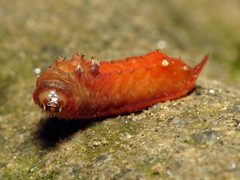
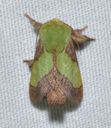
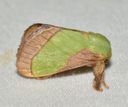
Parasa chloris is a of slug caterpillar in the Limacodidae, commonly known as the smaller parasa. display characteristic green banding on the forewings, while larvae possess stinging hairs and are often brightly colored. Recent taxonomic revision resolved long-standing nomenclatural confusion by designating a lectotype from three syntypes discovered in the National Museum of Natural History, with COI barcoding indicating the type locality is north-eastern USA rather than South America as originally suggested. This work represents the first step toward testing the monophyly of the pantropical Parasa.
Pronunciation
How to pronounce Parasa chloris: /ˈpærəsə ˈklɔːrɪs/
These audio files are automatically generated. While they are not always 100% accurate, they are a good starting point.
Identification
can be distinguished from the sympatric and morphologically similar Parasa indetermina by morphological examination of adults and male genitalia, combined with COI barcoding. Distinguished from other Parasa by green wing pattern typical of the P. undulata group. Larvae possess stinging hairs, a -wide trait of Limacodidae.
Images
Distribution
North-eastern USA, likely southern states; type locality resolved as North America rather than South America through COI barcoding of the lectotype and modern specimens. Distribution records supported by museum specimens and citizen science observations from iNaturalist.
Human Relevance
Larvae possess stinging hairs that can cause skin irritation in humans; are photographed and documented by citizen scientists on iNaturalist with over 2,700 observations.
Similar Taxa
- Parasa indeterminaMorphologically similar and sympatric; distinguished by morphological examination of and male genitalia plus COI barcoding
- Parasa minimaClosely related requiring taxonomic examination to distinguish
- Parasa huachucaPreviously treated as P. chloris huachuca, now elevated to status (stat. nov.) based on COI barcoding and morphological data
- Parasa cuernavacaPreviously synonymized, now revived as valid (stat. rev.) based on COI barcoding and morphological examination
- Parasa maysiClosely related requiring taxonomic examination to distinguish
Misconceptions
Original description suggested South American provenance, but COI barcoding of the ~180-year-old lectotype and modern specimens revealed the true type locality as north-eastern USA.
More Details
Taxonomic History
Three previously unidentified syntypes were discovered in the National Museum of Natural History, Smithsonian Institution, having passed through several collections over approximately 180 years. A lectotype was designated from these syntypes. Historic from the lectotype yielded only a short 177 COI fragment but was sufficient for taxonomic assignment via BLAST (>97% identity).
Nomenclatural Changes
Parasa huachuca Dyar, 1905 was elevated from to status (stat. nov.), and Parasa cuernavaca Dyar, 1907 was revived as a valid species (stat. rev.). Limacodes viridus Reakirt, 1864 was revived as a synonym of Parasa indetermina rather than P. chloris.
Research Significance
This revision represents the first step in delimiting Parasa in preparation for future taxonomic work testing the monophyly of this widespread pantropical .
Sources and further reading
- BugGuide
- Wikipedia
- GBIF taxonomy match
- iNaturalist taxon
- NCBI Taxonomy
- Catalogue of Life
- Meloidae Holdings | Entomology Research Museum
- Megalopygidae | Beetles In The Bush
- Pensoft Editorial Team | Blog - Part 134
- Uncategorized | Blog - Part 30
- Newly-Discovered Bacterium Helps Honey Bee Larvae
- On the identity of the type species of Parasa (Lepidoptera: Limacodidae): investigations into the Nearctic Parasa chloris and related taxa