Apoda y-inversum
inverted Y slug moth, yellow-collared slug moth
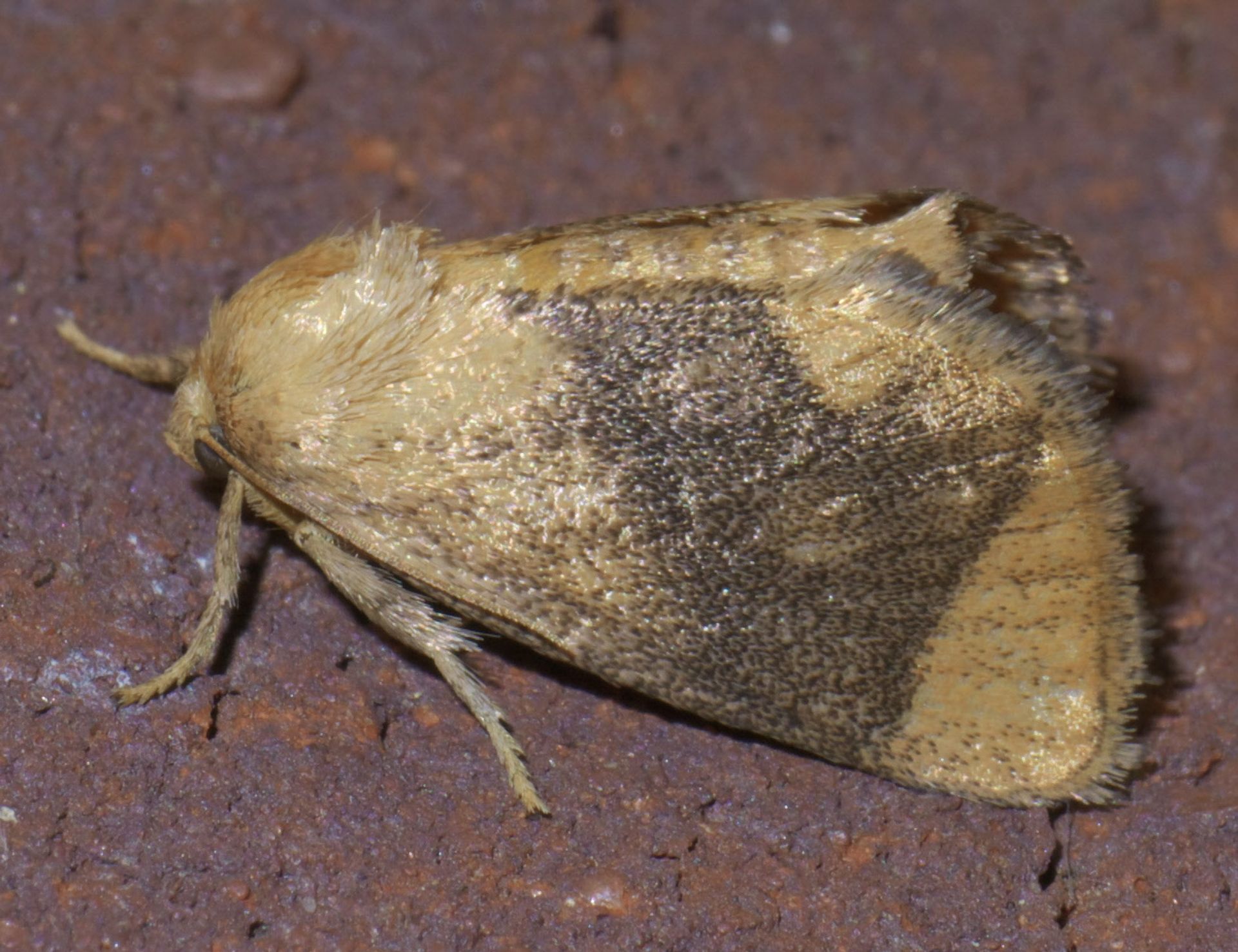
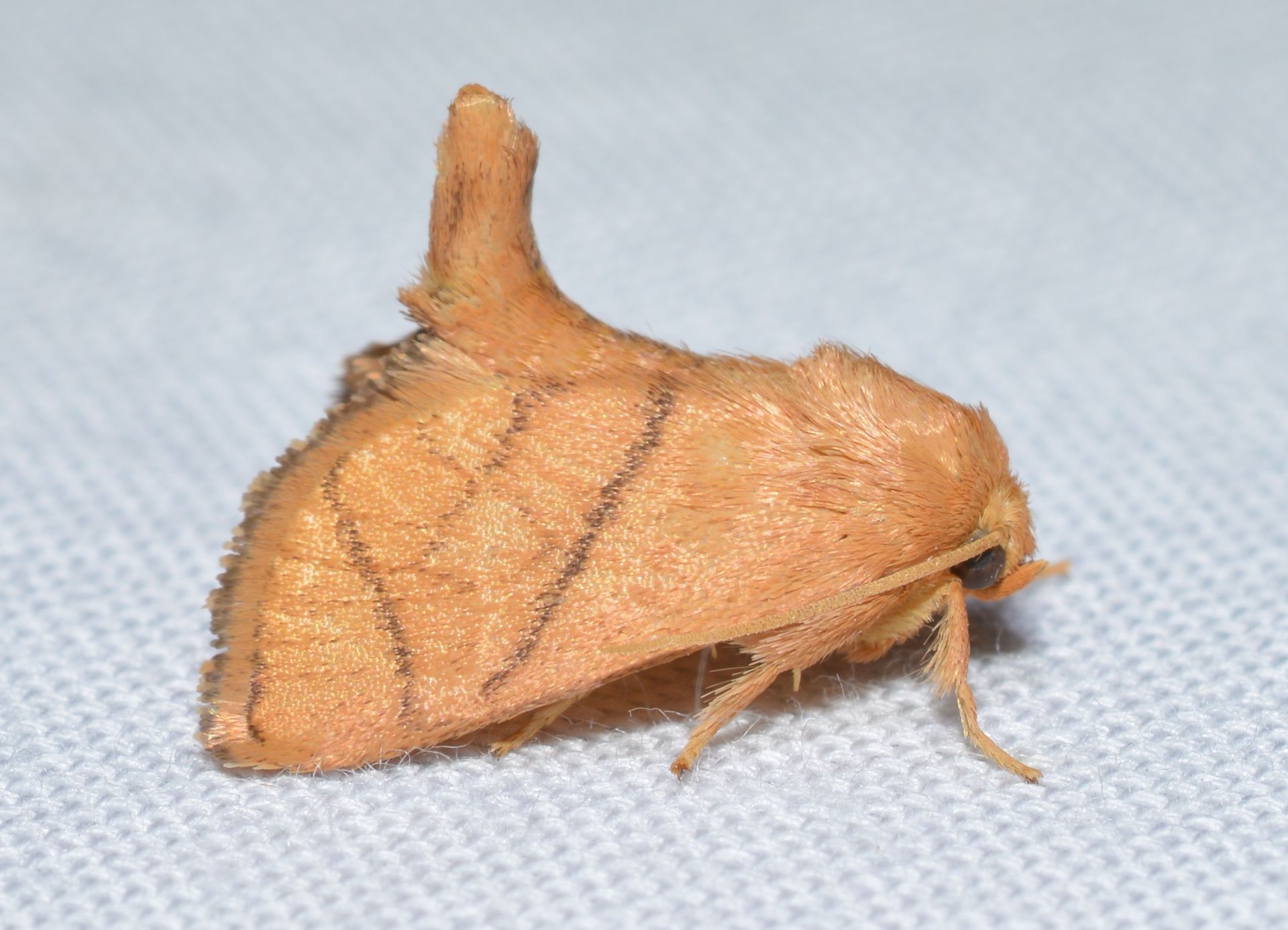
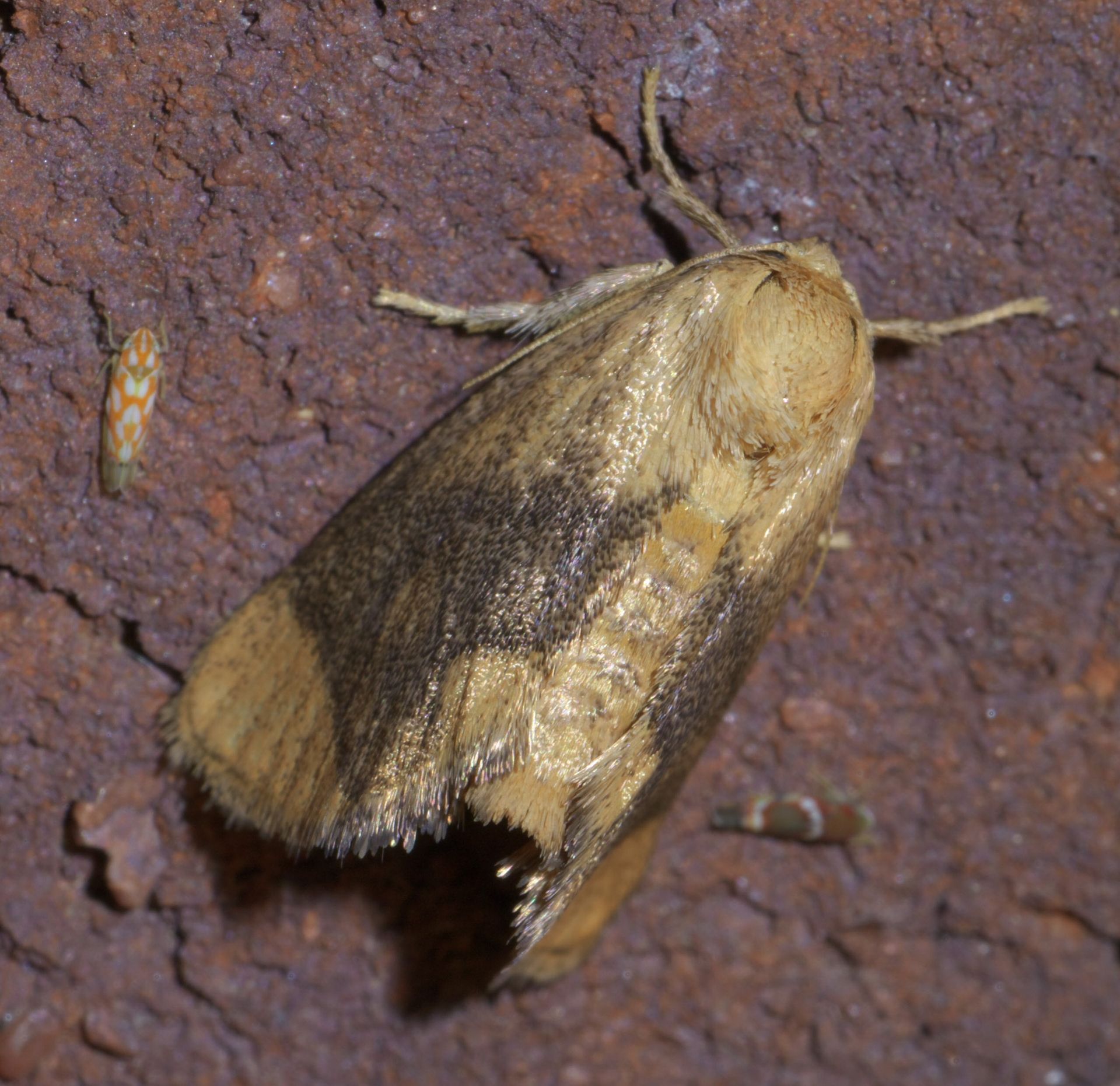
Apoda y-inversum is a slug in the Limacodidae, known for its distinctive helmet-shaped caterpillar that feeds on hickory leaves. The ranges across eastern North America from Quebec to Florida. are active from May through August and have a wingspan of 21–30 mm. The refers to the yellow collar marking on the adult moth.
Pronunciation
How to pronounce Apoda y-inversum: /əˈpoʊdə waɪ ɪnˈvɜrsəm/
These audio files are automatically generated. While they are not always 100% accurate, they are a good starting point.
Identification
can be recognized by the yellow collar marking. The caterpillar's distinctive helmet-shaped, amorphous yellow body distinguishes it from other slug larvae; it lacks the prominent spines of Euclea delphinii or the striking coloration of Parasa indetermina. The name refers to the inverted Y-shaped pattern on the adult.
Images
Habitat
Associated with deciduous forests containing trees, particularly hickory. have been observed in restored tallgrass prairie remnants adjacent to oak-hickory woodlands.
Distribution
Eastern North America: Quebec and Ontario south to Florida, west to Oklahoma and Mississippi.
Seasonality
on wing from May to August. Larvae present during growing season when hickory foliage is available.
Diet
Larvae feed on leaves of Carya (hickory) , including mockernut hickory (Carya tomentosa). Has also been reported from beech, ironwood, and oak, though hickory appears to be the primary .
Host Associations
- Carya tomentosa - larval mockernut hickory
- Carya - larval hickory
- Fagus - larval beech
- Ostrya virginiana - larval ironwood
- Quercus - larval oak
Life Cycle
Complete . Larvae are present on foliage during summer months. occurs in a cocoon, though specific details of pupal and stage are not documented.
Behavior
are and attracted to ultraviolet light. Larvae are solitary feeders on leaves. The caterpillar's compact, helmet-like form and reduced legs are typical of slug moths, which move with a slow, slug-like gliding motion rather than typical caterpillar locomotion.
Ecological Role
Larval herbivore on hardwood trees. Serves as prey for and other natural enemies. The venomous larval spines provide defense against .
Human Relevance
Larval stinging spines can cause skin irritation upon contact, a characteristic shared with other Limacodidae. Otherwise has minimal direct interaction with humans.
Similar Taxa
- Euclea delphiniiBoth are Limacodidae with slug-like larvae, but E. delphinii caterpillar is spiny and lichen-colored rather than smooth and yellow
- Parasa indeterminaBoth are stinging slug moths, but P. indetermina larva has striking rose and green coloration with prominent spines, unlike the plain yellow helmet shape of A. y-inversum
- Apoda biguttataCongeneric with similar ; identification requires examination of genitalia or specific pattern details
More Details
Nomenclature note
The name is sometimes rendered as 'y-inversa' in older sources, but 'y-inversum' is the accepted spelling.
Collection history
The has been documented in entomological surveys of restored prairie in Missouri, where it occurs in association with post oak and blackjack oak .