
Alarodia slossoniae
(Packard, 1893)
Packard's White Slug Moth
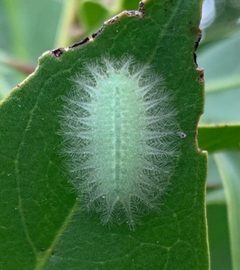
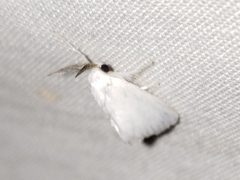
Alarodia slossoniae, known as Packard's White Slug , is a North American moth in the Limacodidae. The refers to the slug-like appearance of its caterpillar, a trait characteristic of this family. are small moths with white or pale coloration. The was originally described by Alpheus Spring Packard in 1893 under the Eupoeya before being transferred to Alarodia.
Pronunciation
How to pronounce Alarodia slossoniae: /ˌæləˈroʊdiə ˌslɒˈsɒni.aɪ/
These audio files are automatically generated. While they are not always 100% accurate, they are a good starting point.
Identification
can be distinguished from other small white by the combination of: Limacodidae (slug caterpillar moths) characteristics including compact body and relatively broad wings; pale unmarked or lightly marked white wings; and specific genitalic structures requiring dissection for definitive identification. Separation from other Alarodia and similar white limacodids such as some Euclea or Isa species requires examination of genitalia or larval associations.
Images
Habitat
Associated with deciduous forests and woodlands in eastern North America. Larvae feed on foliage of trees and shrubs.
Distribution
Eastern North America, with records from the northeastern United States and adjacent Canada southward through the Appalachian region. Specific range boundaries are poorly documented due to limited survey effort and identification challenges.
Seasonality
are active from late spring through summer, with peak activity in June and July in most of the range. Exact period varies with latitude.
Behavior
are and attracted to light. Larvae are solitary feeders on foliage. The slug-like locomotion of caterpillars is slow and gliding, an for moving on leaf surfaces.
Ecological Role
Larvae function as folivores on woody plants, contributing to nutrient cycling and serving as prey for and other natural enemies. Specific quantitative impacts on are unknown.
Human Relevance
No significant economic importance. The stinging spines characteristic of many limacodid caterpillars may be present but have not been documented as causing notable human health issues for this specifically.
Similar Taxa
- Alarodia albidellaSimilar small white limacodid , distinguished by subtle wing pattern differences and genitalic structure; ranges overlap in parts of eastern North America
- Euclea delphiniiSpiny oak-slug moth, another limacodid with white or pale , but distinguished by more prominent wing markings and very different larval appearance with conspicuous branched spines
- Isa textulaCrowned slug moth, pale limacodid with distinctive wing pattern including dark discal spot and more contrasting markings; larva has unique crown of branched spines
More Details
Taxonomic History
Originally described as Eupoeya slossoniae by Packard in 1893, later transferred to the Alarodia. The genus Alarodia is small and taxonomically challenging, with distinguished primarily by subtle morphological features.
Data Limitations
This is underrepresented in collections and literature. Most available information derives from specimen records and iNaturalist observations rather than formal ecological study. Larval plants remain undocumented, and the complete has not been described.