
Ocnerostoma piniariella
Zeller, 1847
White Pine Ermel
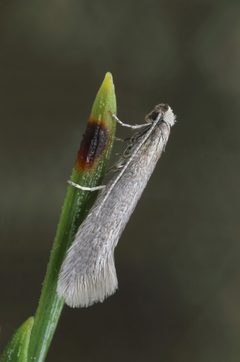
A small European in the Yponomeutidae, characterized by its narrow, light grey forewings and grey hindwings. fly in a single during summer months. The is closely similar to Ocnerostoma friesei and requires careful examination for identification.
Pronunciation
How to pronounce Ocnerostoma piniariella: /oʊkˌnɛroʊˈstoʊmə ˌpɪniˈɛriə/
These audio files are automatically generated. While they are not always 100% accurate, they are a good starting point.
Identification
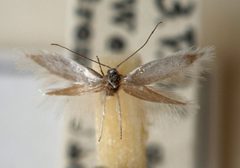
Distinguished from the very similar Ocnerostoma friesei by subtle morphological differences; precise separation requires examination of genitalia or other detailed features not visible in field observations. The shining light grey forewings and small size are characteristic of the .
Images
Appearance
Wingspan approximately 9 mm. Forewings (narrow and tapering), shining light grey. Hindwings grey. Larva shining brown with black and black plate of segment 2.
Habitat
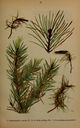
Associated with Scots pine (Pinus sylvestris), the larval plant. Occurs in environments where this conifer is present.
Distribution
Recorded from Europe, with confirmed presence in Belgium (including Flemish Region and Antwerp province) and the Netherlands. Distribution likely broader across European range of Scots pine.
Seasonality
fly in one from June to August, based on observations from Belgium and the Netherlands; timing may vary elsewhere in range.
Diet
Larvae feed on Scots pine (Pinus sylvestris). diet not documented.
Host Associations
- Pinus sylvestris - larval food plantScots pine
Life Cycle
Single per year (). Larval stage feeds on plant; and in summer.
Ecological Role
Herbivore on Scots pine; specific ecological impact not documented.
Human Relevance
No documented economic or cultural significance. Occasionally encountered by recorders and naturalists.
Similar Taxa
- Ocnerostoma frieseiExtremely similar external ; requires detailed examination for reliable separation
More Details
Taxonomic note
Described by Philipp Christoph Zeller in 1847. The specific epithet piniariella reflects association with pine (Pinus).
Flight season caveat
Published season data derives from Belgium and the Netherlands; may differ in other parts of European range.