
Argyresthia calliphanes
Meyrick, 1913
A small in the Argyresthiidae, described by Edward Meyrick in 1913. are active from June to August. Larvae are leaf miners that feed on Alnus . The species occurs across much of North America, from eastern Canada to the Pacific coast.
Pronunciation
How to pronounce Argyresthia calliphanes: /ɑrˌdʒɪrˈɛsθiə kælɪˈfeɪniːz/
These audio files are automatically generated. While they are not always 100% accurate, they are a good starting point.
Identification
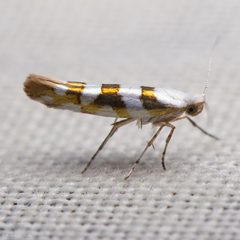
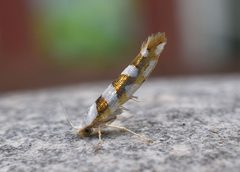
Wingspan 13–14 mm. As a member of the Argyresthia, it is a true micro- with a body length of approximately 3–7 mm. Most Argyresthia are white with broad, transverse metallic stripes; specific distinguishing characters for A. calliphanes require microscopic examination of genitalia.
Images
Habitat
Associated with Alnus (alder) plants. Likely occurs in riparian areas, wetlands, and moist woodlands where alders grow.
Distribution
Canada: Ontario to British Columbia; possibly Alberta, Saskatchewan, and Manitoba. United States: New York to California.
Seasonality
on wing from June to August.
Diet
Larvae feed on Alnus (alders).
Host Associations
- Alnus - larval
Life Cycle
Larvae are leaf miners, feeding between the layers of plant tissue in alder leaves.
Behavior
; attracted to lights.
Ecological Role
As a , larvae create feeding tunnels within alder foliage. Serves as prey for various .
Similar Taxa
- Other Argyresthia speciesMany Argyresthia share similar white coloration with metallic striping and small size; reliable identification requires dissection and examination of genitalia.