
Cnephasia stephensiana
(Doubleday, 1850)
grey tortrix, gray tortrix
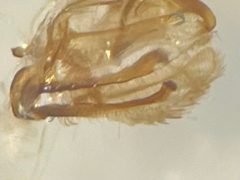
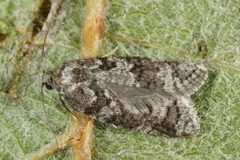
Cnephasia stephensiana is a medium-sized tortricid with highly variable grey-patterned wings. It is widespread across Britain and Ireland, with also recorded across the Palearctic and in Canada. The is , feeding on numerous herbaceous plants. are active in mid-summer and are readily attracted to light. Reliable identification often requires examination of genitalia due to similarity with and other grey tortricids.
Pronunciation
How to pronounce Cnephasia stephensiana: //knɛˈfeɪʒə steːfɛnˈziːˌɑːnə//
These audio files are automatically generated. While they are not always 100% accurate, they are a good starting point.
Identification
Identification to is challenging based on external appearance alone due to high intraspecific variability and similarity to other grey tortricids. Reliable determination typically requires examination of genitalia. The combination of rounded forewings, three irregular darker transverse bands on a light greyish ground, and pale greyish-brown hindwings provides a tentative field character set. Confusion is particularly likely with Isotrias rectifasciana and Neosphaleroptera nubilana.
Images
Habitat
Deciduous woodland; general distribution across Britain and Ireland suggests adaptability to varied herbaceous . Collection records include Wytham Woods, Oxfordshire, a deciduous woodland site.
Distribution
; widespread across Britain and Ireland. Recorded from Belgium (Flemish Region, Walloon Region, Antwerpen province) and Canada.
Seasonality
fly from dusk in July to August. Larval period September to June.
Diet
on herbaceous plants including buttercups (Ranunculus), daisies, docks (Rumex), and plantains (Plantago).
Life Cycle
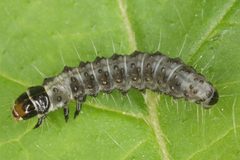
Larvae initially mine leaves, then construct a spun tube or occupy a folded leaf edge, or live beneath a web on the leaf underside. Larval development occurs from September through June. emerge and fly July to August.
Behavior
fly from dusk and come readily to light. Larvae construct protective shelters using silk.
Human Relevance
Subject of -level sequencing; genome assembly published as part of the Darwin Tree of Life project. Potential minor pest status on herbaceous plants, though not documented as economically significant.
Similar Taxa
- Isotrias rectifascianaGrey tortricid with similar wing pattern; external overlaps substantially
- Neosphaleroptera nubilanaGrey tortricid causing identification confusion based on wing appearance
- Other Cnephasia speciesCongeneric grey with overlapping morphological variation, requiring genitalia examination for separation