
Cnephasia
Curtis, 1826
Species Guides
3- Cnephasia asseclana(Flax Tortrix)
- Cnephasia longana(Long-winged Shade)
- Cnephasia stephensiana(grey tortrix)
Cnephasia is a of tortrix moths ( Tortricidae) comprising the type genus of tribe Cnephasiini. The genus was established by J. Curtis in 1826, though the type was initially misidentified and later corrected to Olethreutes pasiuana (now Cnephasia pasiuana). Species occur across the Holarctic region, with twelve species documented from Hungary alone. Many species are morphologically cryptic and require genitalia dissection for reliable identification. Several species are economically significant agricultural pests.
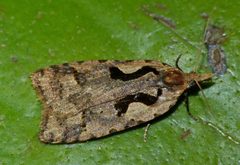
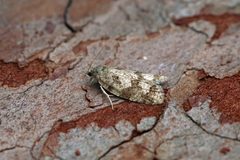
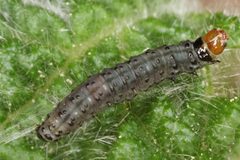
Pronunciation
How to pronounce Cnephasia: //knɛˈfeɪ.ʒə//
These audio files are automatically generated. While they are not always 100% accurate, they are a good starting point.
Identification
Reliable identification of Cnephasia requires examination of male and female genitalia; wing patterns are highly similar among species and frequently lead to misidentification. In Hungary, C. asseclana, C. chrysantheana, C. stephensiana, and C. communana have been historically confused in collections. Genitalia structure and morphological characteristics of wings are illustrated in taxonomic revisions.
Images
Habitat
vary by . C. asseclana occurs in meadows, agricultural areas, gardens, pastures, field margins, groves, and forest edges, mainly in hilly and mid-mountain regions or scattered in lowland sand areas. C. chrysantheana ranges from lowland steppe meadows and sand areas to 800-1000 m mid-mountain regions, occupying mesophilous meadows, rocky grasslands, slope steppes, karst shrub forests, areas along watercourses, gardens, and orchards.
Distribution
Holarctic distribution including Europe, Asia, and North America. Hungary: twelve known, with C. asseclana mainly in northern Transdanubia and Northern Central Mountains, and C. chrysantheana widespread but not common. GBIF records from Denmark, Norway, Sweden, and Vermont, USA.
Seasonality
C. asseclana: one , fly June-August; larvae active April-May; first instar larva overwinters. C. chrysantheana: adults fly from late March through end of July, possibly with two generations; larva overwinters.
Diet
Larvae are . C. asseclana feeds on over 200 plants including Chrysanthemum, Ranunculus, Rumex, Plantago, Papaver, Humulus, and Mentha; also attacks horticultural crops. C. chrysantheana feeds on Artemisia, Carlina, Centaurea, Chrysanthemum, Eryngium, Lathyrus, Pulmonaria, Scabiosa, and Taraxacum. C. jactatana feeds on white clover (Trifolium repens) and is a pest of kiwifruit.
Life Cycle
C. asseclana: one per year; first instar larva overwinters. C. chrysantheana: possibly two generations; larva overwinters. C. jactatana: females complete more slowly than males; most emerge during photophase; male starts 2 days after and peaks 1 day later; mating peaks 3 days after emergence; oviposition peaks 7 days after emergence.
Behavior
Courtship activity peaks 3 and 6 hours into scotophase; mating peaks 4-6 hours into scotophase; most ovipositions occur in the first 2 hours of scotophase. Remating increases female and in C. jactatana, with suboptimally fed females benefiting more. Female weight affects remating propensity.
Ecological Role
herbivores contributing to plant-herbivore interactions in grassland and forest edge ; some function as agricultural pests in horticultural systems.
Human Relevance
C. asseclana is a pest in horticulture on tomato, cabbage, pea, and strawberry—larvae are leaf miners initially, later attacking flowers. C. jactatana is an important pest of kiwifruit in New Zealand; larvae feed on dead or live plant tissues, damaging fruit surfaces or burrowing into flesh.
Similar Taxa
- EanaHypostephanuncia (sometimes listed as a junior synonym of Eana) has type C. ecullyana, indicating close relationship; both belong to tribe Cnephasiini.
- SphaleropteraTaxonomic status unresolved; some authors include it within Cnephasia while others treat it as distinct .
Misconceptions
The type of Cnephasia was originally claimed to be 'Tortrix logiana' by Curtis in 1826, but this was a misidentification; the name was frequently applied to related species in error until the early 20th century. The correct type species was determined to be Olethreutes pasiuana (now Cnephasia pasiuana). 'Cnephasia' jactatana appears to be a misidentification or informal designation, as it does not seem to belong in this .
Sources and further reading
- BugGuide
- Wikipedia
- GBIF taxonomy match
- iNaturalist taxon
- NCBI Taxonomy
- Catalogue of Life
- Magyarország Cnephasia fajai (1.) (Lepidoptera: Tortricidae)
- Remating Behavior of Cnephasia jactatana Walker Females (Lepidoptera: Tortricidae)
- Growth and reproduction of‘Cnephasia’ jactatanaWalker (Lepidoptera: Tortricidae) under two rearing systems
- Adult activity patterns of <i>Cnephasia jactatana</i> Walker (Lepidoptera Tortricidae)
- Oviposition behaviour of‘Cnephasia’ jactatanaWalker (Lepidoptera: Tortricidae) on kiwifruit
- Male Remating Behavior and Its Effect on Female Reproductive Fitness in Cnephasia jactatana Walker (Lepidoptera: Tortricidae)
- The genome sequence of the Grey Tortrix moth, Cnephasia stephensiana (Doubleday, 1850) (Lepidoptera: Tortricidae).