
Cnephasia asseclana
(Denis & Schiffermüller, 1775)
Flax Tortrix
Cnephasia asseclana, the flax tortrix, is a small tortricid with a Holarctic distribution. have a wingspan of 13–19 mm and fly during June–August in a single . The is notable for its complex taxonomic history, having been previously known under several names including C. wahlbomiana and C. virgaureana before C. asseclana was established as the senior synonym. The larvae are and can be significant pests in horticultural settings.
Pronunciation
How to pronounce Cnephasia asseclana: //knɛˈfeɪʒiə əˌsɛkˈleɪnə//
These audio files are automatically generated. While they are not always 100% accurate, they are a good starting point.
Identification
Reliable identification requires examination of genitalia structures due to membership in a cryptic . Frequently misidentified as C. chrysantheana in collections and literature. External alone is insufficient for definitive identification; genital dissection and comparison with illustrated diagnostic features is necessary. The has been historically confused with C. alticolana, C. cupressivorana, C. communana, and C. genitalana under the misapplied name C. wahlbomiana.
Images
Appearance
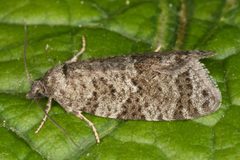
have wingspan 13–19 mm (sources vary: 15–18 mm). Forewings dark to light brownish-grey with distinct crossbands and rows of black dots. Hindwings greyish. Male and female genitalia have diagnostic structures that require microscopic examination for reliable identification within the Cnephasia .
Habitat
Meadows, agricultural areas, gardens, pastures, field margins, groves, and forest edges. Primarily occurs in hilly and mid-mountain regions, with scattered presence on sandy lowland areas.
Distribution
Holarctic distribution: Europe (widespread including British Isles), Asia, North America (Newfoundland), and Canary Islands. In Central Europe, present in Hungary with primary distribution in northern Transdanubia and Northern Central Mountains (Bükk, Mátra, Vértes, Balaton basin), plus scattered records from southern Transdanubia and the Great Plain.
Seasonality
active June–August in one per year. Larvae present April–May, with first instar larvae .
Diet
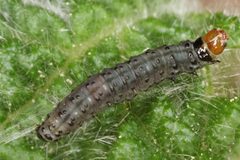
Larvae are , recorded from over 200 plant including Chrysanthemum, Ranunculus, Rumex, Plantago, Papaver, Humulus, and Mentha. In horticultural settings, known to feed on tomato, cabbage, pea, and strawberry.
Life Cycle
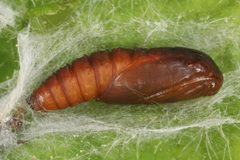
One annually. First instar larvae overwinter. Larval activity April–May, initially mining leaves. emerge June–August. occurs in spun-together leaves or flowers.
Behavior
Larvae initially mine leaves, later feeding more broadly and spinning together leaves or flowers for . are and attracted to light.
Ecological Role
Larval herbivore; considered a pest in horticultural and agricultural systems due to feeding habits.
Human Relevance
Economic pest in horticulture, particularly on tomato, cabbage, pea, and strawberry crops. Subject of applied lepidopterological study due to pest status and identification challenges.
Similar Taxa
- Cnephasia chrysantheanaFrequently misidentified in collections and literature; external similar, requires genital examination for separation
- Cnephasia alticolana, C. cupressivorana, C. communana, C. genitalanaHistorical misapplication of the name C. wahlbomiana to these and other members of the C. asseclana
Misconceptions
The name C. wahlbomiana was long misapplied to this and multiple related species, causing extensive taxonomic confusion until C. asseclana was established as the senior synonym.
More Details
Taxonomic history
Part of a cryptic with confused . Formerly known as C. wahlbomiana and later C. virgaureana before current name was established as senior synonym. Name C. wahlbomiana was also erroneously applied to Eana derivana in at least one study.