
Archips
Leafroller moths
Archips is a of leafroller moths in the Tortricidae, Tortricinae. The genus includes economically significant whose larvae roll or tie leaves together with silk, feeding within these shelters. Some species are major agricultural and forestry pests, with larvae feeding on a wide range of plants including trees and shrubs. The genus has been subject to taxonomic confusion, with misidentifications documented in regional faunistic records.
Identification
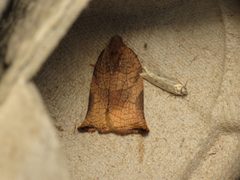
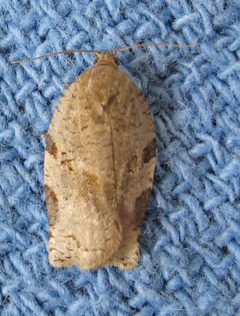
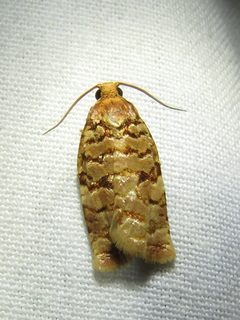
Larvae are recognized by their habit of rolling or folding leaves into shelters using silk, within which they feed. are medium-sized tortricid moths with typical bell-shaped resting posture and mottled brown or gray forewings. -level identification requires examination of genitalia and often dissection; external alone is frequently insufficient for reliable determination.
Images
Habitat
Larvae inhabit the foliage of woody plants, particularly trees and shrubs, where they construct silk-bound leaf shelters. Found in forests, orchards, ornamental plantings, and suburban landscapes with suitable vegetation.
Distribution
Widespread across the Holarctic region, with documented in North America, Europe, and Asia. Specific distribution varies by species; some have restricted ranges while others are broadly distributed.
Seasonality
are typically active during spring and summer months, with exact timing varying by and latitude. Larval feeding occurs primarily during the growing season.
Diet
Larvae feed on leaves of various woody plants; associations vary considerably among . Specific host plant records exist for individual species but are not generalizable to the as a whole.
Life Cycle
Complete with , larva, pupa, and stages. Larvae are the primary feeding and damaging stage. occurs within the larval shelter or in leaf litter or soil. Number of per year varies by and climate, with to multivoltine patterns documented.
Behavior
Larvae exhibit characteristic leaf-rolling , using silk to bind leaves together or to fold leaf edges, creating protected feeding shelters. When disturbed, larvae may drop from shelters on silken threads and later climb back. are and attracted to light.
Ecological Role
Larvae function as primary consumers of plant foliage. Some reach pest densities that can cause significant defoliation. Serve as prey for various and , including solitary that specialize on capturing leafroller caterpillars.
Human Relevance
Several are economically important pests of fruit trees, ornamentals, and forest trees. Misidentifications of Archips species have been documented in pest management literature, leading to potential errors in control recommendations. Larvae are hunted by beneficial solitary , contributing to in some settings.
Similar Taxa
- ChoristoneuraSimilar leaf-rolling larvae and tortricid ; distinguished by genitalia structure and forewing pattern details
- CroesiaOverlapping use and larval ; requires dissection for reliable separation