
Zomaria andromedana
(Barnes & McDunnough, 1917)
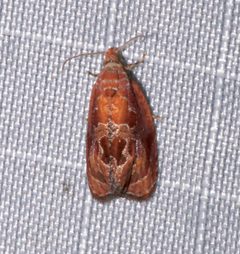
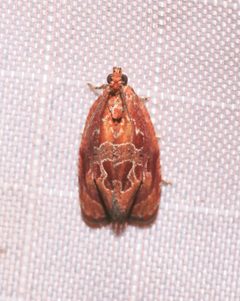
Zomaria andromedana is a of tortricid in the Olethreutinae, first described by Barnes and McDunnough in 1917. It belongs to a small of moths whose remains poorly documented. The species is known from limited observations, with most records originating from North America. Like other members of Olethreutinae, it likely has concealed larval habits, though specific associations have not been established.
Pronunciation
How to pronounce Zomaria andromedana: /zɔˈmɑɹiə ændɹəˈmiːdəˌnə/
These audio files are automatically generated. While they are not always 100% accurate, they are a good starting point.
Identification
Distinguished from other Zomaria by genitalia ; male valvae structure and female sterigma configuration provide definitive characters. Externally similar to other small Olethreutinae with unmarked or subtly patterned forewings; dissection required for reliable identification. The specific epithet references Andromeda, though the biological significance of this name is unclear.
Images
Appearance
are small with wingspan estimated at 12–16 mm based on related Olethreutinae. Forewings are narrow and somewhat elongate, with coloration and pattern details insufficiently documented in available literature. Hindwings are paler and more translucent. Genitalia distinguishes this from , with male valvae and female sterigma providing diagnostic characters for identification.
Habitat
preferences are undocumented. Based on sparse collection records, the has been associated with forested or shrubland environments in eastern North America.
Distribution
Eastern North America; specific range boundaries undefined due to limited sampling. Records exist from the northeastern United States and adjacent Canada.
Seasonality
period spans June to August based on collection dates; single-brooded inferred from limited data.
Behavior
activity typical of Tortricidae; larvae presumably concealed feeders based on characteristics, though direct observations are lacking.
Similar Taxa
- Zomaria interruptolineana with overlapping eastern North American range; external similarity requires genitalia examination for separation
- Other Olethreutinae generaSmall size and general facies resemble numerous in the ; genitalia dissection necessary for definitive identification
More Details
Taxonomic History
Originally described in the Eucosma by Barnes and McDunnough (1917), subsequently transferred to Zomaria. The genus Zomaria remains taxonomically problematic, with boundaries defined primarily on genitalia .
Data Limitations
Only 17 observations documented in iNaturalist as of source date. No published accounts, plant records, or ecological studies identified. epithet 'andromedana' possibly alludes to Andromeda polifolia (bog rosemary) as potential host, though this remains speculative and unsupported by evidence.