
Pseudogalleria inimicella
(Zeller, 1872)
Inimical Borer Moth
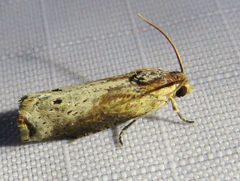
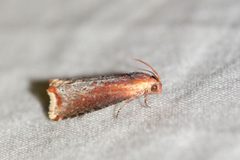
Pseudogalleria inimicella, commonly known as the inimical borer , is a small tortricid moth described by Zeller in 1872. It is widely distributed across eastern and central North America, with records spanning from Ontario and Maine south to Florida and west to Texas and Oklahoma. are active throughout most of the year, with records from January through October. The is characterized by its small size and relatively broad geographic range within the continent.
Pronunciation
How to pronounce Pseudogalleria inimicella: //ˌsjuːdoʊɡəˈlɪəriə ˌɪnɪˈmɪsɛlə//
These audio files are automatically generated. While they are not always 100% accurate, they are a good starting point.
Identification
Distinguished from similar tortricid moths by combination of small size (wingspan 16.5–23 mm), broad geographic distribution in eastern North America, and extended period from January through October. Specific diagnostic characters for separating from congeneric and similar Olethreutinae require examination of genitalia or detailed wing pattern analysis not documented in general sources.
Images
Appearance
Small with wingspan of 16.5–23 mm. Forewings and hindwings typical of Tortricidae , with relatively broad, somewhat triangular forewings that fold roof-like over the body at rest. Coloration and pattern details not specified in available sources.
Distribution
Eastern and central North America: recorded from Alabama, Arkansas, Florida, Georgia, Illinois, Indiana, Kentucky, Maine, Maryland, New Hampshire, North Carolina, Ohio, Oklahoma, Ontario (Canada), South Carolina, Tennessee, Texas, and West Virginia.
Seasonality
active year-round in warmer portions of range; recorded on wing from January through October. No specific data on larval seasonality or number of per year.
Similar Taxa
- Other Pseudogalleria speciesCongeneric share general and require detailed examination for accurate identification; P. inimicella distinguished by distribution and period patterns where documented.
- Other Olethreutinae in same regionMany small tortricid moths overlap in size and general appearance; knowledge needed to distinguish based on subtle wing pattern and structural differences.
More Details
Taxonomic history
Originally described as Galleria inimicella by Zeller in 1872, later transferred to Pseudogalleria. The genus name reflects historical confusion with the greater wax moth (Galleria mellonella), though the two are not closely related.
Etymology
epithet 'inimicella' derived from Latin 'inimicus' meaning hostile or unfriendly, combined with diminutive suffix '-ella' common in names; significance of this naming is not documented.