Pammene
Hübner, [1825], 1816
Species Guides
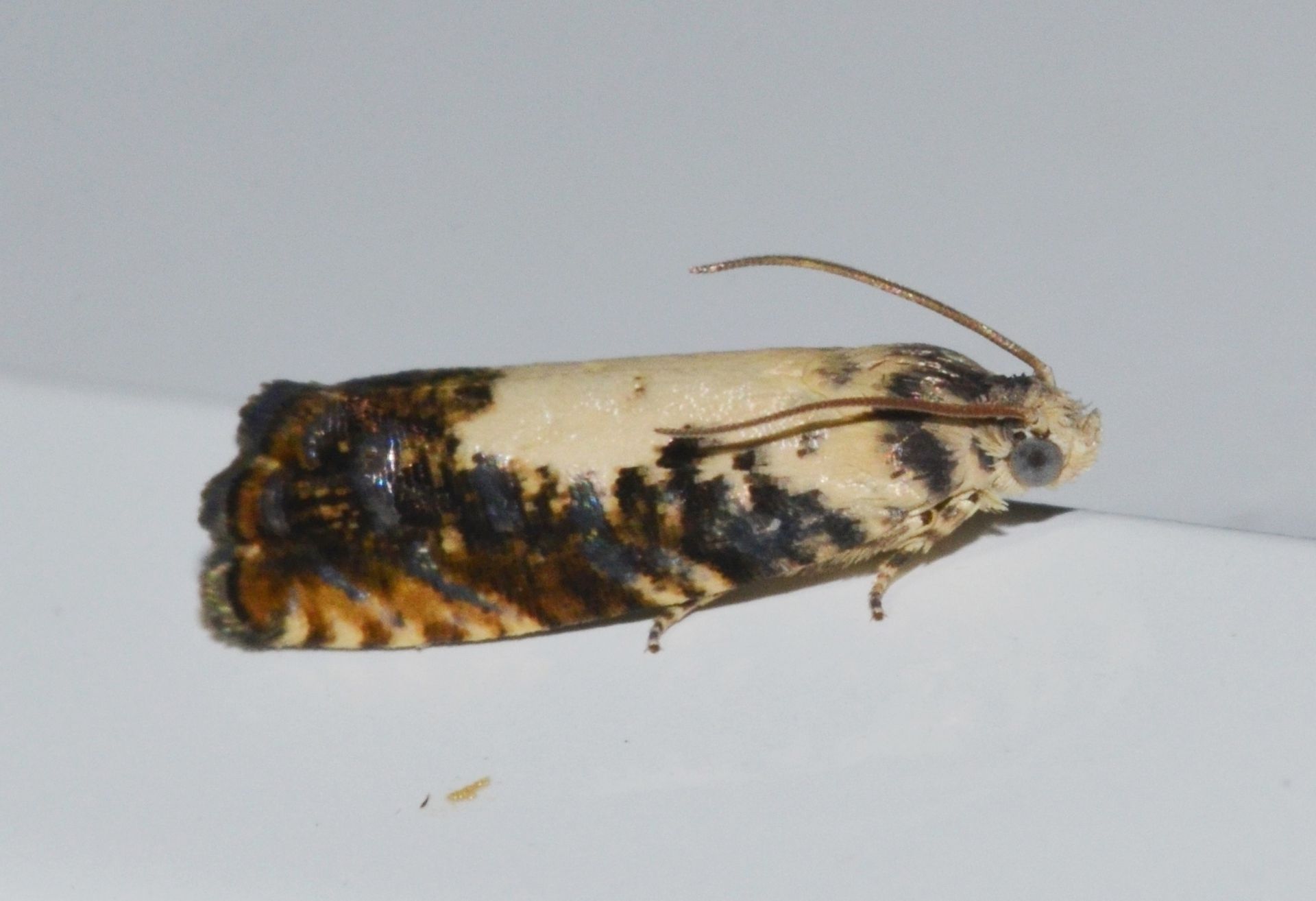
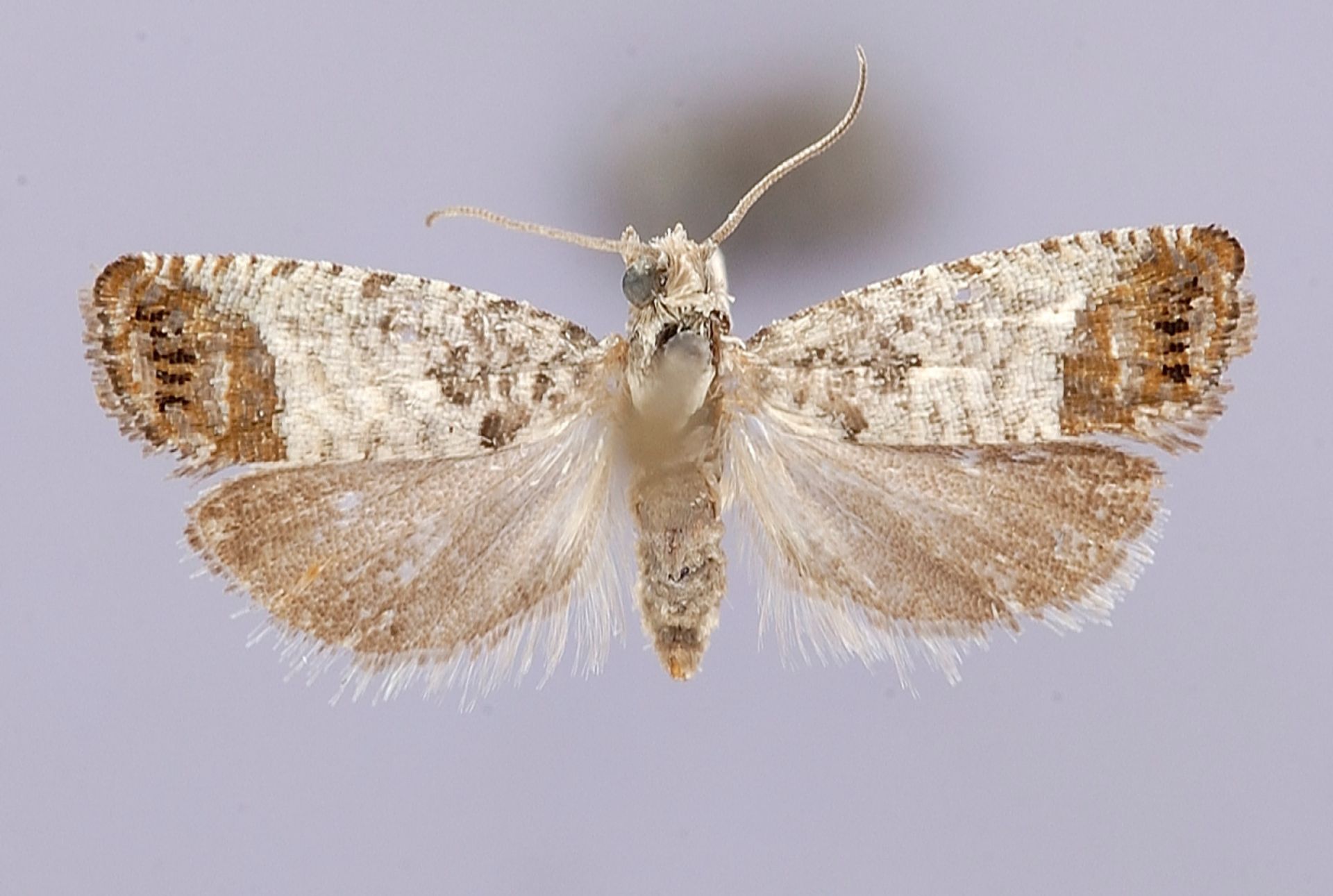
4Pammene is a of tortrix moths comprising 89 recognized in the tribe Grapholitini. Species are distributed across Europe, Asia, and North America, with several species serving as economically significant pests of conifers and nut-bearing trees. Larvae typically develop internally within plant tissues—cones, fruits, or seeds—causing damage to commercially important species including chestnut (Castanea), sal (Shorea robusta), and various Cupressaceae. The genus has undergone taxonomic revision, with former synonyms Eucelis, Halonota, Orchemia, and Trycheris now recognized as junior subjective synonyms.
Pronunciation
How to pronounce Pammene: //ˈpæm.ɪˌniː//
These audio files are automatically generated. While they are not always 100% accurate, they are a good starting point.
Identification
-level identification requires examination of forewing pattern and male genitalia. Pammene blockiana can be distinguished from related Cupressaceae-associated species using , with minimum genetic distances of 5.4% from P. oxycedrana and 7.1% from P. juniperana. Pammene castanicola was previously misidentified as P. fasciana due to morphological and biological similarity; mature larva provides diagnostic characters.
Images
Habitat
Forested and cultivated environments including chestnut woods, coniferous forests, gardens, and ornamental tree plantings. Specific associations vary by : P. castanicola occurs in chestnut woods near volcanic regions; P. blockiana inhabits Cupressaceae-dominated plantings along coastal areas; P. theristis is associated with sal forests in India.
Distribution
Europe (including Greece, Scandinavia, Denmark, Russia), Asia (India, Russia/Black Sea coast), and North America (Vermont, USA). Distribution is often underestimated; P. fasciana in Greece and P. blockiana in Russia represent recently documented range extensions.
Seasonality
activity varies by . Pammene blockiana males captured in May in Sochi, Russia. Seasonal patterns likely tied to plant , particularly cone and fruit development periods.
Diet
Larvae feed internally on reproductive structures of plants: cones of Cupressus and Juniperus (P. blockiana, P. oxycedrana, P. juniperana); chestnut fruits/endocarp (P. fasciana, P. castanicola); sal seeds and seedlings (P. theristis).
Host Associations
- Cupressus - larval cone feeder; P. blockiana
- Juniperus - larval cone feeder; P. blockiana, P. juniperana, P. oxycedrana
- Castanea sativa - larval fruit and endocarp feeder; P. fasciana, P. castanicola
- Shorea robusta (sal) - larval seed and seedling borer; P. theristis
Life Cycle
Complete with internal larval development. Larvae tunnel within tissues—cones, fruits, or seeds—consuming internal tissues including endocarp. site not explicitly documented in available sources. captured in traps, indicating sexual communication via pheromone-mediated attraction.
Behavior
Males of at least one (P. blockiana) are attracted to synthetic of the Oriental fruit moth Grapholita molesta, enabling detection and monitoring. Regular trap catches suggest established, potentially abundant in suitable . Larvae are concealed feeders, developing entirely within structures.
Ecological Role
Specialized herbivores of woody plant reproductive tissues. Several function as economic pests reducing seed quality, nut commercial value, and seedling survival. Pammene blockiana represents a potential threat to Cupressaceae in managed and natural along the Black Sea coast. Pammene theristis is implicated in die-off of new sal forest in India.
Human Relevance
Multiple are significant agricultural and forestry pests requiring management intervention. Pammene fasciana, P. castanicola, and related species damage chestnut crops in Italy and Greece. Pammene theristis is managed with (dimethoate, monocrotophos, imidacloprid) and contact (chlorpyrifos, cypermethrin, deltamethrin) in Indian sal forests. -based monitoring has been developed for detection. of P. fasciana has been sequenced.
Similar Taxa
- CydiaCo-occurring tortricid with similar chestnut-feeding habits; both genera contain important nut pest in Italian chestnut industry
- EpinotiaClose relative with historically confused synonymy; taxonomic boundaries clarified through type examination
- Grapholita molestaOriental fruit moth whose synthetic attracts P. blockiana males, indicating potential cross-attraction
Sources and further reading
- BugGuide
- Wikipedia
- GBIF taxonomy match
- iNaturalist taxon
- NCBI Taxonomy
- Catalogue of Life
- First record of Pammene blockiana (Lepidoptera: Tortricidae) in Russia
- Comments on the morphology and biology of Pammene castanicola Trematerra & Clausi, 2009 (Lepidoptera: Tortricidae: Grapholitini)
- The distribution ofPammene fascianaL. (Lepidoptera: Tortricidae) in Greece: an underestimated chestnut-feeding pest
- Management of Sal seed and seedling borer - Pammene theristis Meyrick (Lepidoptera: Tortricidae) by using systemic and contact insecticides
- Morphological and Molecular Characterization ofApanteles mohandasiSumodan & Narendran (Hymenoptera: Braconidae), a Solitary Endoparasitoid ofPammene criticaMeyrick (Lepidoptera: Tortricidae), with Notes on Biology from India
- The genome sequence of the acorn piercer, Pammene fasciana (Linnaeus, 1761).